


Notes from the Field
Where Ideas Begin
Most travelers follow Buddhism downstream. The source is upstream, and it changes everything you think you know.
We live in a strange moment for meaning.
Facts are contested. History is rewritten on a daily basis. The loudest voice in the room tends to win, regardless of whether it has anything true to say. And somewhere in the middle of all that noise, a growing number of people are quietly asking the same question: Is there anything solid to stand on?
Here is what I want to tell those people: this question is not new. It is, in fact, 2,500 years old. And the place where it was first asked, seriously, systematically, at civilizational scale, is a specific patch of ground in the Indian state of Bihar, beneath a specific tree, where a man sat down in the 6th century BCE and refused to leave until he had an answer.
Most people who are drawn to Buddhism never get there. They encounter it downstream: in the temples of Kyoto, the meditation retreats of Bali, the monasteries of Ladakh. Those are extraordinary places. But they are translations. Eastern India is the original text.
India’s Original Counterculture
To understand why Buddhism matters, you have to understand what it was arguing against.
In the 6th century BCE, northeastern India was organized around Brahmanical authority: the Vedas as sacred text, the priest caste as the sole interpreters of meaning, and the caste system as a cosmic fact, not a social arrangement to be questioned, but a metaphysical truth. Access to the sacred was controlled. Your place in the order was determined at birth and enforced by ritual. You did not inquire. You inherited.
Buddhism said: no.
Not quietly. Not politely. The Shramana movement, the broader countercultural wave that Buddhism emerged from, was one of the most radical intellectual upheavals in ancient history. It rejected Vedic authority. It rejected caste as a determinant of spiritual worth. It said that the path to liberation was open to anyone willing to examine their own mind. That meaning was not something you inherited from your priests. It was something you arrived at through inquiry.
This wasn’t a philosophical abstraction. It was a direct argument with power, made in a specific historical moment, the period historians call the “second urbanization” of South Asia. Rapidly expanding cities, new kingdoms, emerging merchant classes with every reason to question the inherited order. In other words: the exact conditions that make a counterculture possible.
Jainism was born from the same moment. So were traditions that history has mostly forgotten. Eastern India in the 6th century BCE was not a quiet backwater. It was the intellectual center of a civilization in transformation. And when you travel there today, you are standing in the archaeology of that transformation.
Nalanda: The Mind That Survived Its Own Destruction
At its height, Nalanda University housed ten thousand students and two thousand teachers. Scholars traveled from China, Korea, Japan, Tibet, Persia, and Turkey to study there, not because it was the only option, but because it was the best. Its library was so vast that when it burned, it reportedly took months for the fire to go out.
Almost no one outside classical studies knows it existed.
Nalanda was founded in the 5th century CE in Bihar, one of the first residential universities in the world, and the greatest center of Buddhist learning ever established. It was not a monastery in the sense of withdrawal. It was a place where the world’s most serious thinkers came to argue: about logic and metaphysics, about medicine and astronomy, about the nature of consciousness. Buddhist philosophy, yes, but also grammar, mathematics, and the Hindu traditions that Buddhism had always been in conversation with.
In 1193 CE, it was burned to the ground by an Afghan military commander. The scholars who escaped fled, some to Tibet, carrying what they could. The library was gone. The institution was gone.
The ideas were not gone.
What began under a tree in Bodh Gaya had by then traveled along the Silk Road, west to Central Asia, east to China, south to Sri Lanka and Southeast Asia, not as a finished export, but as a living conversation. Every place it landed, it changed. Every place it landed, it was changed. Nalanda was the mind at the center of that exchange, and the ruins you walk through today are physical evidence of something that neither fire nor armies could actually extinguish.
The library burned. The conversation continued. From “Where Ideas Begin”
The Thread That Never Broke
Buddhism did not survive in India the way it survived in Japan or Tibet or Sri Lanka. After the medieval disruptions, Buddhist institutional life on the subcontinent largely collapsed. For centuries, the birthplace of the tradition was, in a real sense, a Buddhist desert.
And then B.R. Ambedkar changed that.
In 1956, the man who drafted India’s constitution stood in Nagpur and converted to Buddhism, along with hundreds of thousands of his followers. His argument was clear: Buddhism offered what Brahmanism denied, a tradition that affirmed the dignity and spiritual equality of every human being, regardless of birth. The conversion was not nostalgic. It was political. It was a reclamation of the original argument, made directly, 2,500 years after Bodh Gaya.
That is what makes Eastern India different from every other Buddhist destination in the world. It is not a museum. The conversation it started is still happening, in its ruins and relics, in its caves and temples, in the presence of pilgrims from every Buddhist nation on earth who arrive daily at the tree where it began, and in the living social movement that Ambedkar’s conversion set in motion.
You are not visiting history. You are entering a debate that has never closed.
Why This Trip Exists: Dr. David Eckel and the Buddhist Road
India overwhelms travelers who arrive without the right interpretive key. The scholar doesn’t just add depth, he makes the place navigable. If you don’t know what you’re looking at, it reads as chaos. If you do, the chaos resolves into something remarkable.
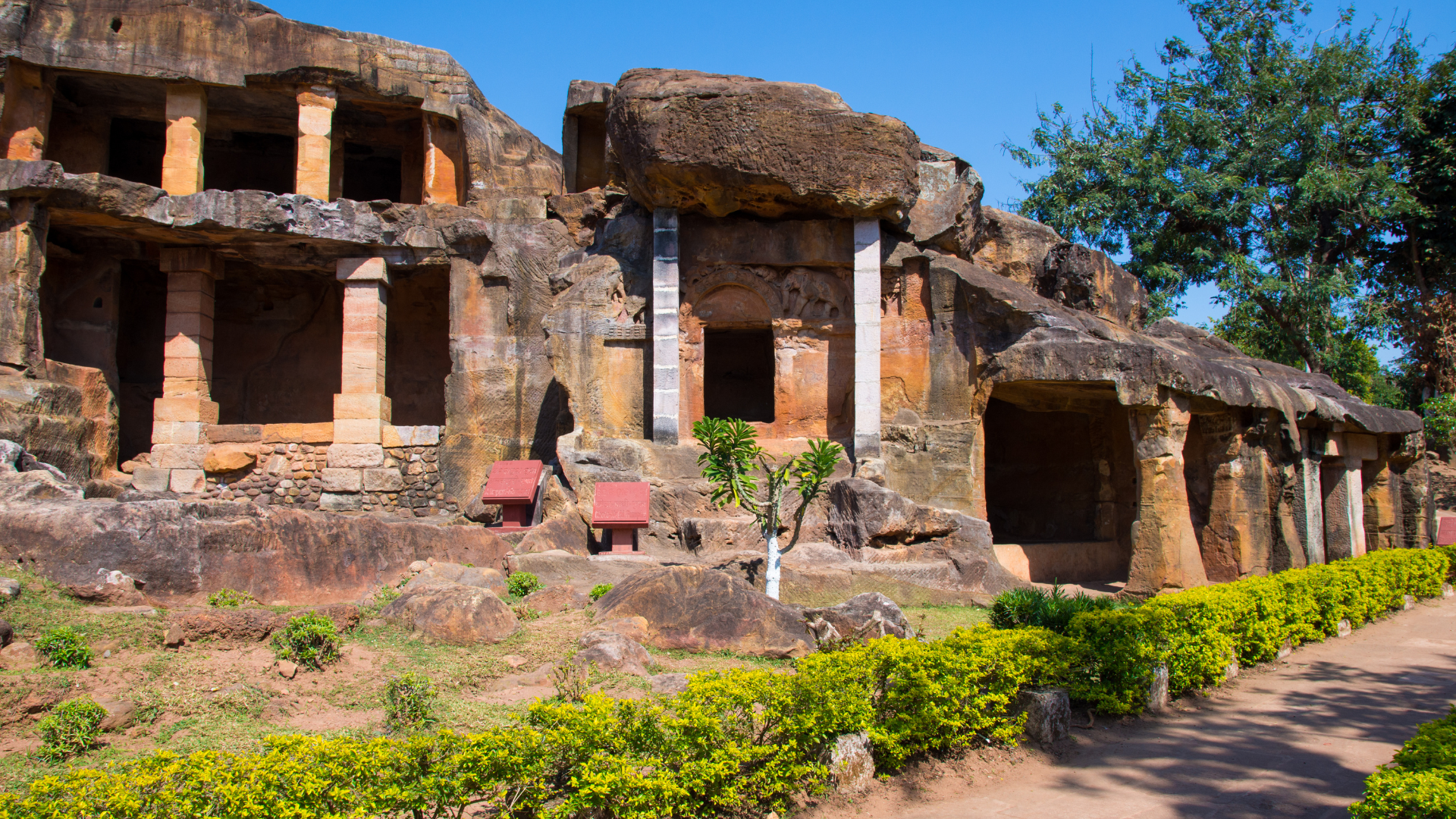
Dr. David Eckel, Professor of Religion at Boston University and a scholar of Buddhist studies whose Great Courses lectures have introduced hundreds of thousands of people to this tradition, travels with Far Horizons to Eastern India in January 2027. The itinerary covers Bodh Gaya, Nalanda, Rajgir, Patna, the Barabar Caves, and Kolkata, the full arc of Eastern India’s Buddhist heritage, from the moment of origin to its contemporary life.
This is not a lecture series attached to a tour. It is a two-week conversation with one of the finest scholars working in this field, conducted in the places where the tradition began.
And Eastern India is only the beginning.
The Buddhist Road is Far Horizons’ four-chapter series: East India (the origin), Sri Lanka (the oldest surviving school, where the tradition was first written down), Japan (where one thread of the conversation landed), and North India (where another continued). Each trip stands alone. Together, they form something rarer: a sustained intellectual journey through the physical record of one of humanity’s most consequential ideas.
The Trip Ends. The Question Doesn’t.
We cannot tell you what the question will be. It is yours, and it will not arrive until you are standing beneath the Bodhi tree or sitting in the silence of caves cut two thousand years ago by human hands. What we can tell you is that it will come. And once it does, it will want an answer.
Which means it will take you somewhere next.
That is how Intellectual Travel™ works. It does not close loops. It opens them.
If you are the kind of traveler who wants to go to the source, to understand not just what Buddhism became, but why it was necessary, what it was responding to, and why the argument it started is still the one worth having, Eastern India in January 2027 is where that conversation begins for you.
Travel With Us
Walk the Buddhist Road in Person
Join Dr. David Eckel on the Far Horizons Eastern India journey in January 2027 and stand at the source of one of humanity’s most consequential ideas, in the company of others who travel for the mind.
Explore the Eastern India journey