


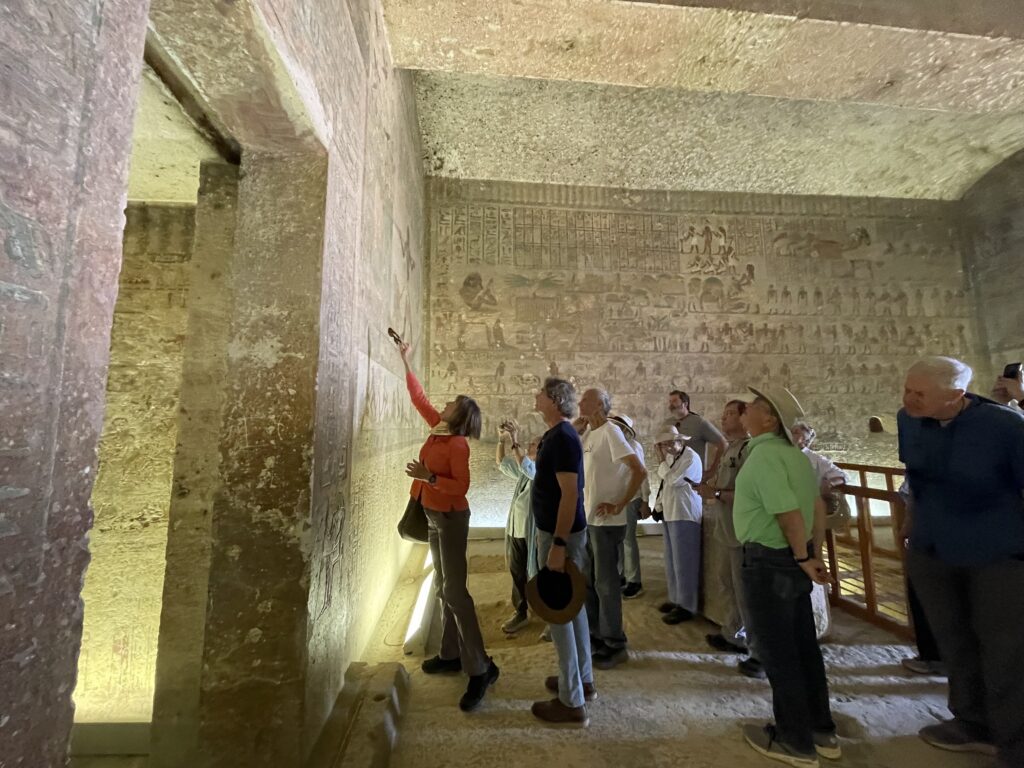
You’re standing at a site you’ve dreamed about for years.
You have questions—real questions about the engineering, the methodology, the debates among scholars.
The guide says: “We need to keep moving.”
That night, you realize: You saw it. But you didn’t connect with it.
Here’s what you actually came for:
Not just to see the site. To understand it deeply enough that it changes how you think.
Not just to visit with a group. To connect with peers who share your curiosity.
Not just to hear information. To engage in dialogue that satisfies your intellectual appetite.
You came for depth. For connection. For transformation
But educational tours are designed for coverage, not connection.
When connection doesn’t happen, you leave feeling:
– Surface-level when you wanted depth
– Alone in a crowd when you wanted intellectual companionship
– Rushed when you needed time to absorb
– “Lecture-lite” when you expected graduate-level discourse
And here’s the truth: It’s not you.
You’re not too demanding. You’re not too curious. You’re not asking for too much.
You’re just in the wrong model.
This 8-point framework is your key.
After running heritage travel companies for over a decade, I’ve seen the pattern: travelers choose by destination and price—then come home feeling they saw everything but connected with nothing.
Not because the tours are bad. Because they optimized for the wrong variables.
This checklist reveals the 8 criteria that separate tours you’ll rave about from tours that feel like lecture-lite crowd control.
Use it to evaluate ANY educational tour company. Yes, even Far Horizons.
Because informed travelers make better decisions.
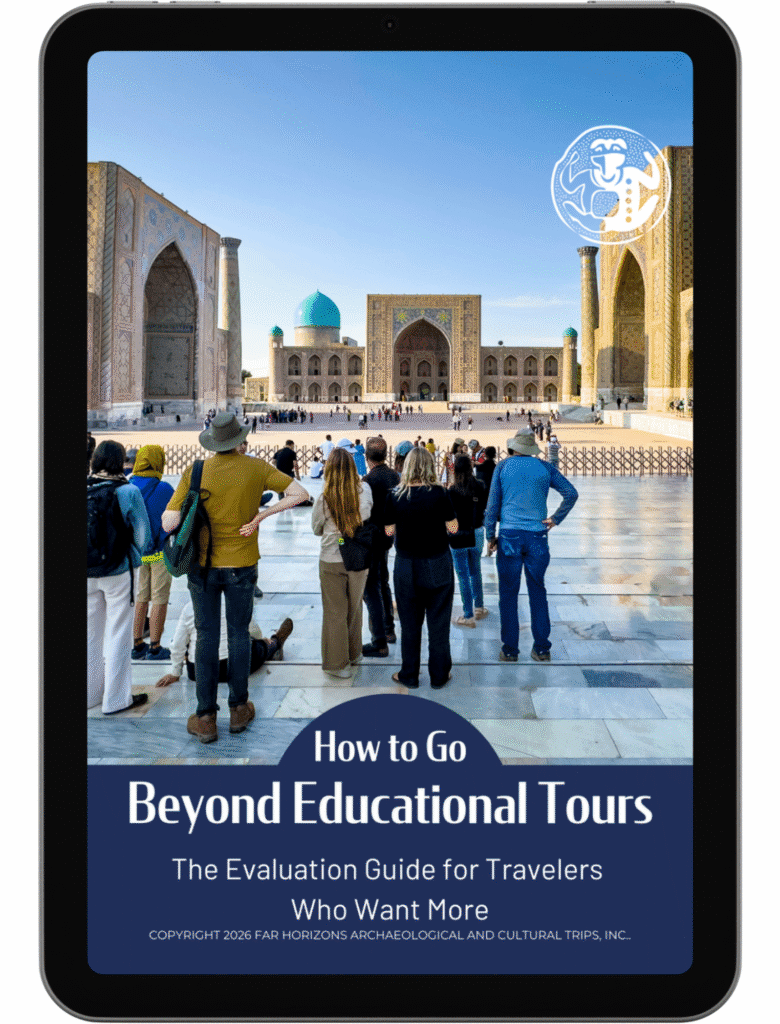
Download the 8-Point Evaluation Framework
What you’ll get:
8 specific criteria to evaluate any tour operator
Red flags vs. green flags for each criterion
Questions to ask before you book
How to identify Intellectual Travel™ vs. standard educational tours
You’ll receive the PDF immediately + occasional insights on Intellectual Travel. Unsubscribe anytime.