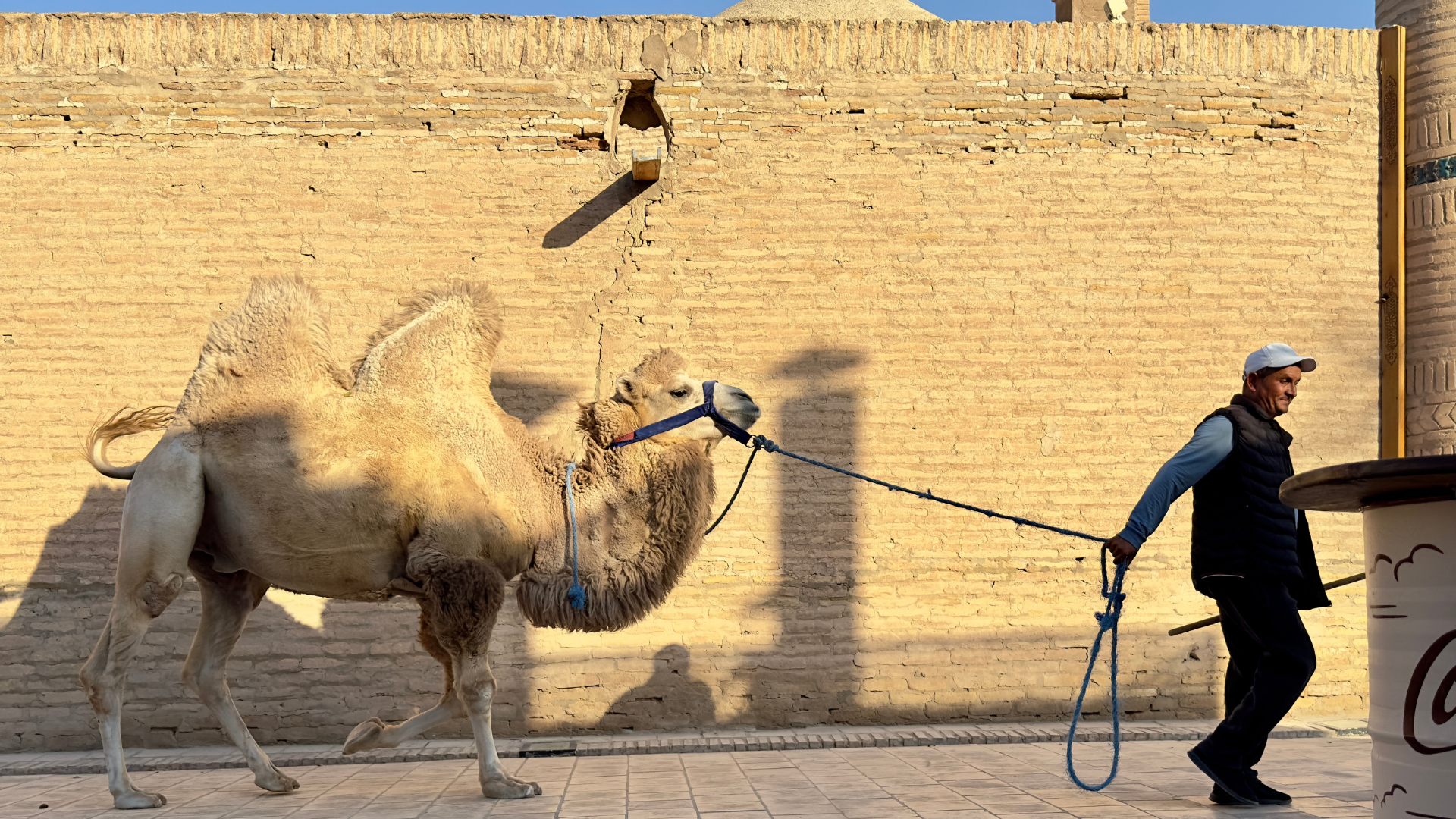


“Silk Road” calls up camel caravans loaded with luxury goods, moving across open desert on trails you can barely see. The lands they crossed, today’s Turkmenistan, Uzbekistan, Tajikistan, Kazakhstan, and Kyrgyzstan, carry the marks of Alexander the Great, Genghis Khan, and Tamerlane, and of the Parthians, Sogdians, and Saka nomads who ruled here before and between them.
The Silk Road was more than a trade route. Merchants, missionaries, and soldiers carried ideas along with silk, and the religions of the ancient world traveled with them: Zoroastrianism, one of the oldest living faiths, along with Buddhism, Judaism, Christianity, Manichaeism, and Islam. Your study leader, Dr. Jenny Rose, is a historian of Zoroastrianism whose work centers on how Iranian peoples met other cultures along these roads. With her, a mudbrick “tower of silence” in the Khorezm desert, a Sogdian wall painting, and a 10th-century mausoleum in Bukhara become chapters of the same story.
You begin at Nisa, an early capital of the Parthian Empire outside Ashgabat, then fly north to the medieval ruins of Kunya-Urgench and cross into Uzbekistan. The mudbrick fortresses of ancient Khorezm lead you to the walled city of Khiva, and from there a high-speed train carries you to Bukhara. You reach Samarkand on Navruz, the Persian New Year, and make a day trip into Tajikistan to walk the Sogdian city of Panjakent with a member of its excavation team. After the museums and metro stations of Tashkent, you fly to Almaty to meet the gold-clad Saka of the Kazakh steppe, then cross on foot into Kyrgyzstan, where the Burana Tower stands over the ruins of Balasagun beneath the Tian Shan mountains.
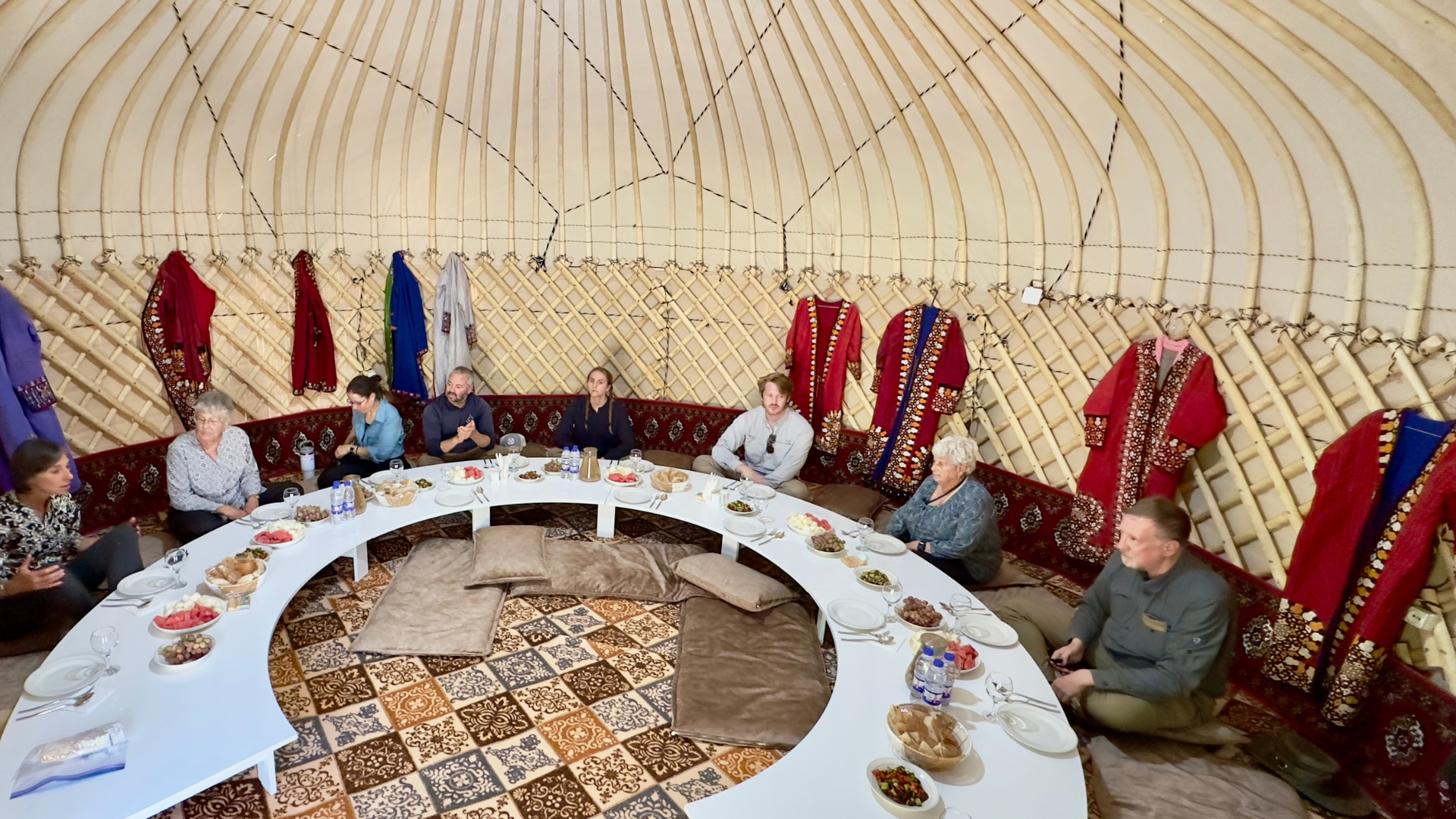
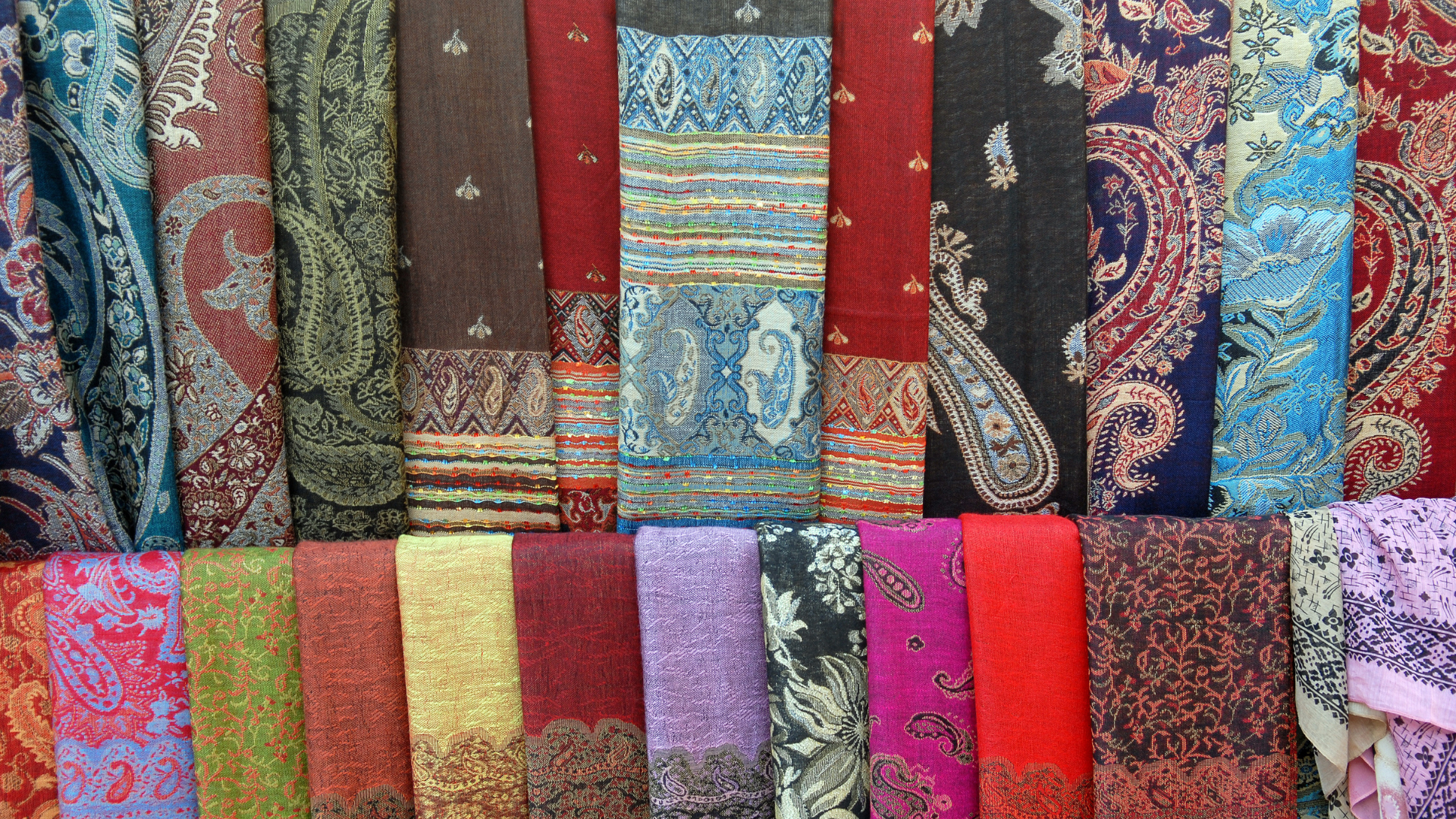
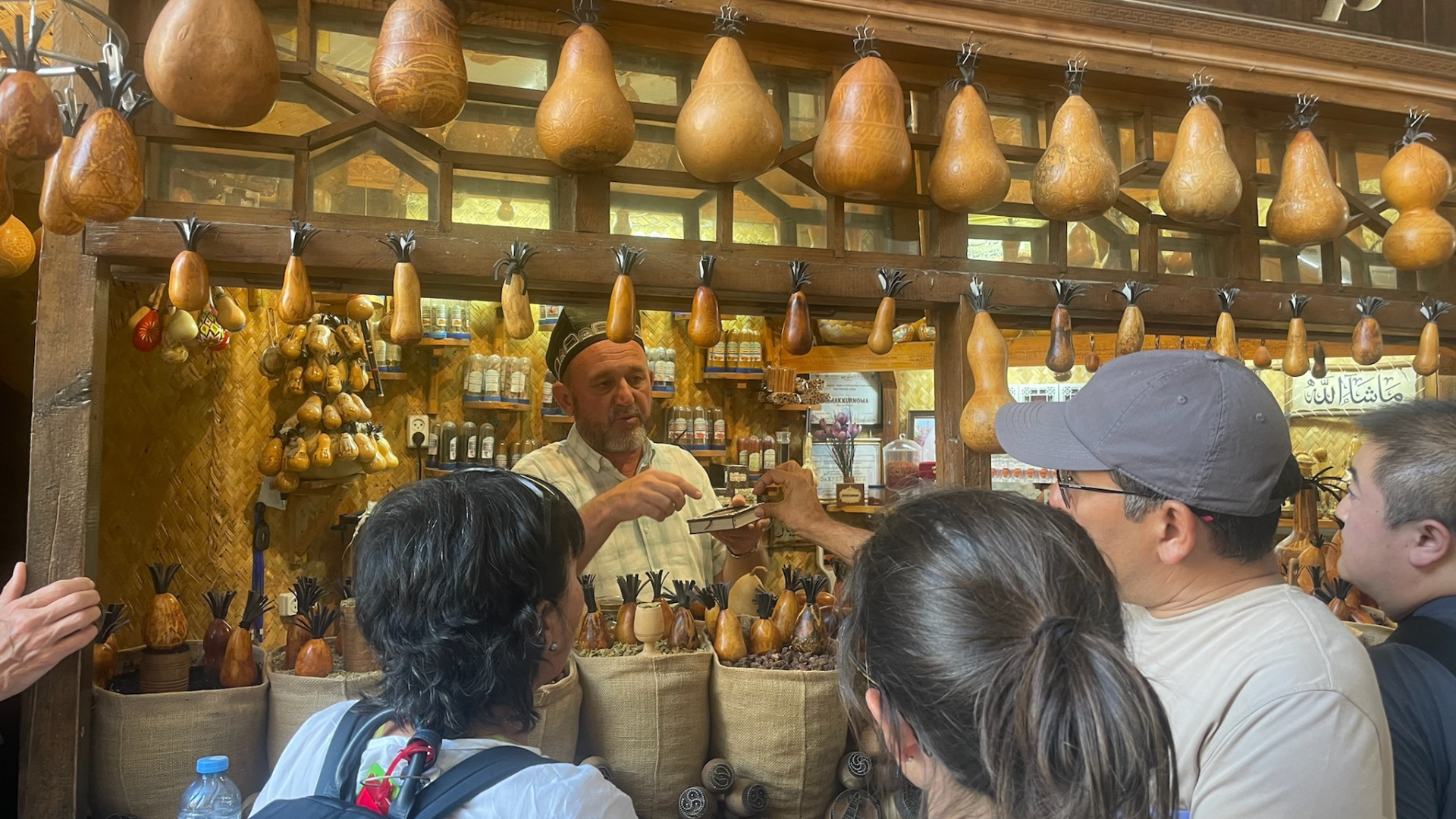
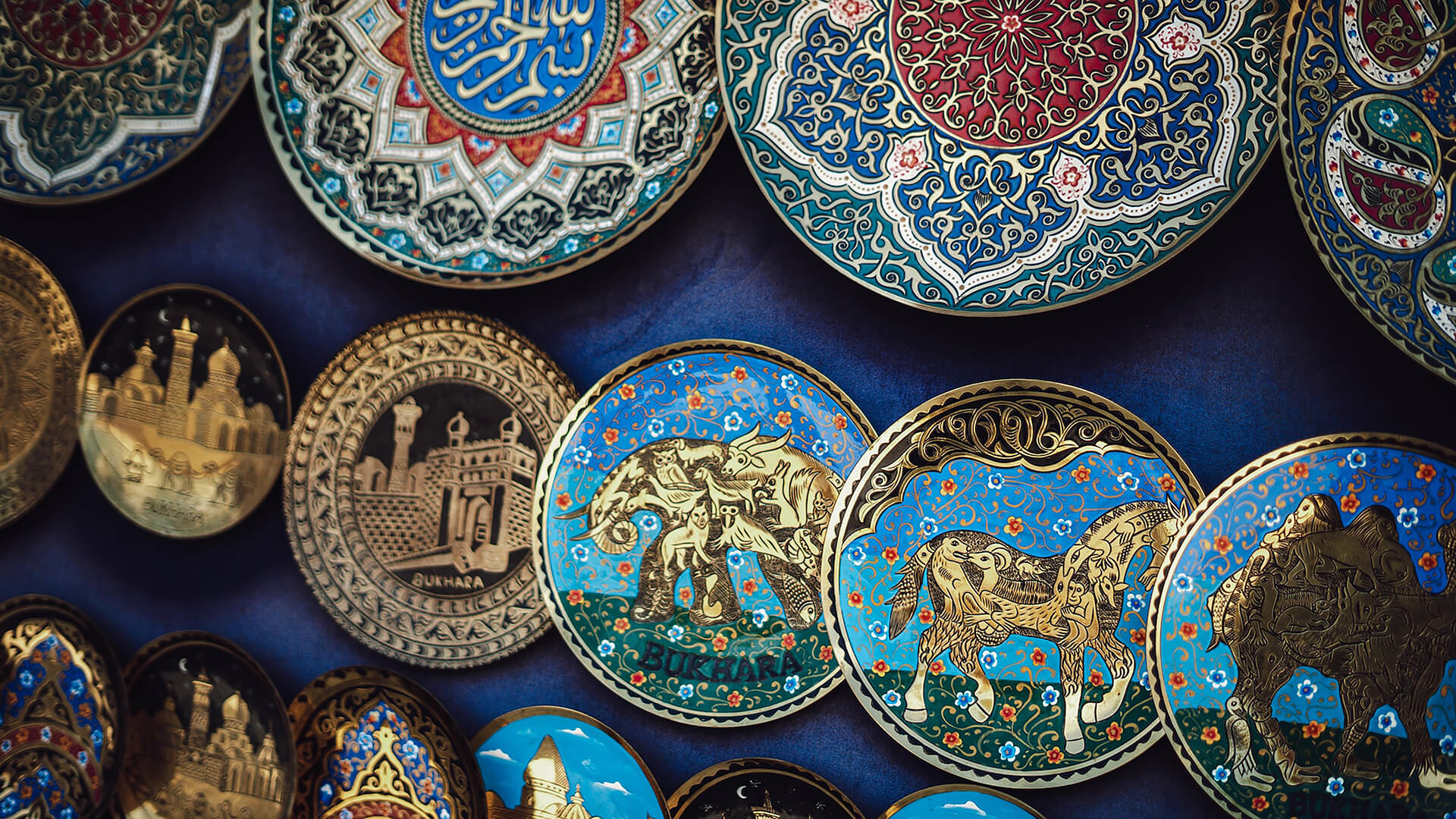
The food and crafts of the region are part of the trip. You will share lunch in a yurt camp beneath the walls of Ayaz Kala, eat in a private home in Samarkand, and have shashlik at a local favorite. You watch potters at Gijduvan working foot-powered wheels, and papermakers at Konigil reviving the mulberry-bark paper Samarkand was famous for. In Kyrgyzstan, eagle hunters, felt makers, and horsemen show the nomadic traditions that still shape life on the steppe, and a farewell dinner with Kyrgyz traditional music closes the journey.
Across five countries and more than two thousand years of history, you follow the Silk Road the way its caravans did, one oasis city at a time, with a scholar who can read the faiths and empires written into its walls.
Arrive in Ashgabat, the capital of Turkmenistan, early this morning and check in to your hotel with time to rest. After a late lunch, drive to Nisa, a UNESCO World Heritage Site. This huge mudbrick city, still enclosed within an imposing wall, was one of the earliest and most important cities of the Parthian Empire, the power that dominated this region from the 3rd century BC to the 3rd century AD. Excavations here uncovered carved ivory drinking horns, or rhyta, that blend Greek and Iranian imagery, evidence of how far the Hellenistic world reached after Alexander.
Overnight for two nights at the Yildiz Hotel in Ashgabat. (B/L/D)
A short drive east of the city brings you to Anau, a settlement first occupied more than seven thousand years ago, with the remains of a Bronze Age walled town. The American geologist Raphael Pumpelly excavated here in 1904, one of the first scientific digs in Central Asia. In the 15th century, the mosque of Shaykh Jamal al-Din was built on the site; its entrance portal carried a rare figural mosaic of two yellow dragons against a blue ground, fragments of which survived the 1948 earthquake that brought most of the building down.
Continue to a breeding farm for the Akhal-Teke, the ancient Turkmen horse and the national emblem of Turkmenistan. Prized for speed and stamina on long marches, the breed was shaped by centuries of desert life. Prior to the Russian occupation of 1917, nearly every Turkmen family owned at least one or two horses.
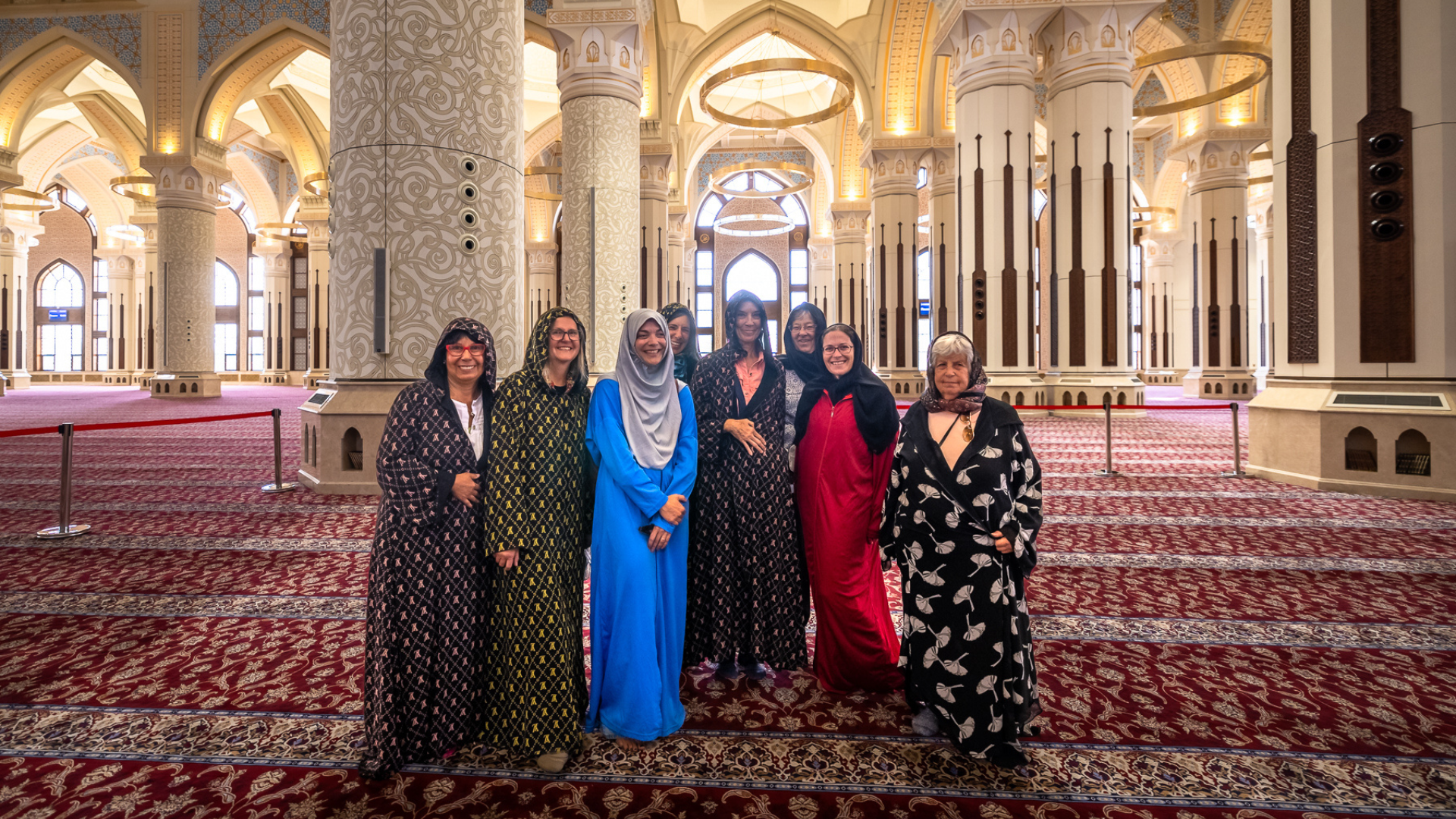
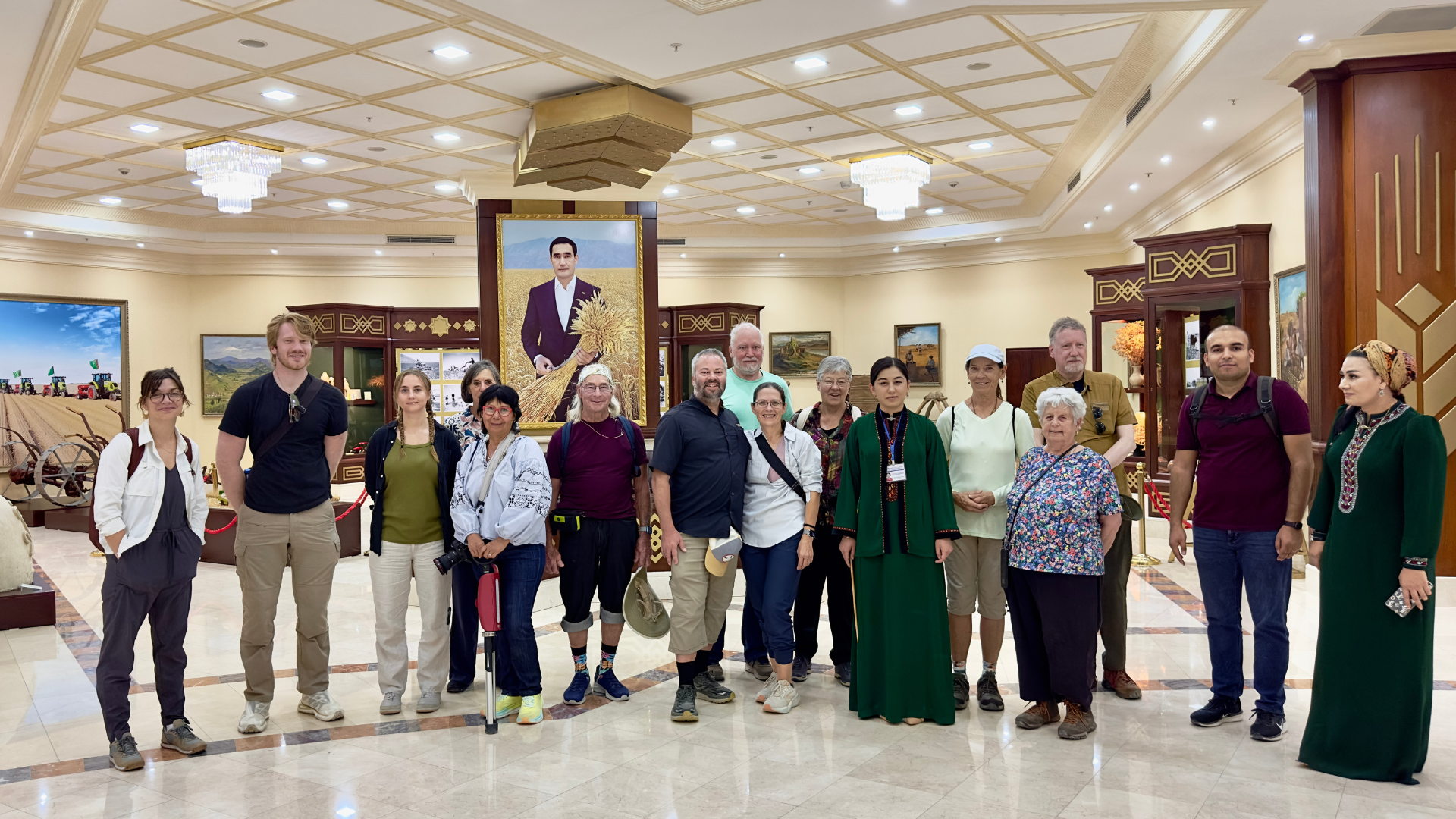
Return to Ashgabat for the National Museum, whose collections span the Bronze Age sites of the Margiana oasis, Parthian Nisa, and medieval Merv, followed by a visit to the Ruhy Mosque, one of the largest mosques in Central Asia. (B/L/D)
After a very early start, fly north to Dashoguz and drive to the UNESCO World Heritage Site of Kunya-Urgench (Köneürgenç in Turkmen), once the capital of Khorezm. A major trade center on the Silk Road from the 10th to the 14th centuries, the city was destroyed by the Mongols in 1221 and rebuilt, only to be sacked again by Tamerlane. You will see the 12th-century mausoleum of Il-Arslan with its faceted conical dome, the mausoleum of Sultan Tekesh, the 14th-century mausoleum of Turabek Khanum with its intricately tiled cupola, and the brick minaret of Kutlug Timur, banded with geometric patterns and rising almost 200 feet over the plain.
This afternoon, cross the border into Uzbekistan at Hojayli and continue to Nukus where we spend one night. (B/L/D)
Begin at the State Museum of Arts of the Republic of Karakalpakstan in Nukus, known as the “Louvre in the Desert.” Assembled by the artist and collector Igor Savitsky, the museum holds the world’s second-largest collection of Russian avant-garde art, much of it rescued from Soviet censorship, along with galleries of Khorezmian antiquities and Karakalpak folk art.
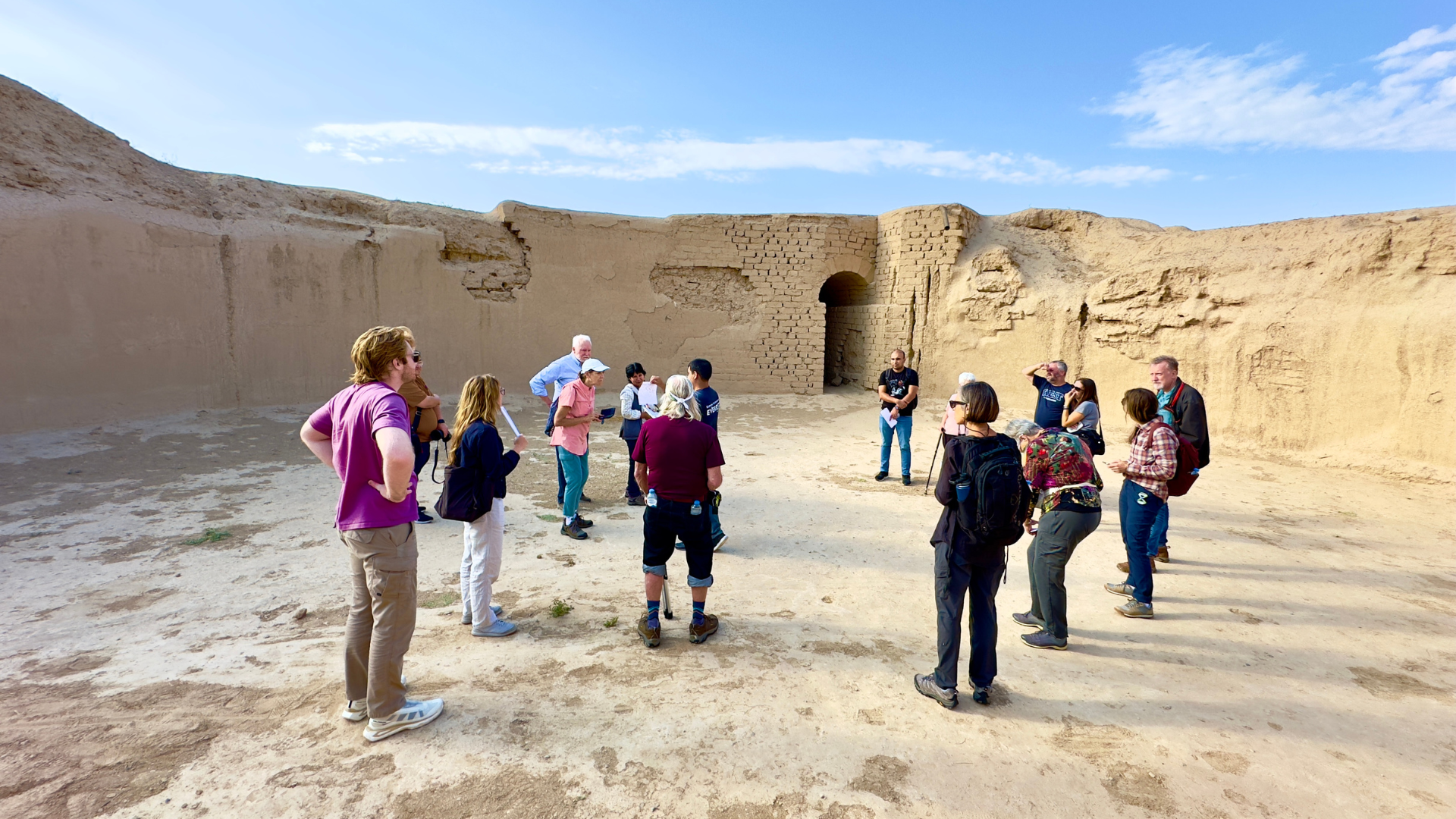
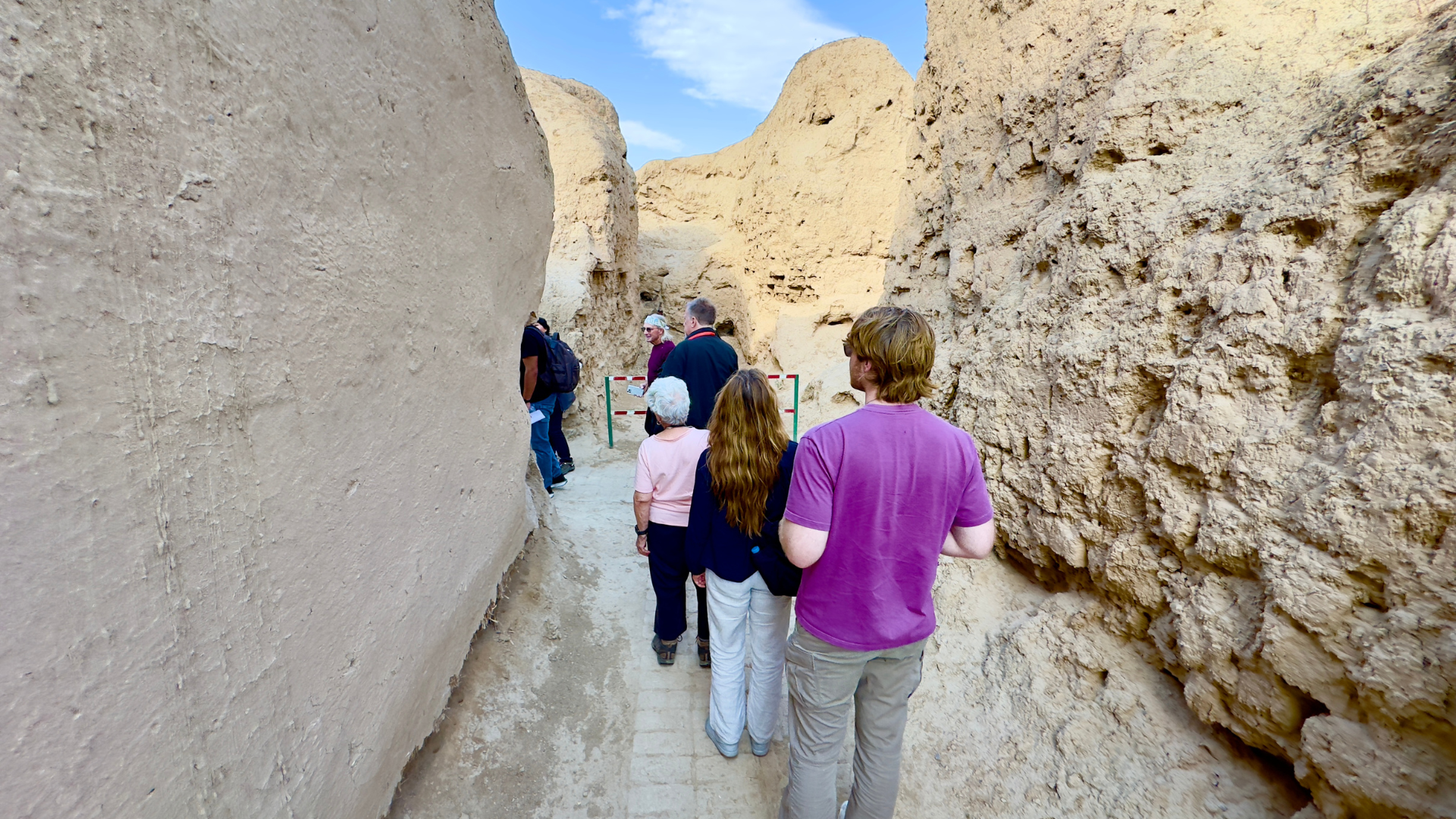
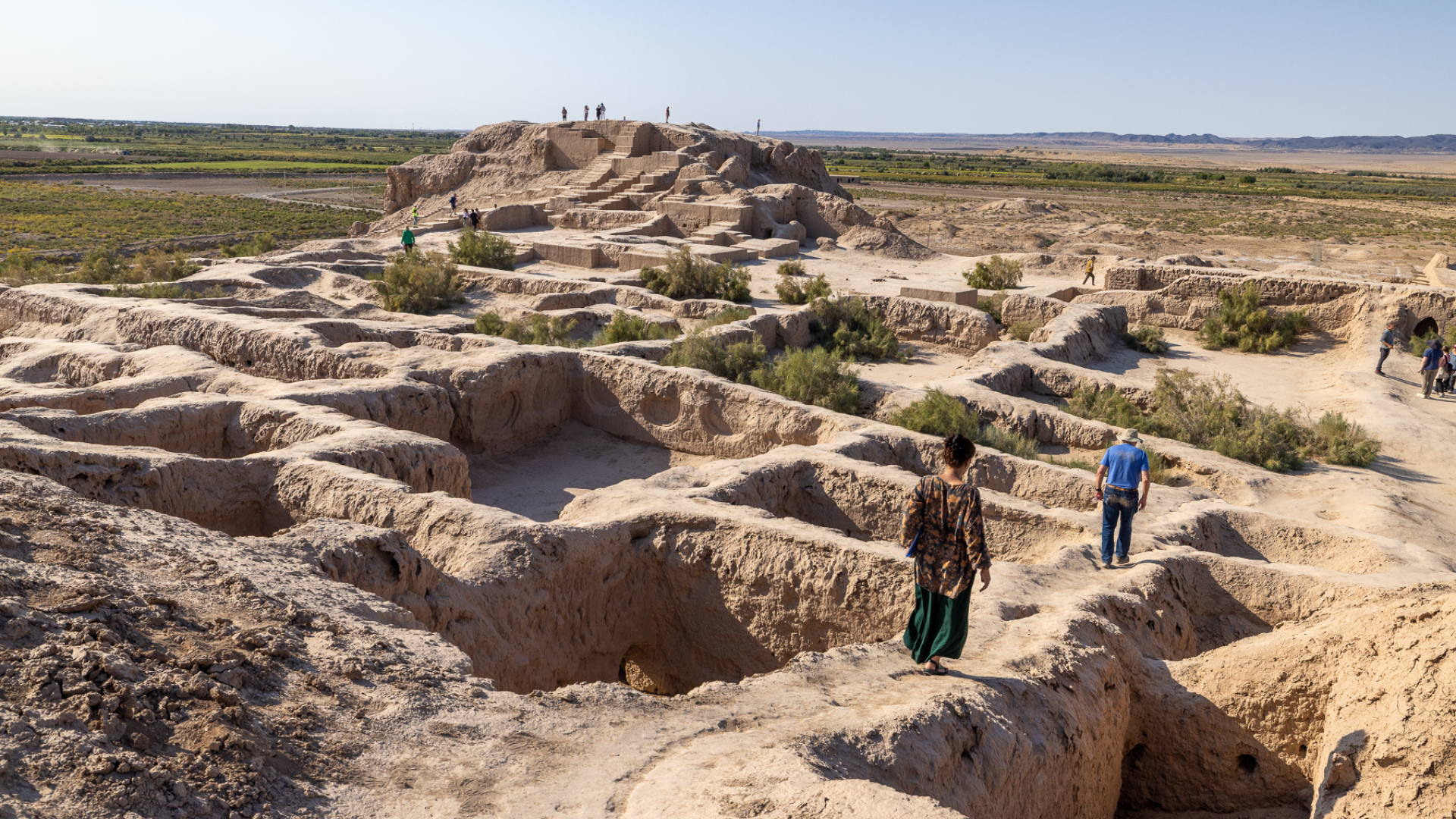
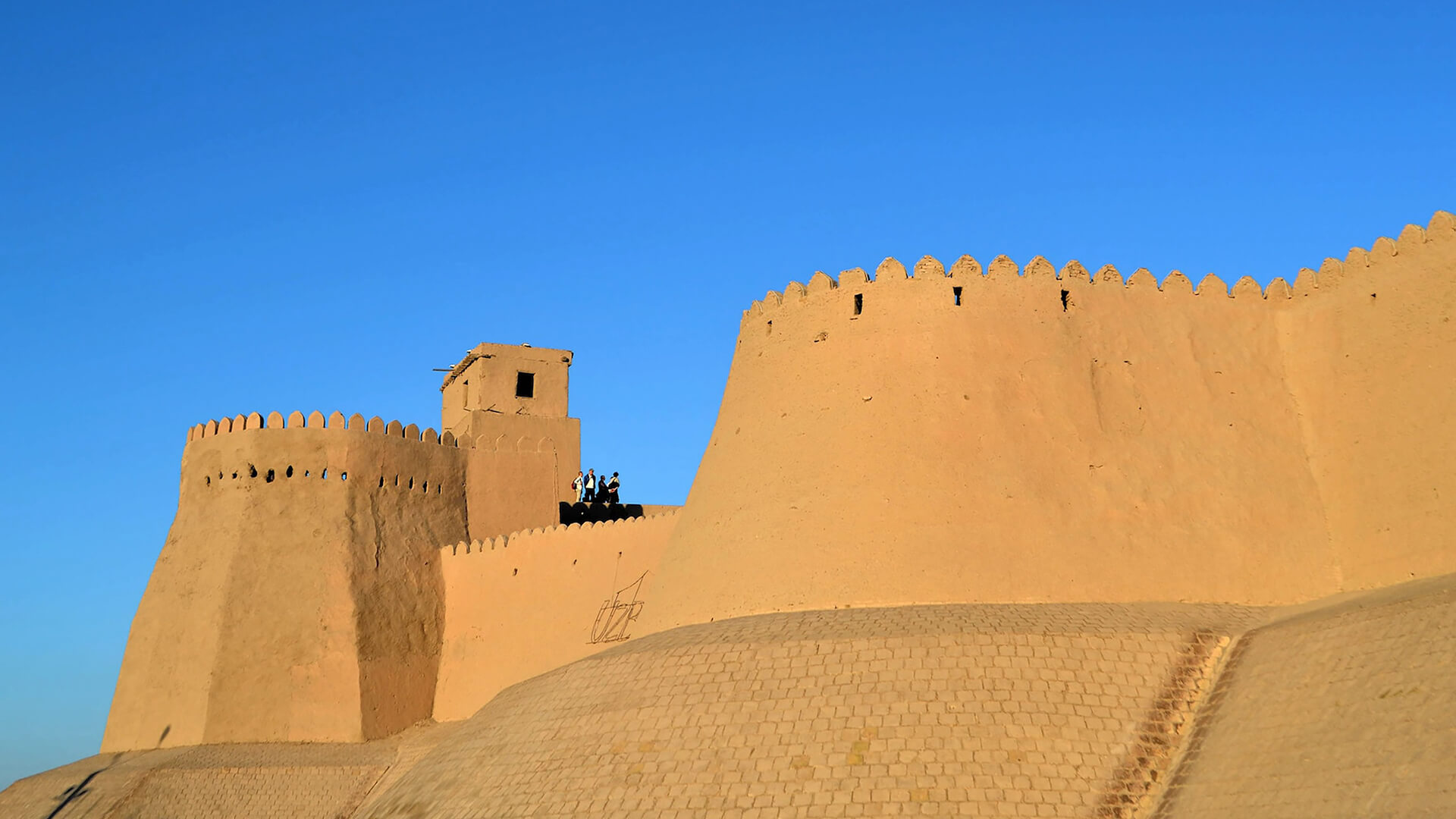
Today’s drive to Khiva crosses ancient Khorezm, where oases once dotted the Kyzyl Kum (“red sand”) and Kara Kum (“black sand”) deserts, with the Aral Sea at the northern edge. Fed by the Oxus (Amu Darya) River, its fortified towns thrived on irrigated agriculture and on the caravans that crossed this land for thousands of years. At Chilpyk Kala, a ring of mudbrick walls on a hilltop above the river, you see a Zoroastrian dakhma, or “tower of silence,” where the dead were exposed so as not to pollute earth or fire. Toprak Kala was the capital of the Khorezmian kings in the 2nd and 3rd centuries AD; its palace once held more than one hundred rooms, and its walls sheltered a fire temple. Ayaz Kala comprises three fortresses built between the 4th century BC and the 7th century AD. Lunch is served in a yurt camp below its walls.
Arrive in Khiva this evening. Overnight for two nights at the Kamil Palace Hotel. (B/L/D)
Today is spent in Khiva, once the capital of the Khanate of Khiva and the last stop for caravans before they crossed the desert toward Iran. Its inner town, Itchan Kala, is still enclosed by its massive mudbrick walls and was the first site in Uzbekistan to be placed on the UNESCO World Heritage List.
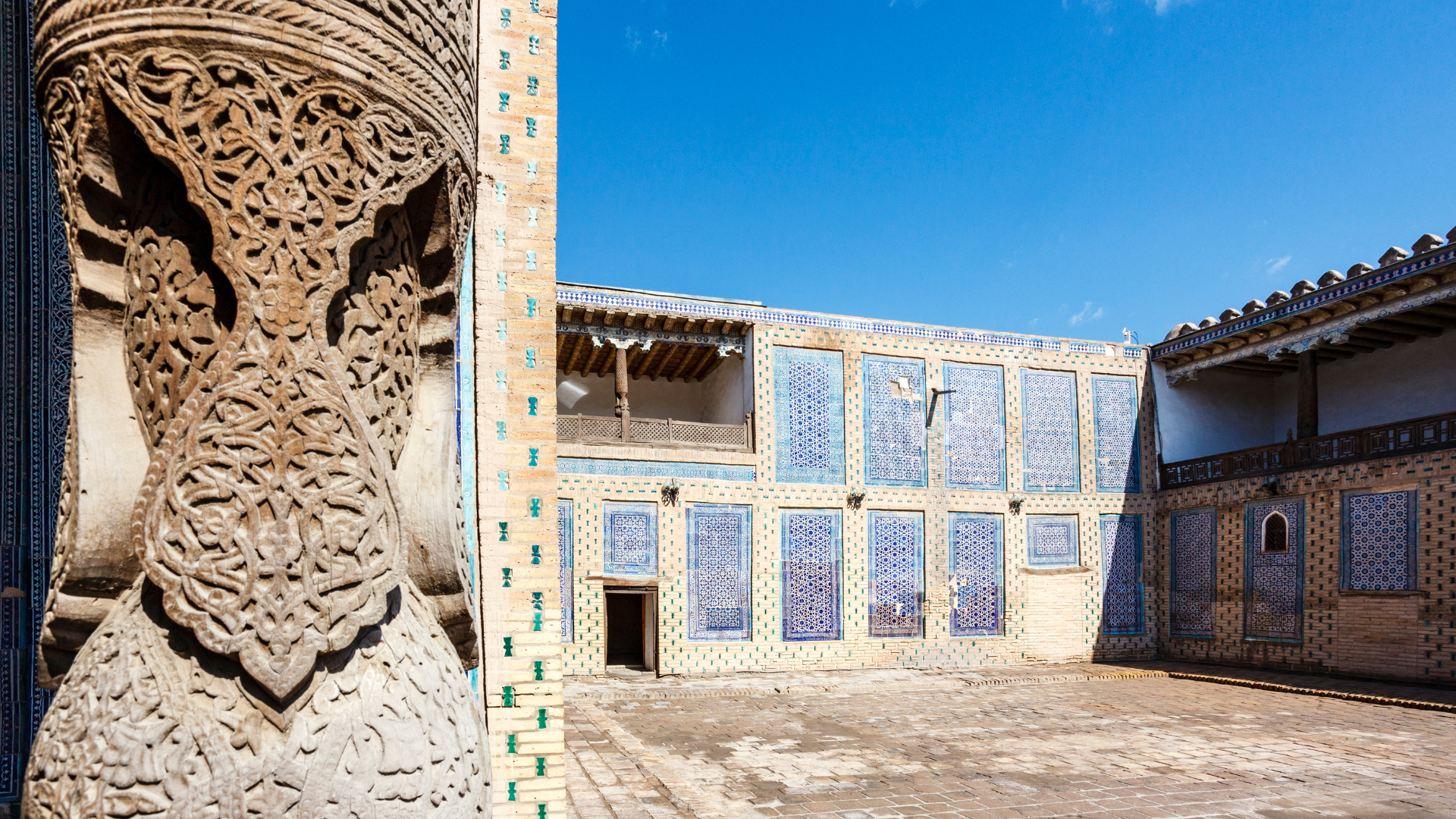
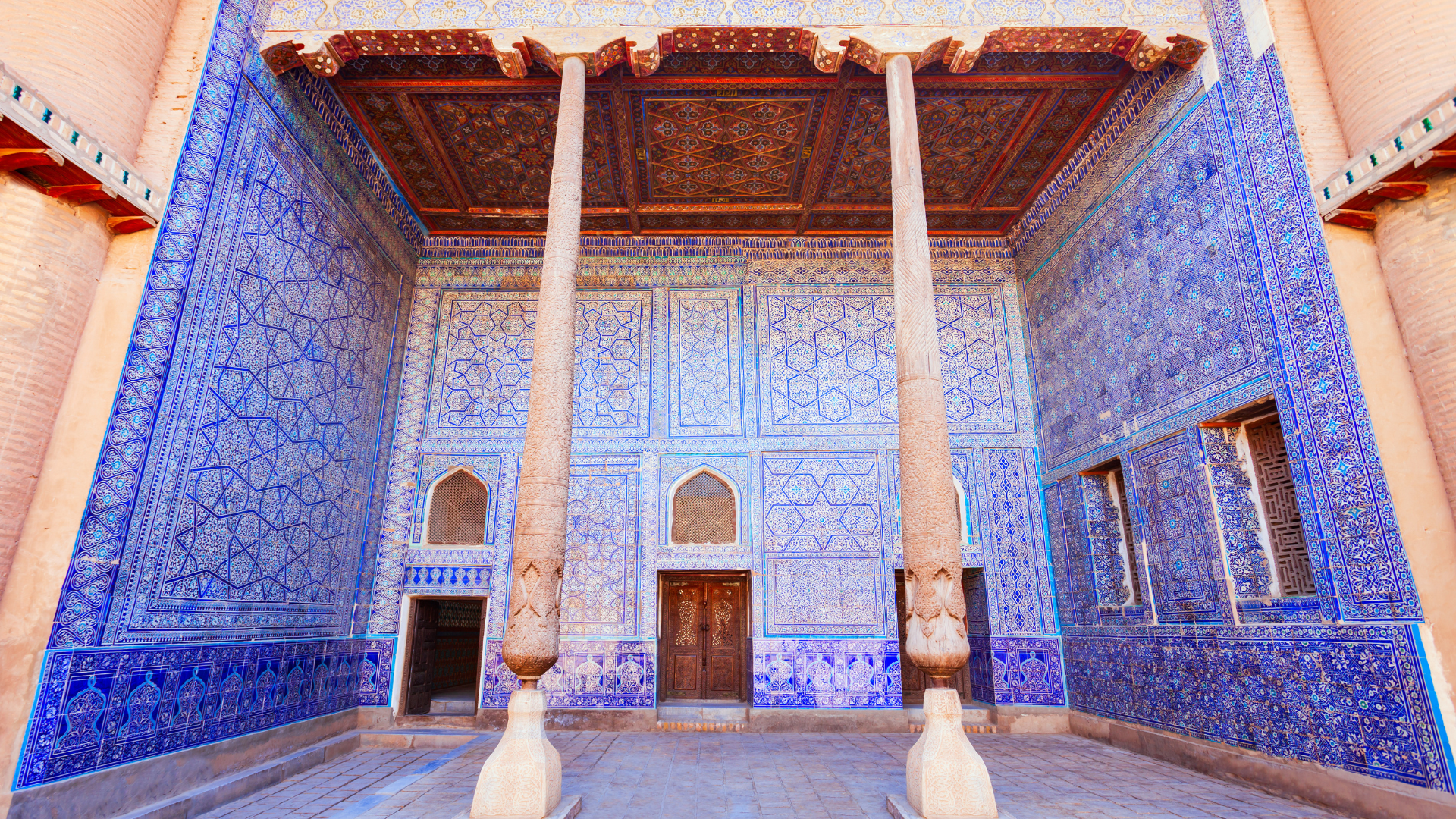
The historic district contains more than fifty monuments. The Muhammad Amin Khan Madrasa, the largest in Khiva, stands beside the Kalta Minor, a squat, turquoise-tiled minaret left unfinished in 1855. The Djuma Mosque is a forest of more than two hundred carved wooden columns, a few thought to date back to the 10th century. Kunya Ark was the fortified residence of the khans, and the mausoleum of Pahlavan Mahmud honors the 14th-century poet, wrestler, and patron saint of the city. The Islam Khodja minaret and madrasa, built in 1910, were among the last major monuments of the khanate. Finish at the small Avesta Museum, devoted to the Zoroastrian scriptures. (B/L/D)
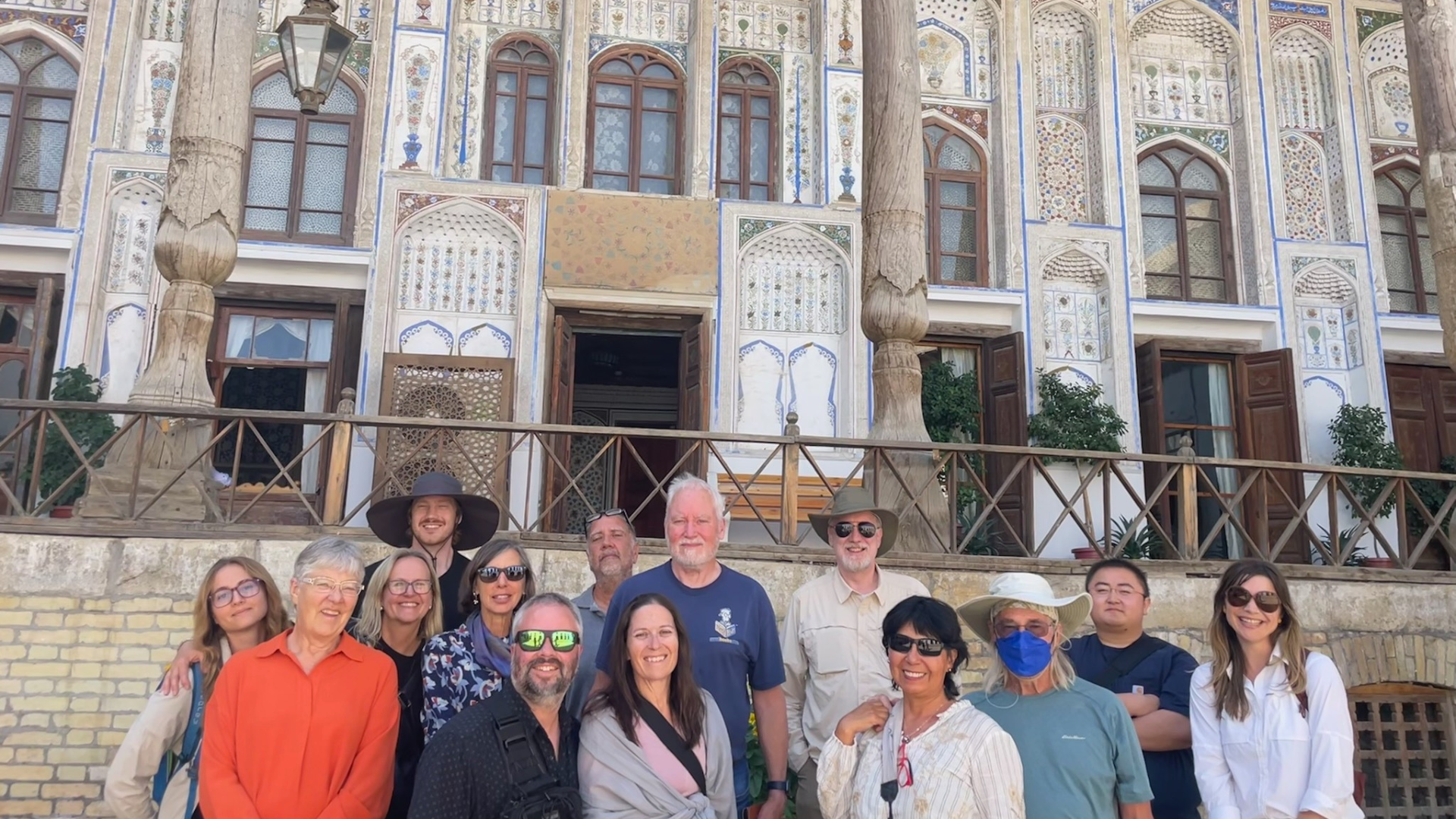
Board an early high-speed train to Bukhara, with breakfast served on board. This afternoon, visit the complex of Bahauddin Naqshband, the 14th-century founder of the Naqshbandi Sufi order and one of the most revered pilgrimage sites in Central Asia; it is a component of the UNESCO-listed Silk Roads: Zarafshan-Karakum Corridor. Continue to Chor Minor, the four-towered gatehouse of a madrasa built in 1807, and the House Museum of Fayzulla Khodjaev, a 19th-century merchant’s home with carved and painted reception rooms. End with free time in Bukhara’s Jewish Quarter, home to a community that has lived here for centuries, and a visit to its synagogue. Dinner is at a local restaurant.
Overnight for two nights at the Alexia Suite Hotel in Bukhara. (B/L/D)
More than 2,000 years old, Bukhara has long been a center of trade, learning, and faith, and its historic center is the most complete medieval city in Central Asia and a UNESCO World Heritage Site.
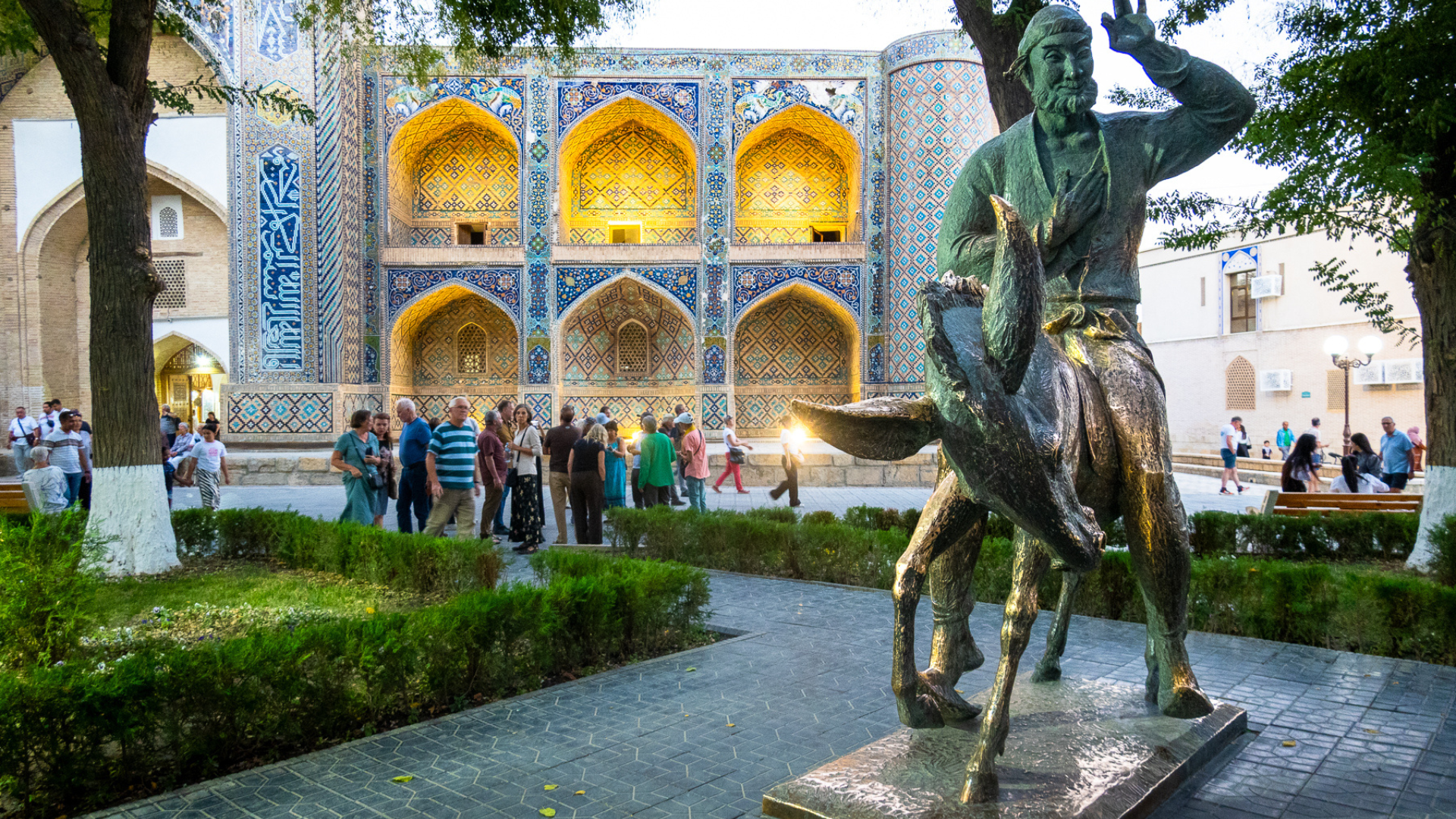
Begin at the Ark, the fortress-palace of Bukhara’s rulers for more than a thousand years, and cross to the Bolo Hauz Mosque (1712), whose tall carved wooden columns are reflected in the pool before it. The tomb of Ismail Samani, built for the founder of the Samanid dynasty in the 10th century, is a landmark of early Islamic architecture: its patterned terracotta brickwork disguises walls six feet thick, and it has stood for more than a thousand years. Nearby, the Chashma-Ayub, or “Job’s Spring,” shelters a sacred well beneath a conical Khwarazmian dome.
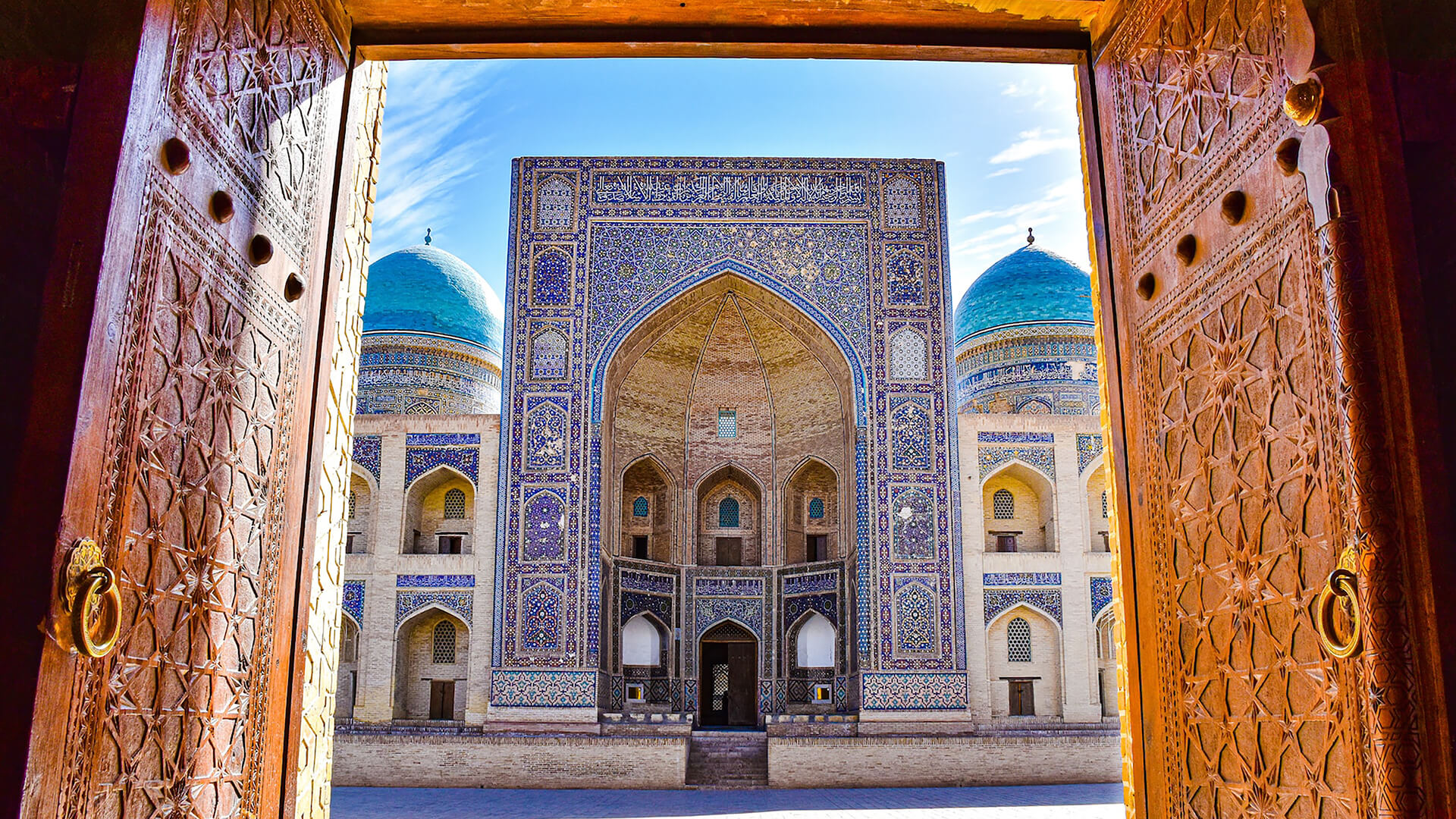
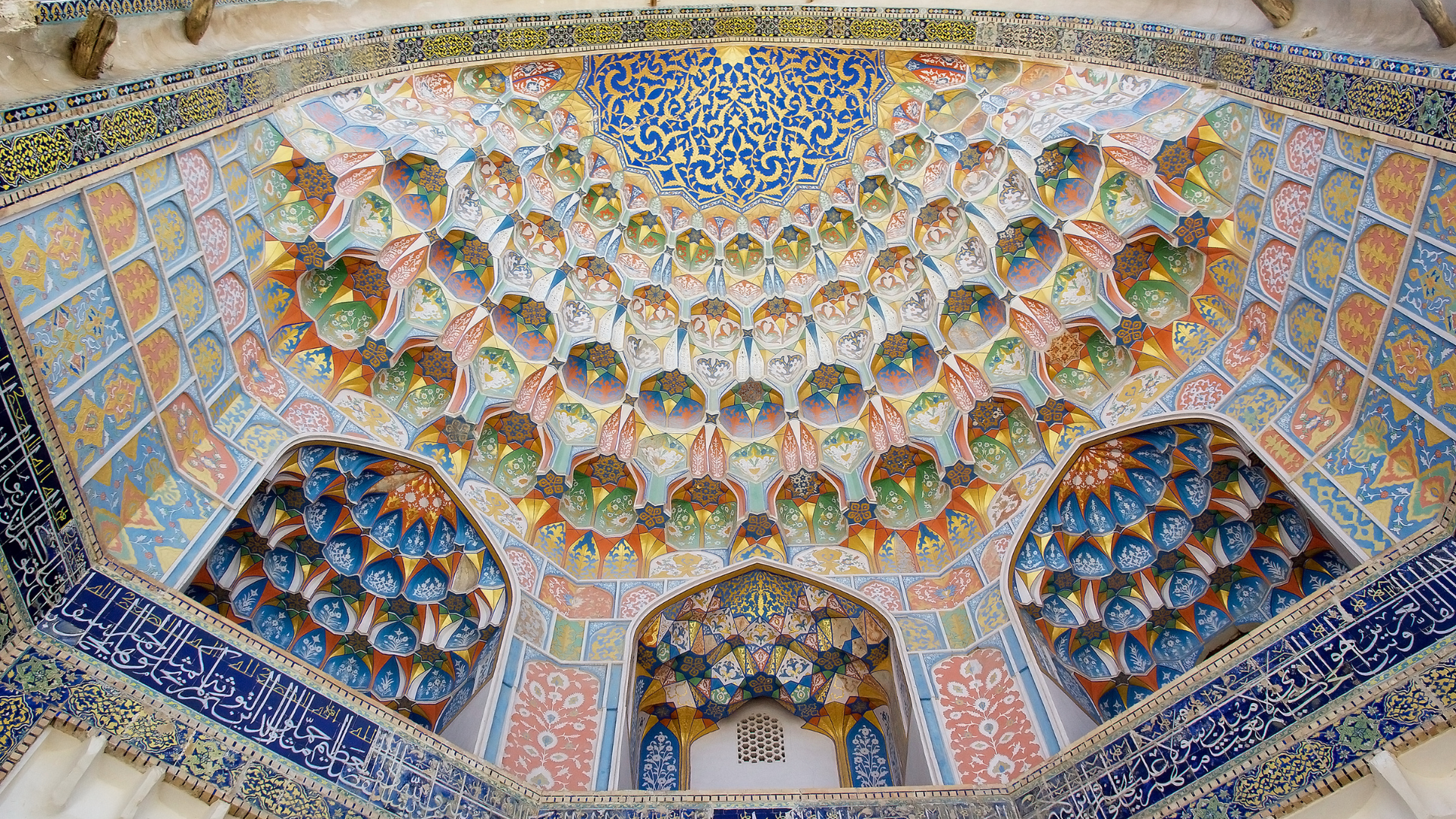
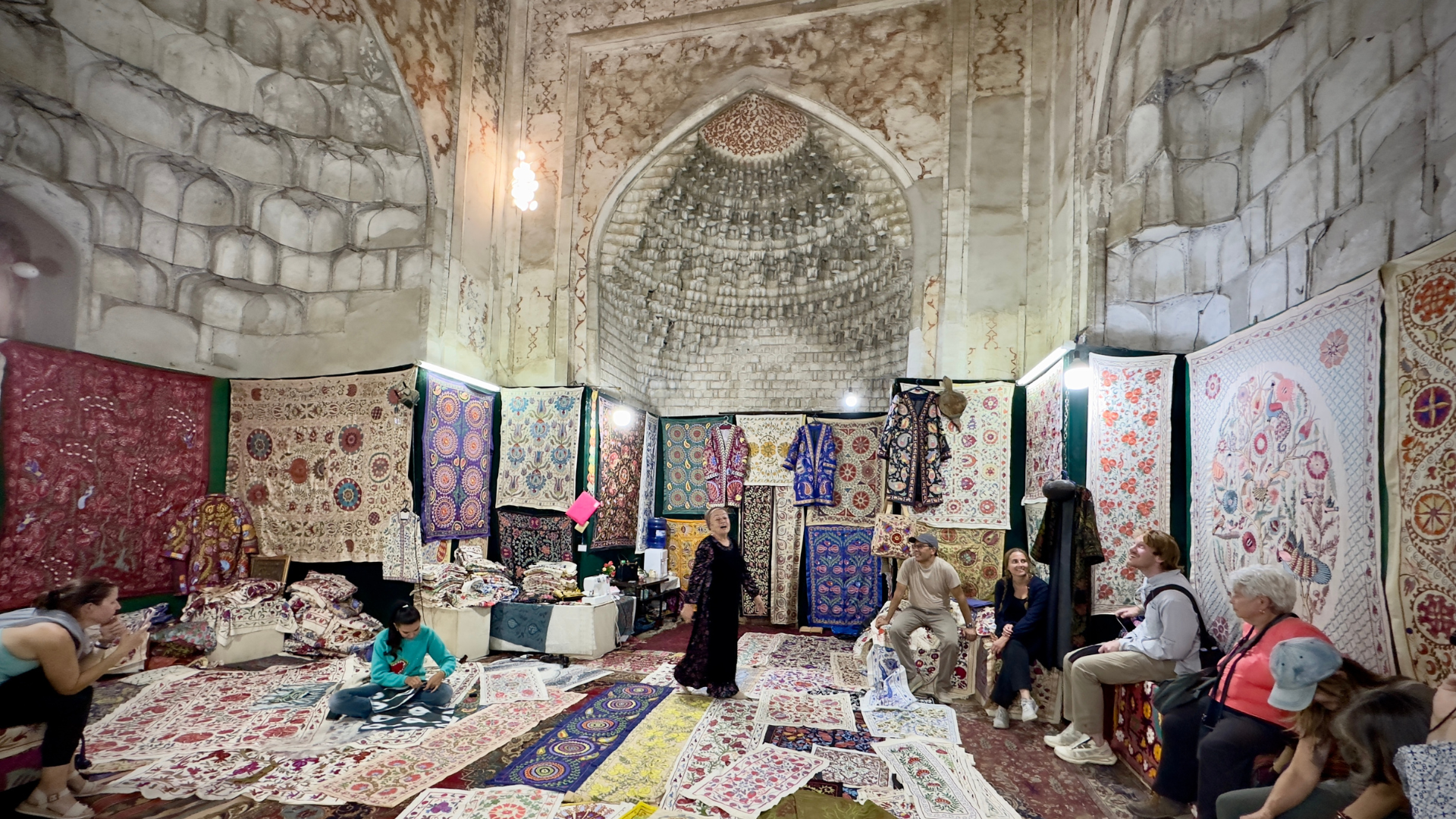
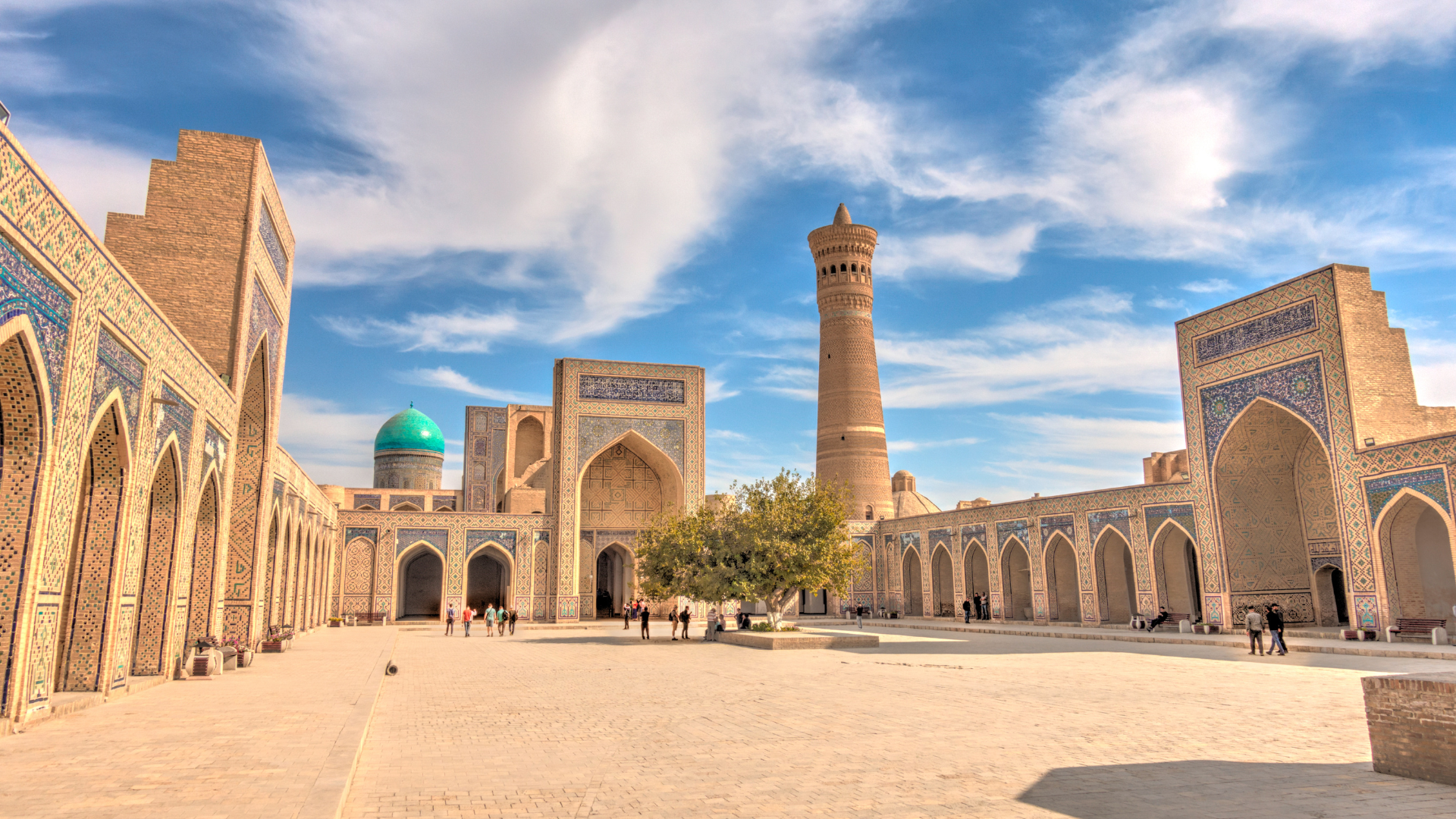
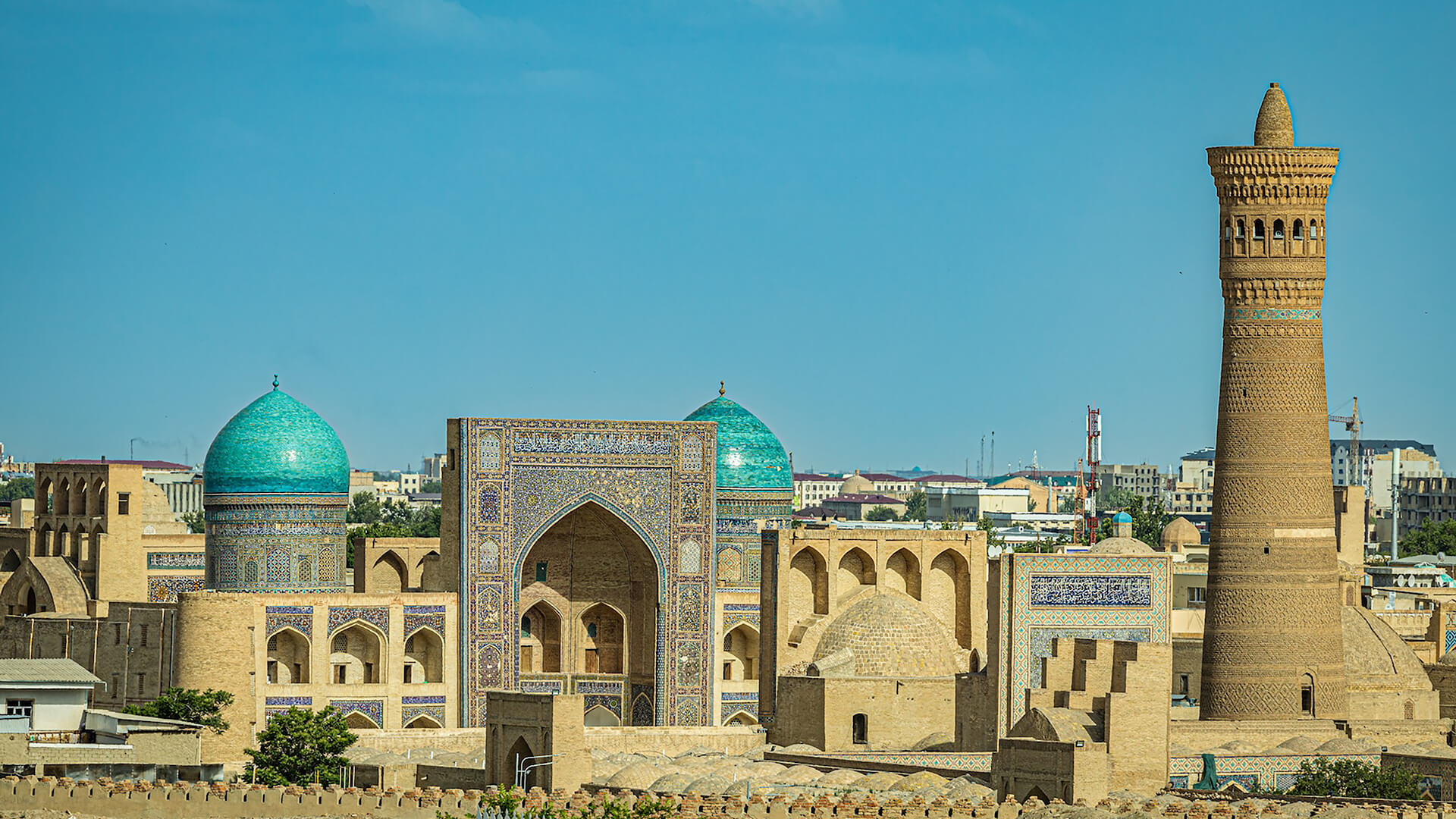
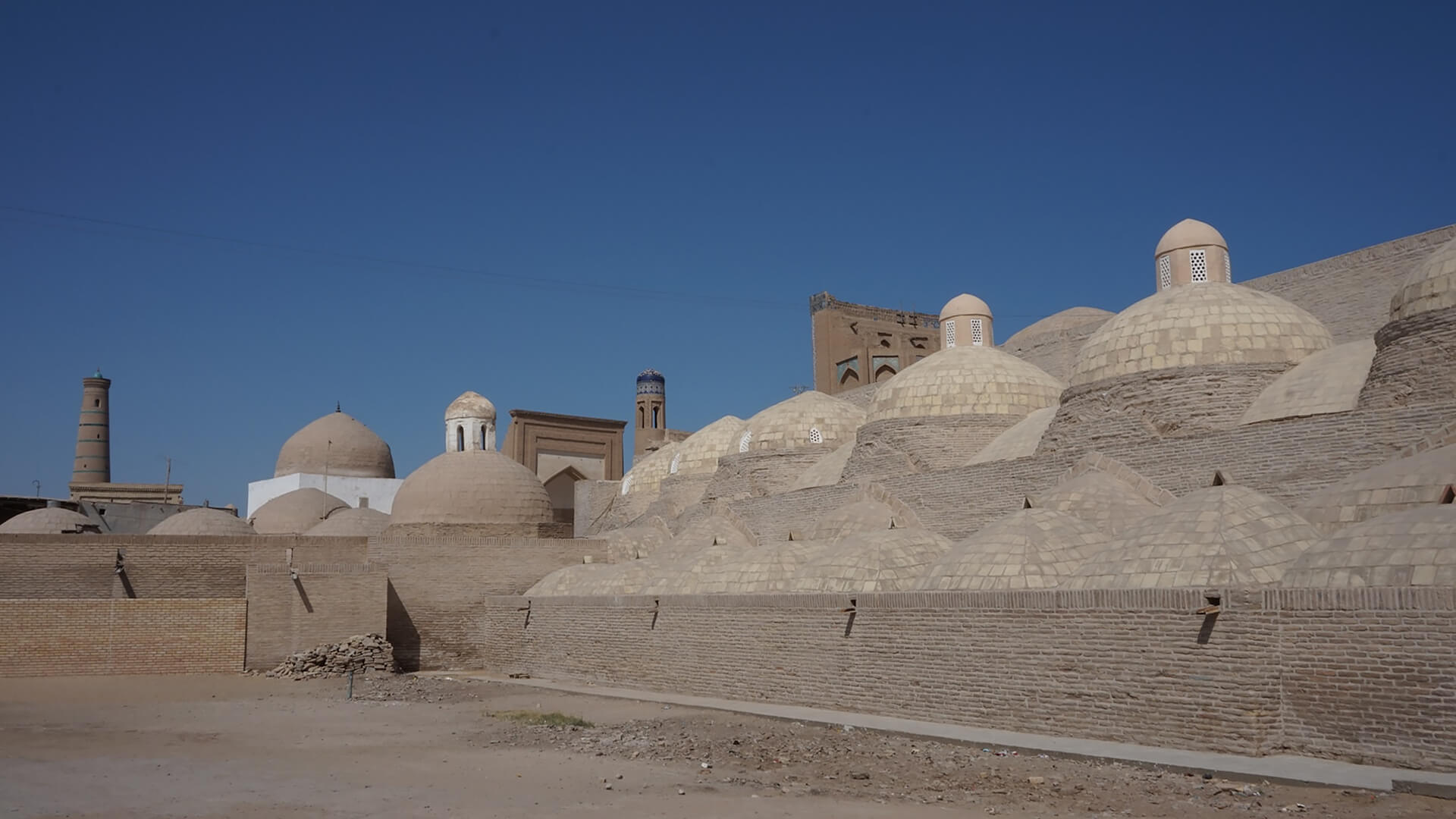
At the heart of the city, the Poi Kalon ensemble gathers the Kalon Mosque, the Mir-i Arab Madrasa, and the Kalon Minaret. Built in 1127 and standing almost 150 feet tall, the minaret rests on deep foundations designed to absorb earthquakes; legend holds that Genghis Khan ordered it spared when he sacked the city. The Ulugh Beg Madrasa (1417) is the oldest surviving madrasa in Central Asia. Walk through the covered market of Tim Abdullah Khan and the domed trading halls, where money changers and hat sellers once worked, and visit the Maghoki-Attar Mosque, thought to stand on the remains of a pre-Islamic temple. End the day at Lyabi-Hauz, the tree-shaded pool where the city gathers in the evening. (B/L/D)
Today you travel by road to Samarkand, arriving on Navruz, the Persian New Year celebrated at the spring equinox and recognized by UNESCO as part of the Intangible Cultural Heritage of Humanity. En route, stop at the Gijduvan Crafts Center, a family-run ceramics workshop that uses centuries-old techniques (foot-powered wheels, wood-fired kilns, and locally made glazes) to carry its craft into the present.
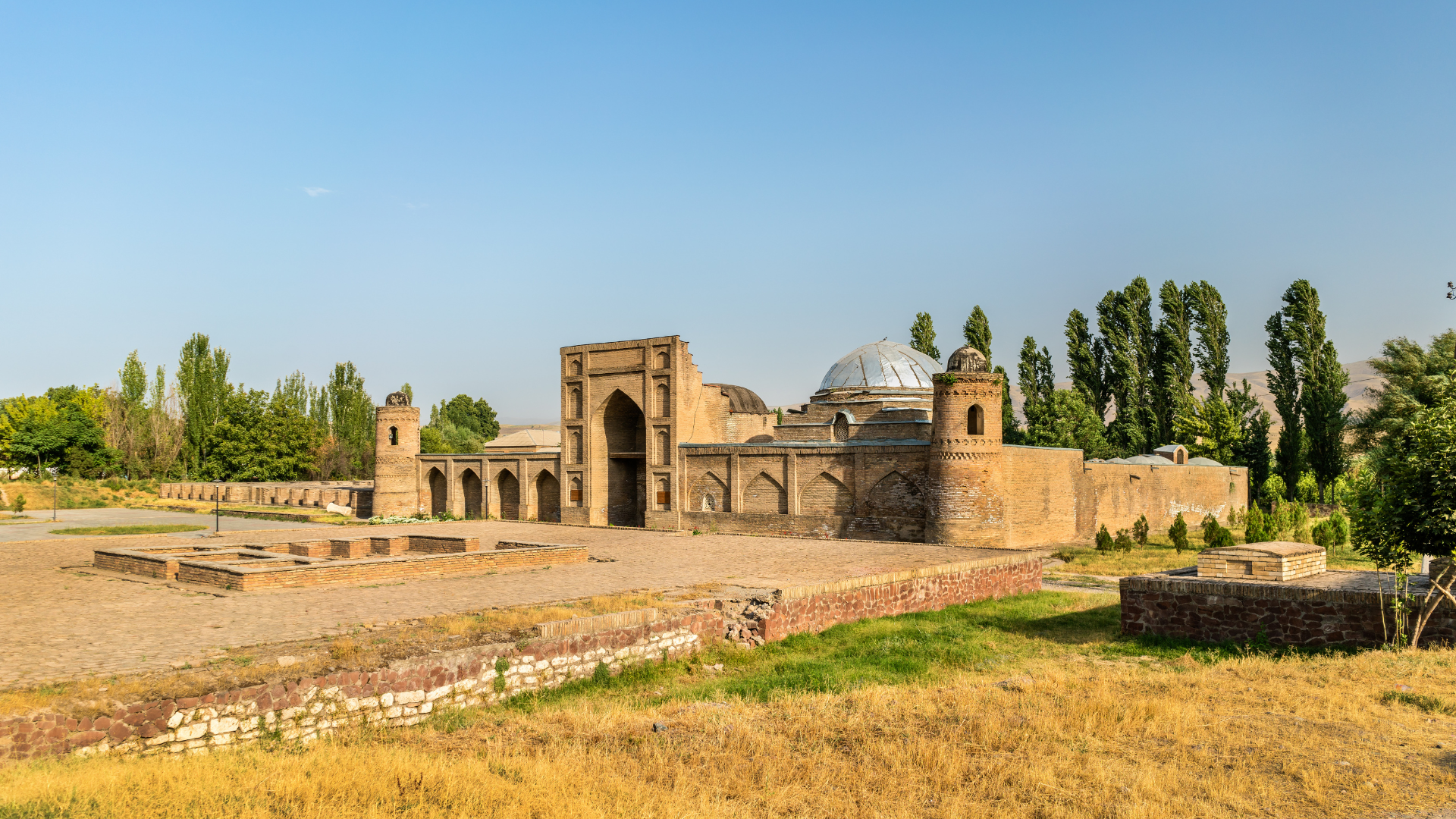
Continue to Rabati Malik, the royal caravanserai built by the Karakhanid ruler Shams al-Mulk in the 1070s. Its massive entrance portal still stands, and across the road is its domed sardoba, a covered cistern that supplied travelers with water. Both are components of the UNESCO-listed Silk Roads: Zarafshan-Karakum Corridor. In Samarkand, join in a Navruz celebration. Overnight for three nights at the Superior Grand Hotel in Samarkand. (B/L/D)
Depart early for the border and cross into Tajikistan at Sarazm, named for the nearby proto-urban settlement of the 4th and 3rd millennia BC, a UNESCO World Heritage Site. A short drive brings you to Ancient Panjakent, where (if available) we will have a private tour with a member of the excavation team.
Between the 5th and 8th centuries, Panjakent was a prosperous Sogdian city of merchants and craftsmen, with houses, markets, temples, and a citadel. It was abandoned after the Arab conquest in the 8th century; its last ruler, Devashtich, retreated to a fortress on Mount Mugh, where a cache of Sogdian documents was found in 1933. The wall paintings excavated at Panjakent, depicting epic heroes, banquets, and gods, are among the most important sources for Sogdian life and belief, and Panjakent is now a component of the Silk Roads: Zarafshan-Karakum Corridor. Time permitting, visit the Rudaki Museum, named for the 10th-century poet often called the father of Persian poetry, whose collection includes finds from Sarazm and Panjakent.
After lunch in Panjakent, return across the border to Samarkand. (B/L/D)
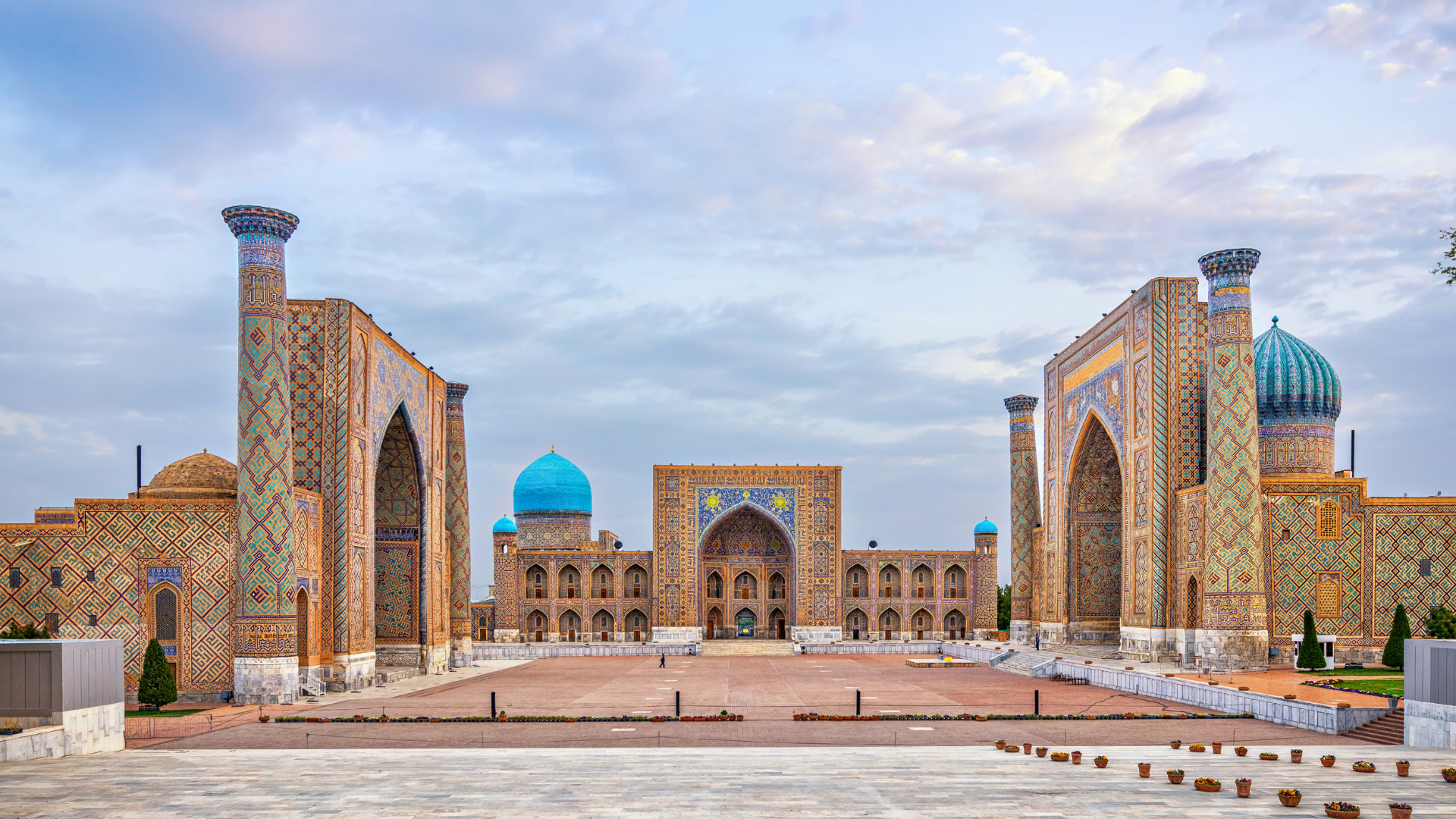
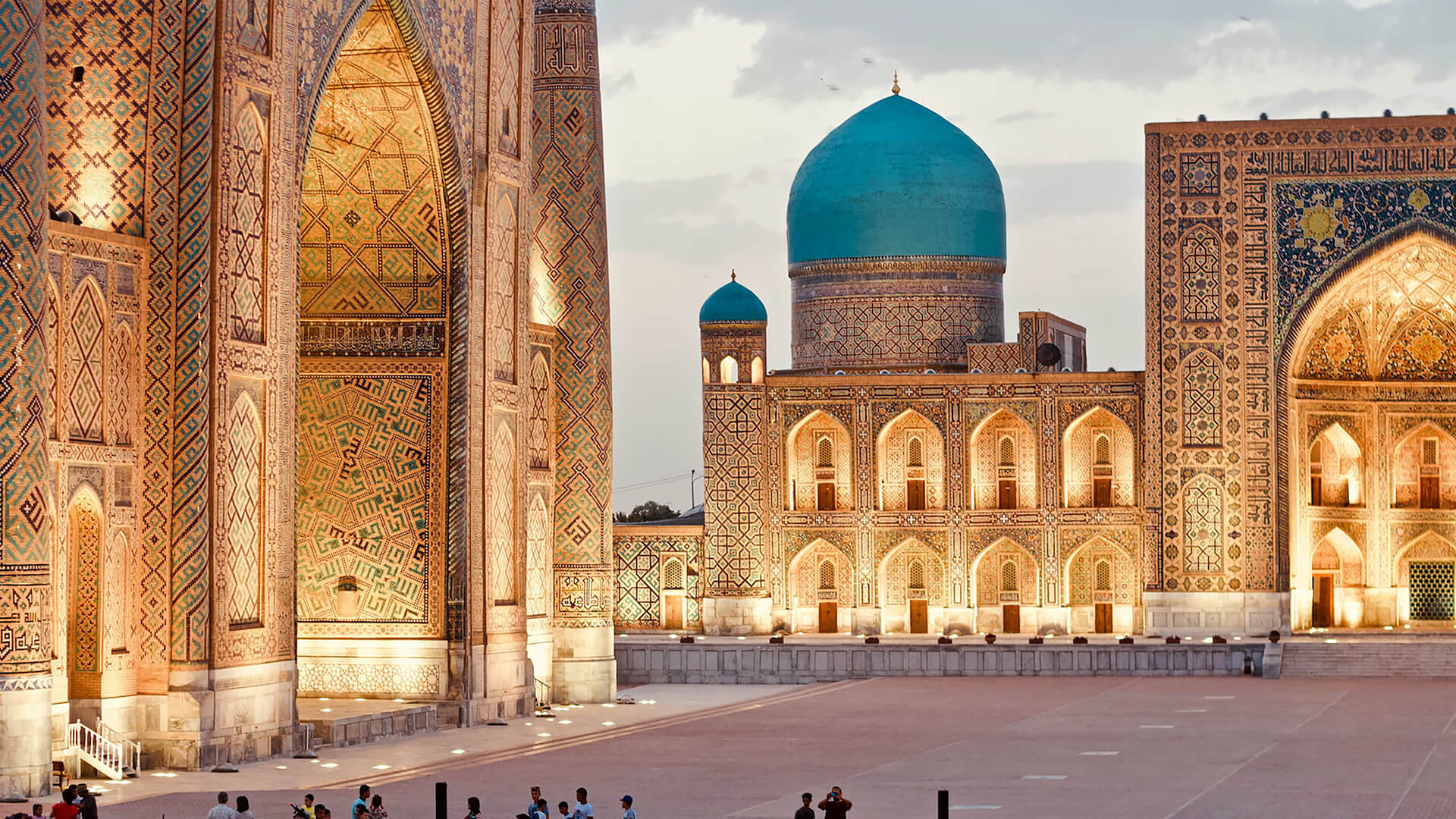
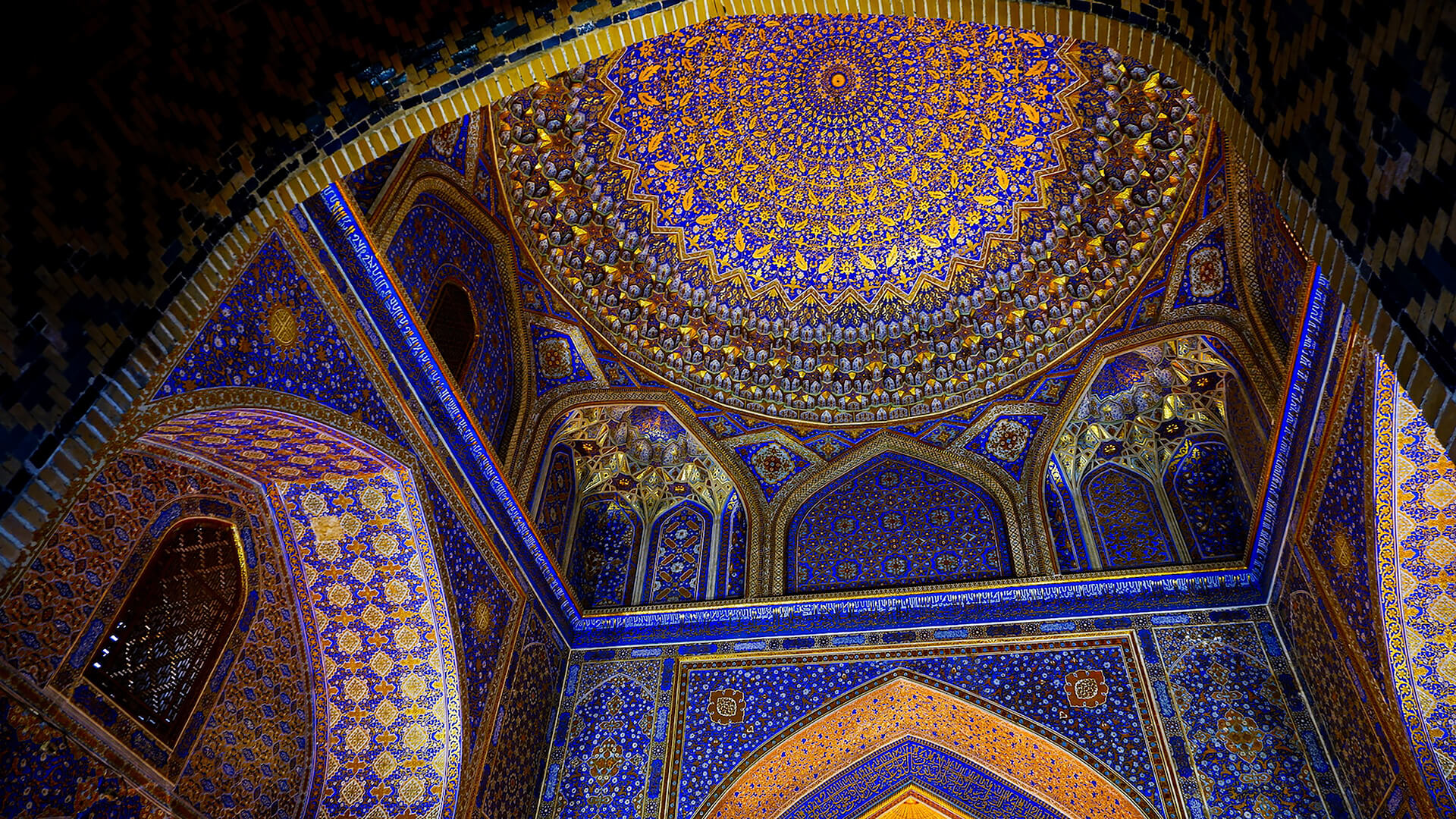
Samarkand, a UNESCO World Heritage Site, was Tamerlane’s capital. Begin at the Registan, framed by three madrasas. The Ulugh Beg Madrasa (1417–1420) was built by Tamerlane’s grandson as a school of theology and science. The 17th-century Sher Dor Madrasa facing it has a portal showing lion-like tigers chasing deer beneath human-faced suns, a figural motif rarely seen in Islamic architecture. Between them, the Tilla Kari Madrasa holds a mosque whose domed hall is covered in gilded decoration.
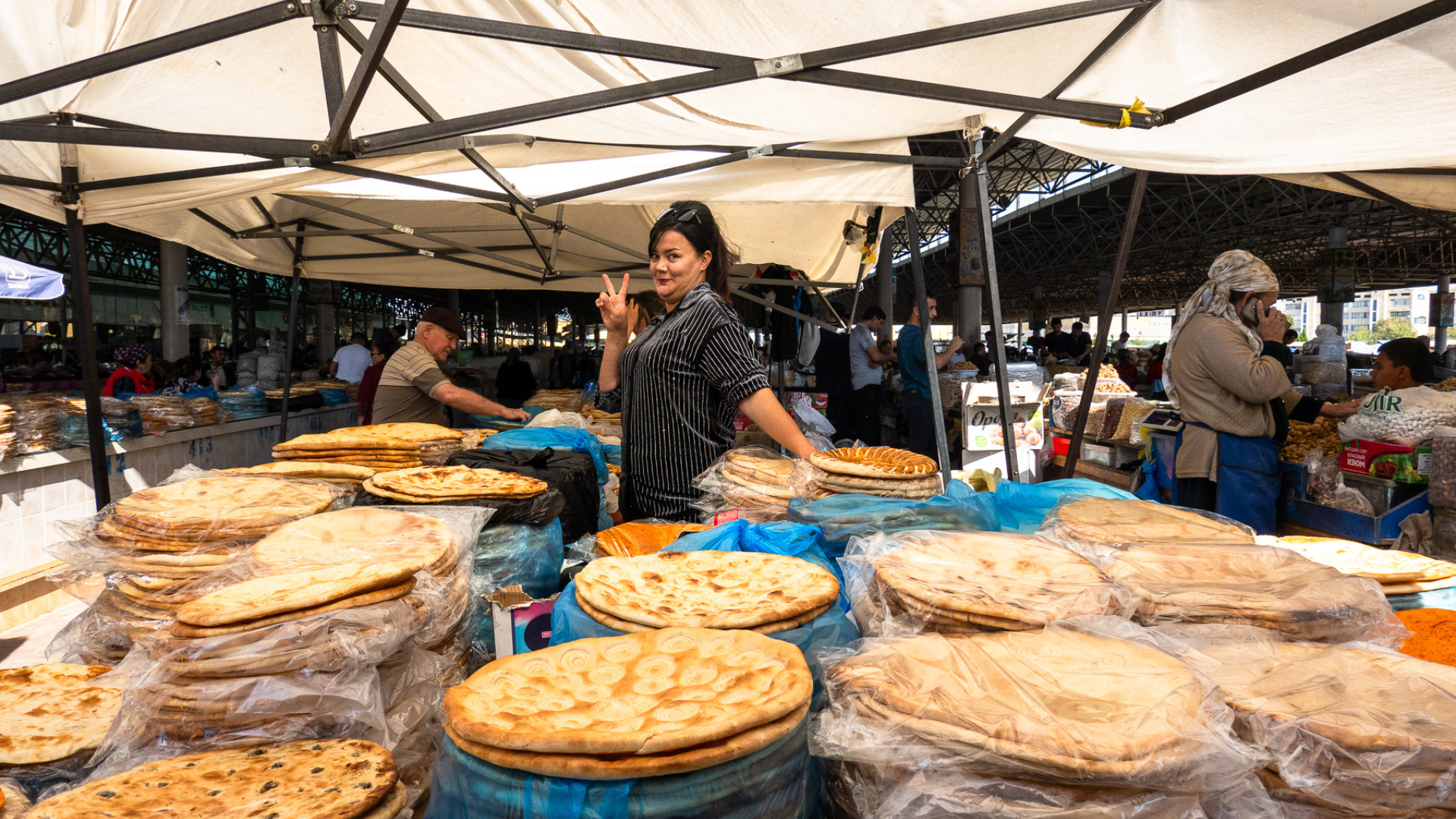
Ulugh Beg, governor of Samarkand, was also an astronomer. In the 1420s he built an observatory around a huge meridian arc cut into the hillside, and the star catalogue compiled there was the most complete since Ptolemy’s. After visiting the observatory and its museum, enjoy free time in the bazaar and lunch in a private home.
This afternoon, visit the Afrasiyab Museum on the site of pre-Mongol Samarkand. Its centerpiece is the 7th-century “Ambassadors’ Painting” from the palace of the Sogdian king Varkhuman, showing envoys from across Asia bringing gifts to his court. Nearby is the Tomb of Daniel, a shrine honored by Muslims, Jews, and Christians, and you will visit the Institute of Archaeology. End at the Gur-Emir Mausoleum, beneath whose ribbed turquoise dome lies Tamerlane, his grandson Ulugh Beg, and other members of the dynasty. Dinner is at Karimbek, known for its shashlik. (B/L/D)
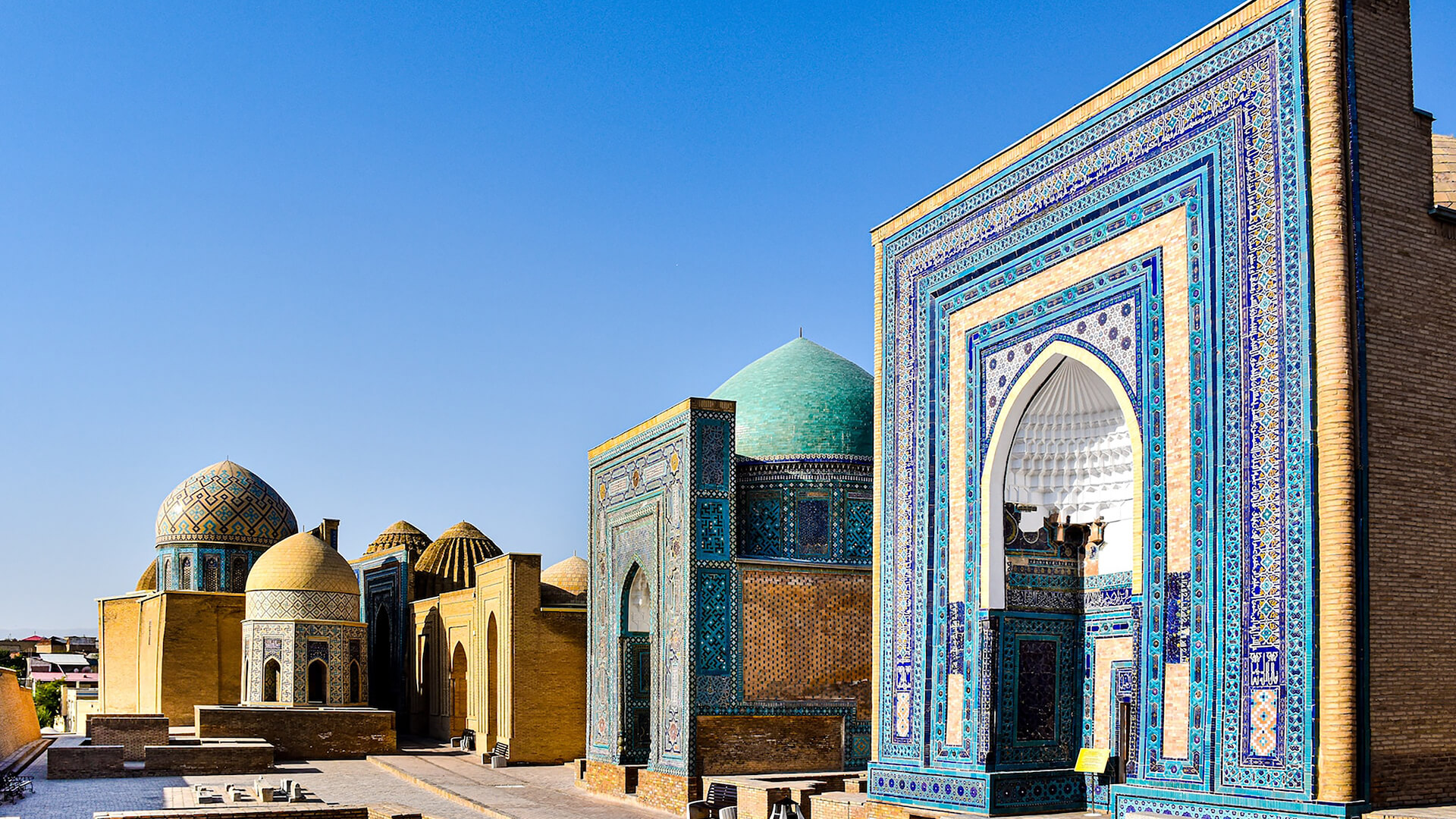
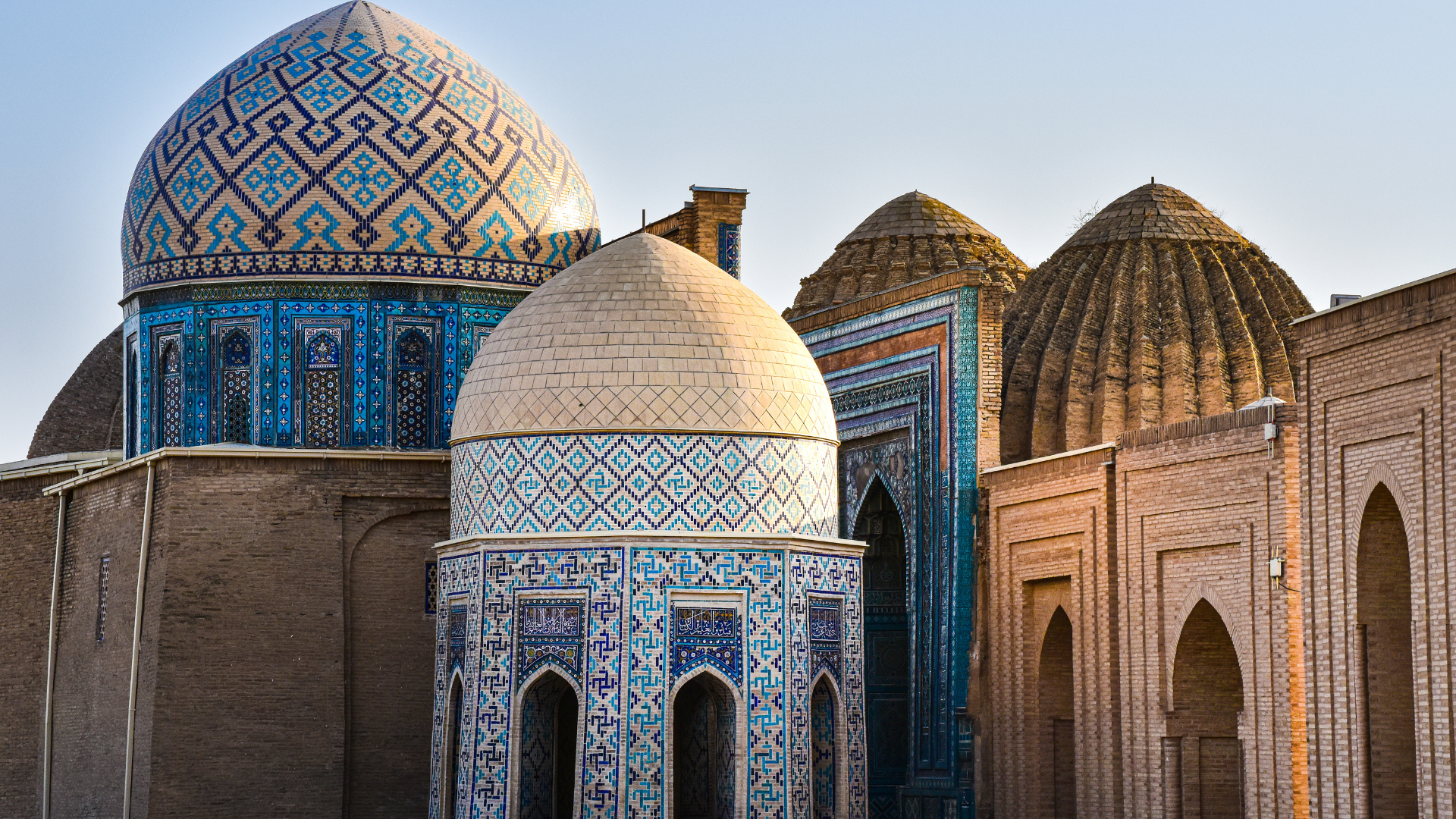
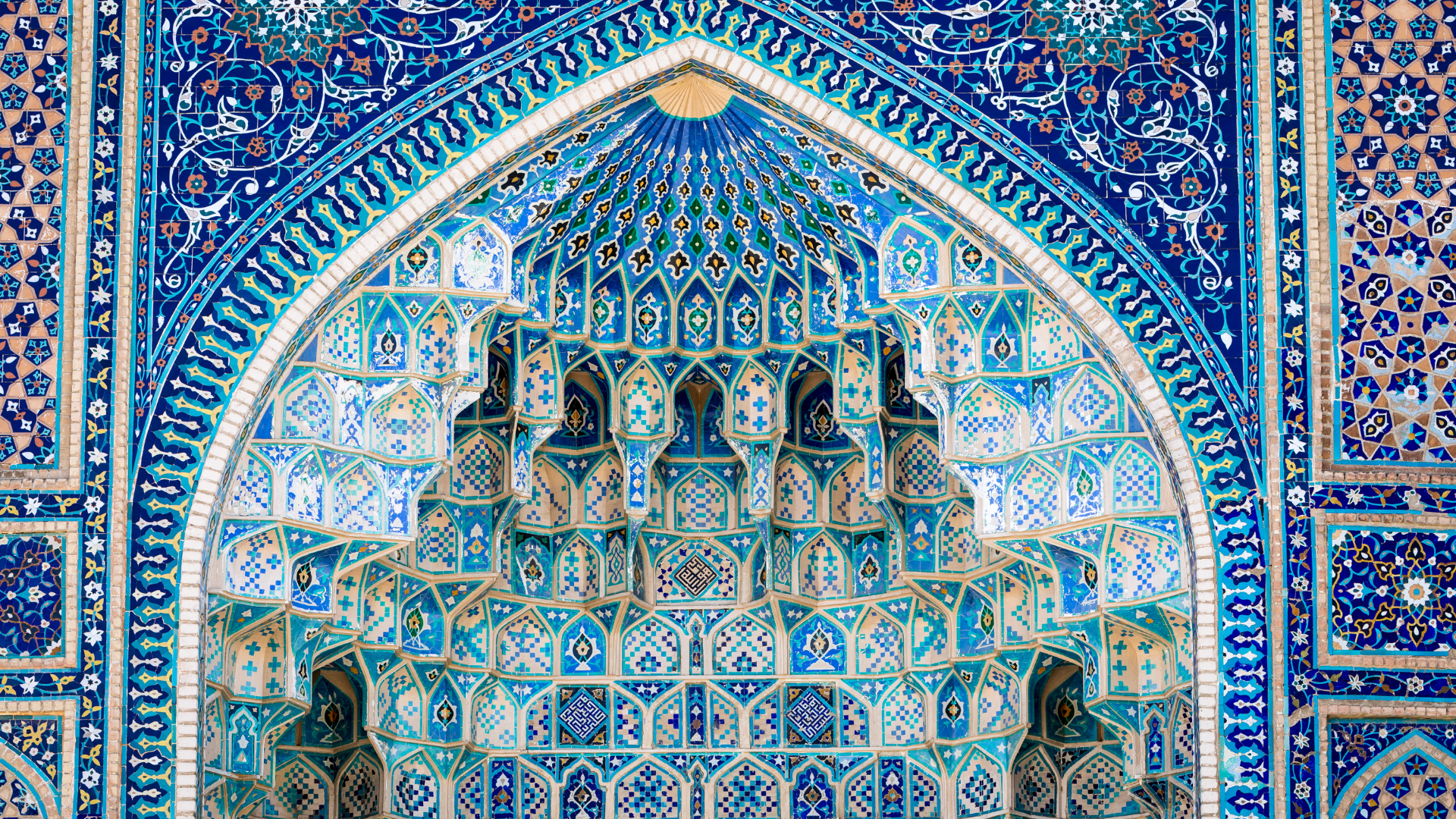
This morning, walk the Shah-i Zinda, an avenue of tombs climbing the slope of ancient Afrasiyab. Its mausoleums, many built for Tamerlane’s family and court, are faced with some of the finest glazed and carved tilework of the Timurid era. At the center of the complex is the shrine traditionally associated with Qusam ibn Abbas, a cousin of the Prophet. Then visit the Konigil paper workshop, where artisans revive the mulberry-bark paper Samarkand was famous for; tradition holds that papermaking reached the city from China in the 8th century.
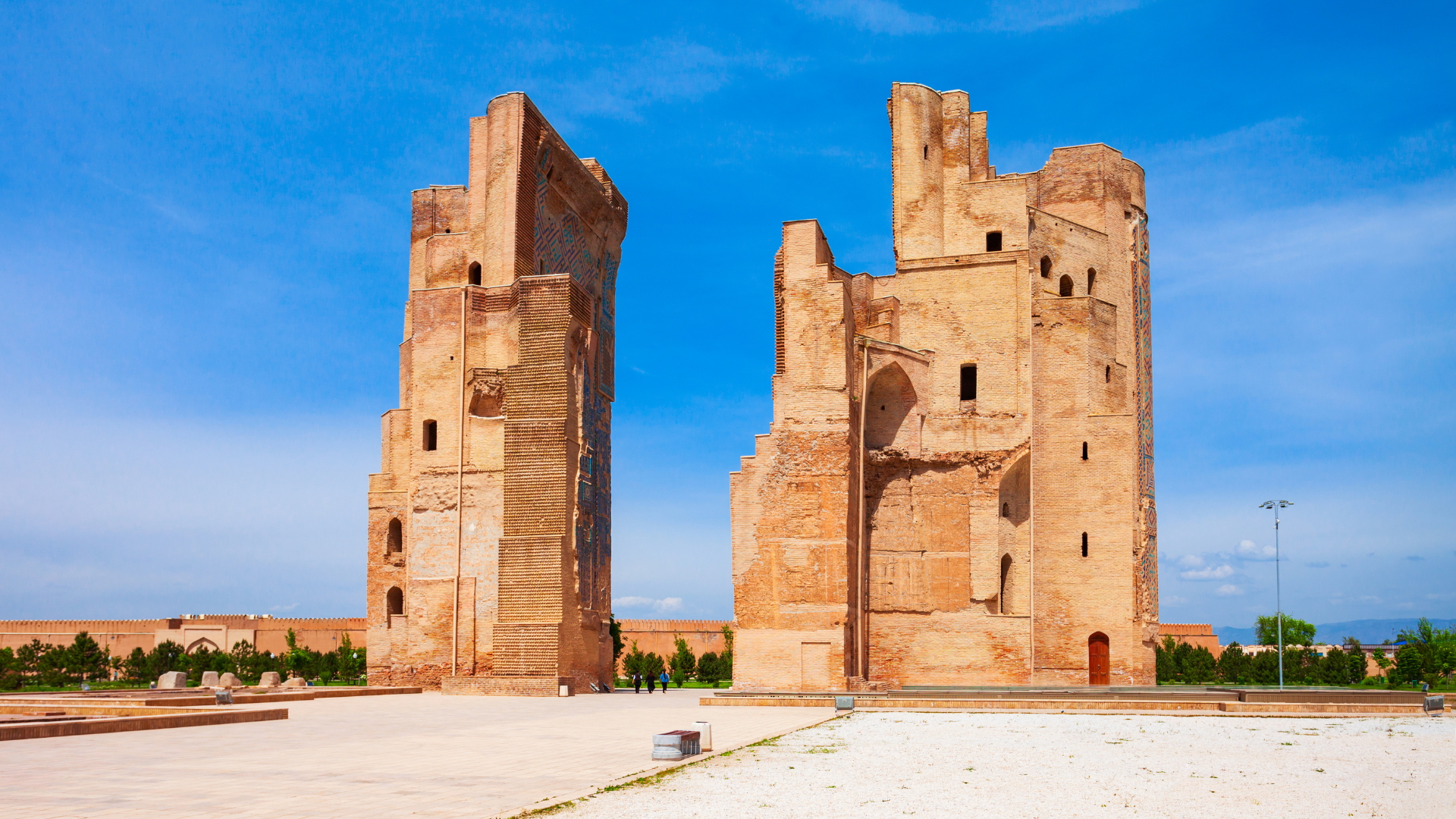
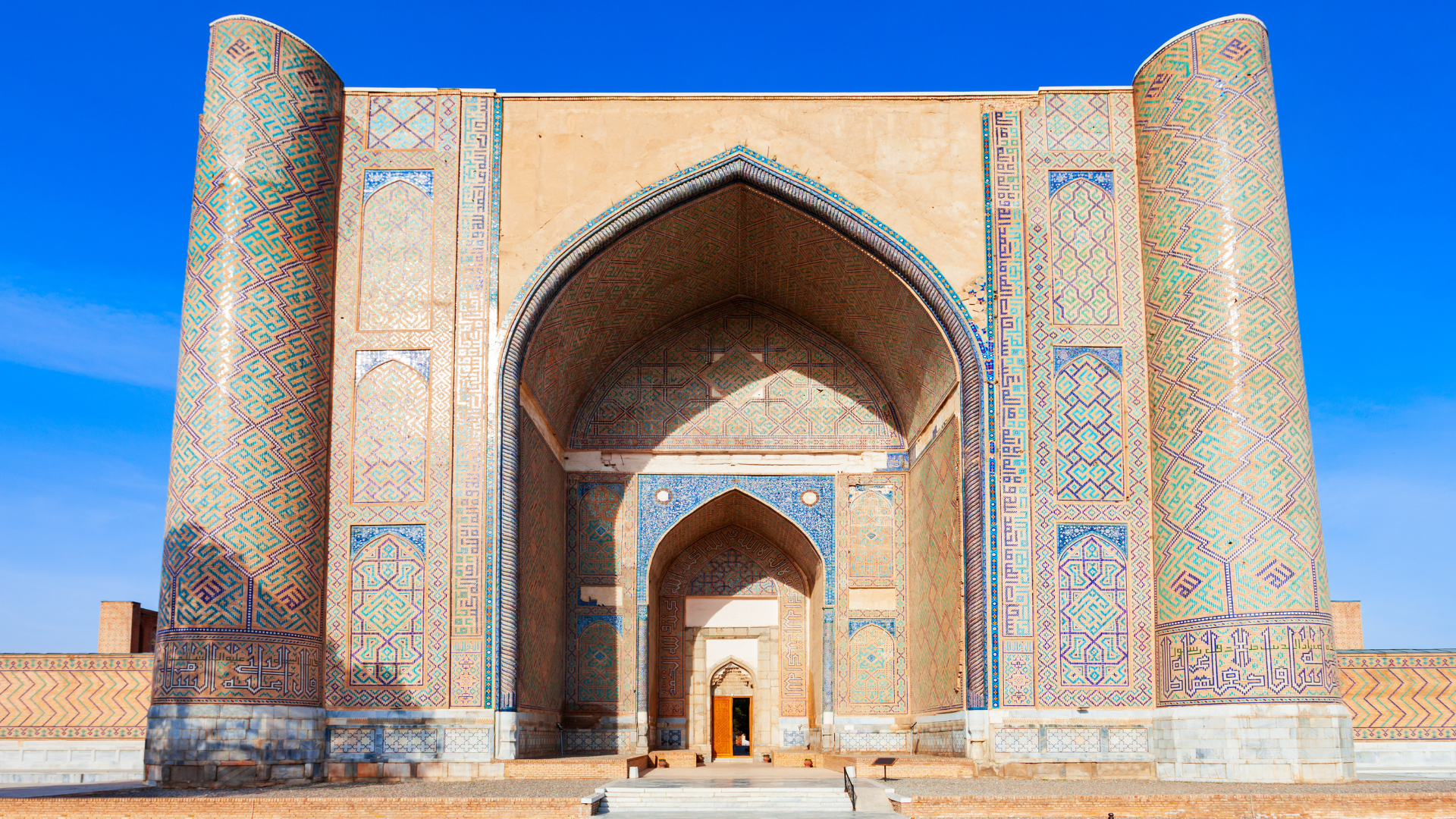
After lunch, visit the Bibi Khanum Mosque, built by Tamerlane after his Indian campaign of 1398–99 and in its day one of the largest mosques in the Islamic world. This evening, take a high-speed train to Tashkent, the capital of Uzbekistan. Overnight for two nights at the Hyatt Regency Tashkent. (B/L/D)
Begin at the Hazrati Imam complex, the religious heart of old Tashkent. The 16th-century Barak Khan Madrasa is decorated with glazed mosaic, and the nearby library houses a large early Quran traditionally associated with the third caliph, Uthman, one of the oldest surviving copies of the text. Continue to the Holy Assumption Cathedral, seat of the Russian Orthodox Church in Uzbekistan.
After lunch, take a walking tour of Soviet and post-independence Tashkent. Independence Square, once the largest city square in the Soviet Union, now centers on a globe showing Uzbekistan where a statue of Lenin once stood. The Navoi Theater was designed by Alexey Shchusev, architect of Lenin’s Tomb in Moscow, and completed in 1947. Then ride the Tashkent Metro, opened in 1977, where each station has its own decoration of marble, ceramic, and chandeliers. (B/L/D)
Enjoy a morning at leisure and lunch on your own before your flight to Almaty, Kazakhstan’s largest city, set beneath the snowcapped Trans-Ili Alatau range. This afternoon, visit the Zenkov Cathedral in Panfilov Park. Completed in 1907 and built almost entirely of wood, the Russian Orthodox cathedral survived the earthquake of 1911 that leveled much of the town.
Overnight for two nights at the Dostyk Hotel in Almaty. (B/D)
Walk through Panfilov Park and visit the Museum of Kazakh Folk Musical Instruments, housed in a wooden building also designed by Andrei Zenkov, where the collection of dombras, kobyz, and other instruments traces the music of the steppe. After lunch, drive about 30 miles east to Issyk, at the foot of the mountains. In 1969, archaeologists excavating the Issyk kurgan found the burial of a young Saka warrior of around the 4th century BC, dressed in a ceremonial costume of more than 4,000 gold ornaments. The “Golden Man” has become a national symbol of Kazakhstan, and the Issyk Museum offers a vivid introduction to the nomadic Saka culture that once ruled these steppes. (B/L/D)
Set out early for the drive west along the mountains to the Korday checkpoint, where you cross into Kyrgyzstan on foot. Lunch is en route. Continue to Bishkek, the Kyrgyz capital, for an afternoon visit to one or two of the city’s sites.
Overnight for three nights at the Hyatt Regency Bishkek. (B/L/D)
Drive east through the Chuy Valley to the Burana Tower, an 11th-century minaret that marks the site of Balasagun, a capital of the Karakhanid dynasty. Earthquakes have reduced the tower to about half its original height, and you can climb its interior stair for views over the valley. Around it lie the outlines of the ancient city and a field of balbals, carved stone grave markers of the Turkic nomads. Balasagun is a component of the UNESCO-listed Silk Roads: Chang’an-Tianshan Corridor.
Local families demonstrate the traditions of nomadic life: berkutchi flying golden eagles trained for the hunt, the making of felt and the raising of a yurt, and ulak tartysh, the horseback game played with a goat carcass.
This evening, enjoy a farewell dinner with a performance of Kyrgyz traditional music. (B/L/D)
This morning’s tour of Bishkek begins at Ala-Too Square and the monument to Manas, hero of the Kyrgyz epic that bears his name, one of the longest oral epics in the world. Visit the National Historical Museum and walk through Oak Park, the city’s oldest park.
After lunch, the rest of the day is at leisure. (B/L)
Transfer to the airport for early morning flights home. (B)