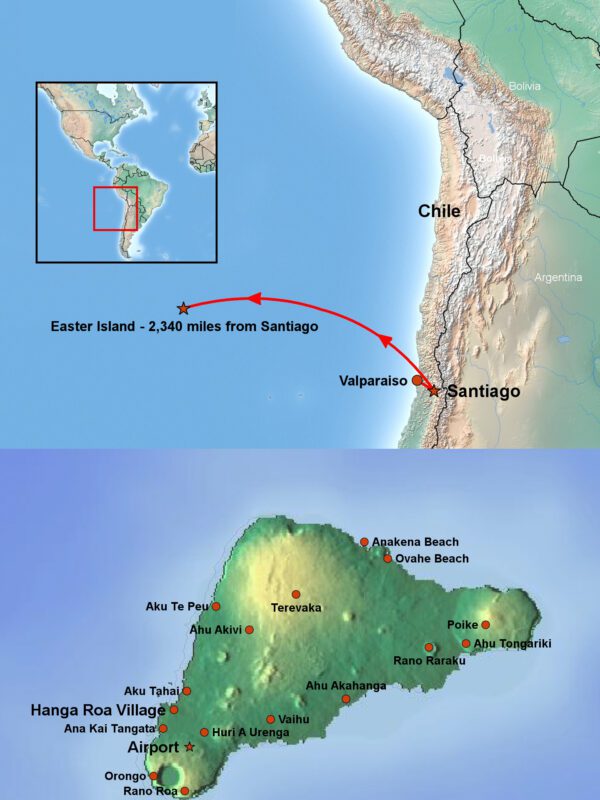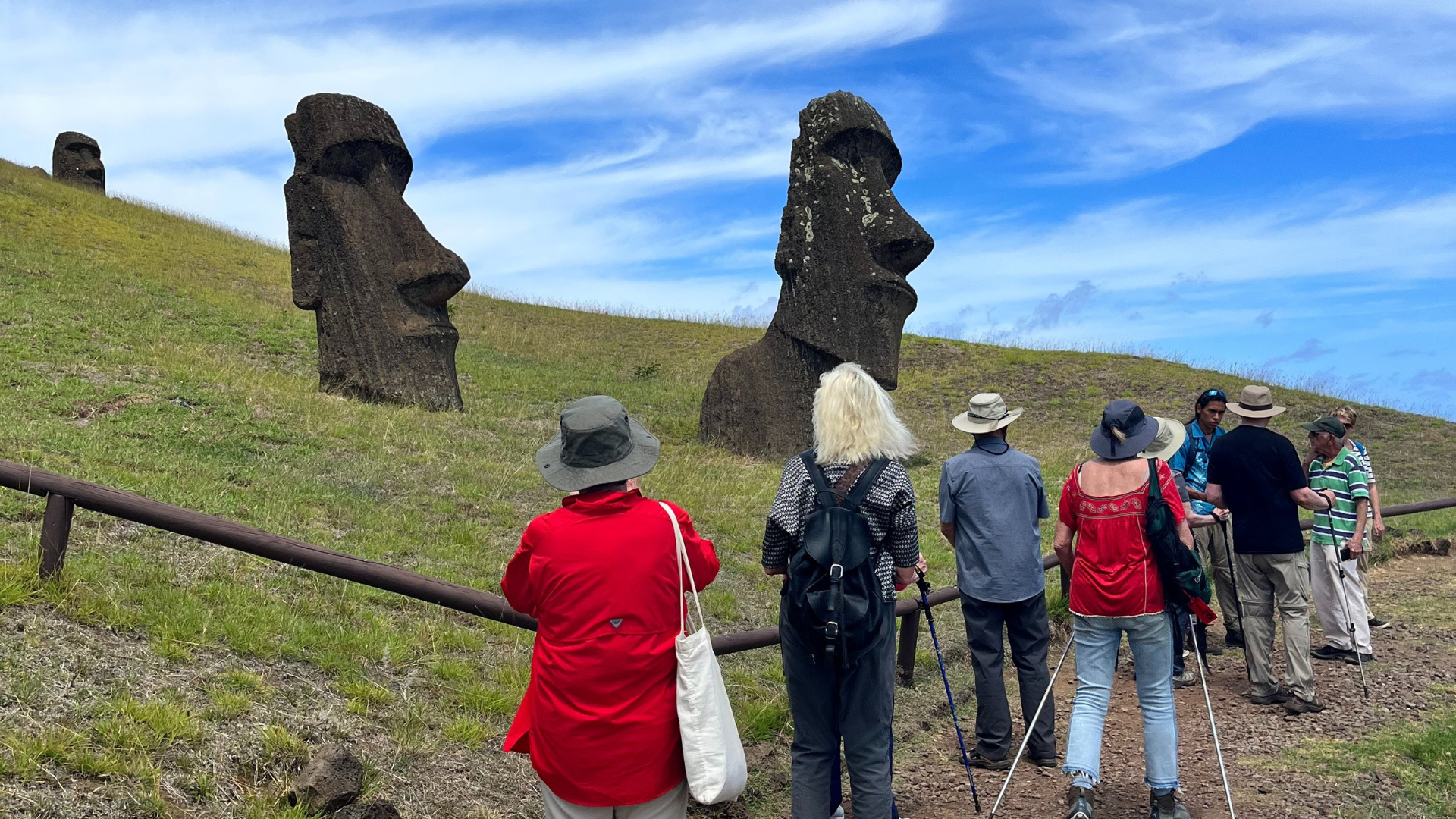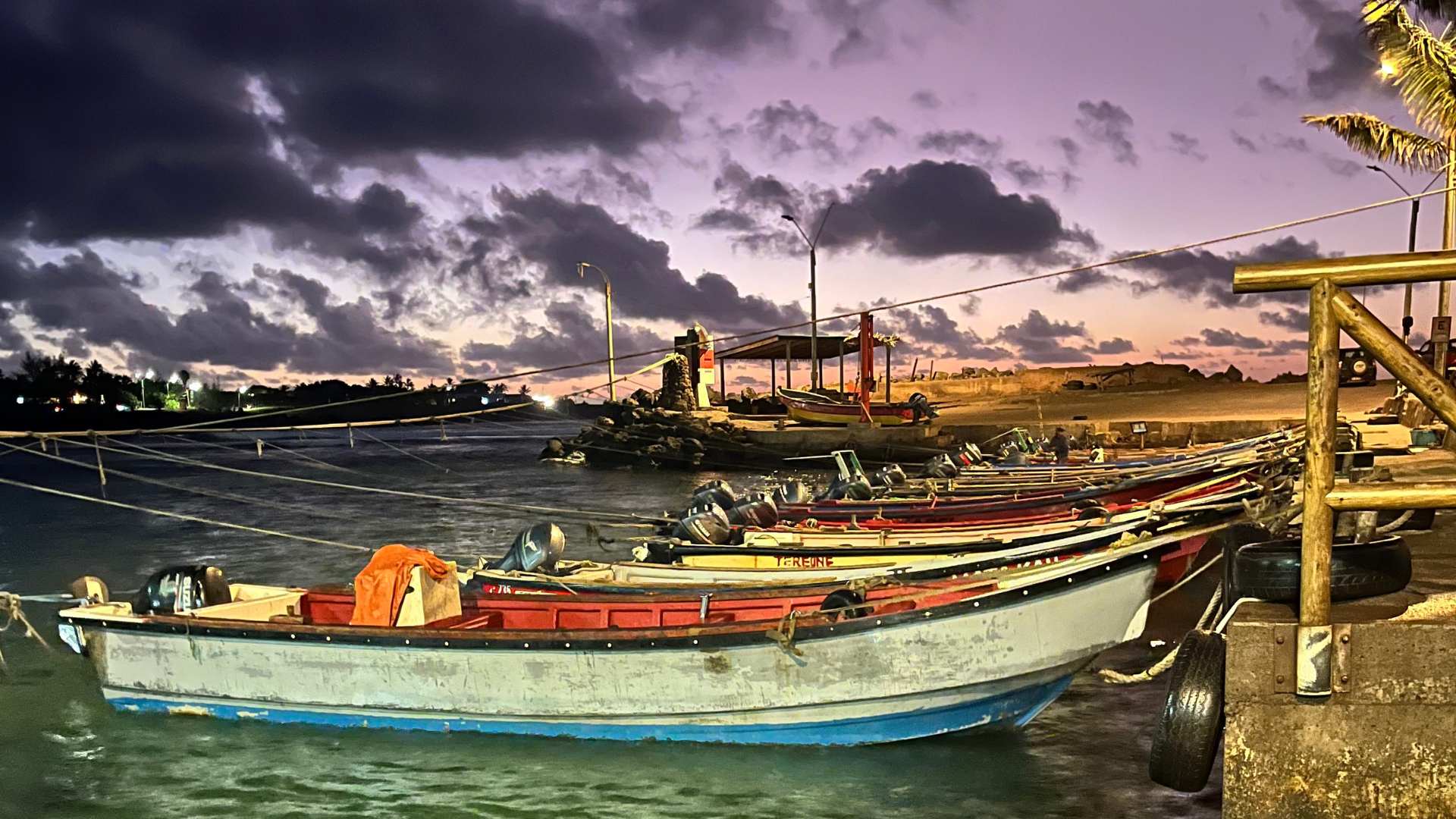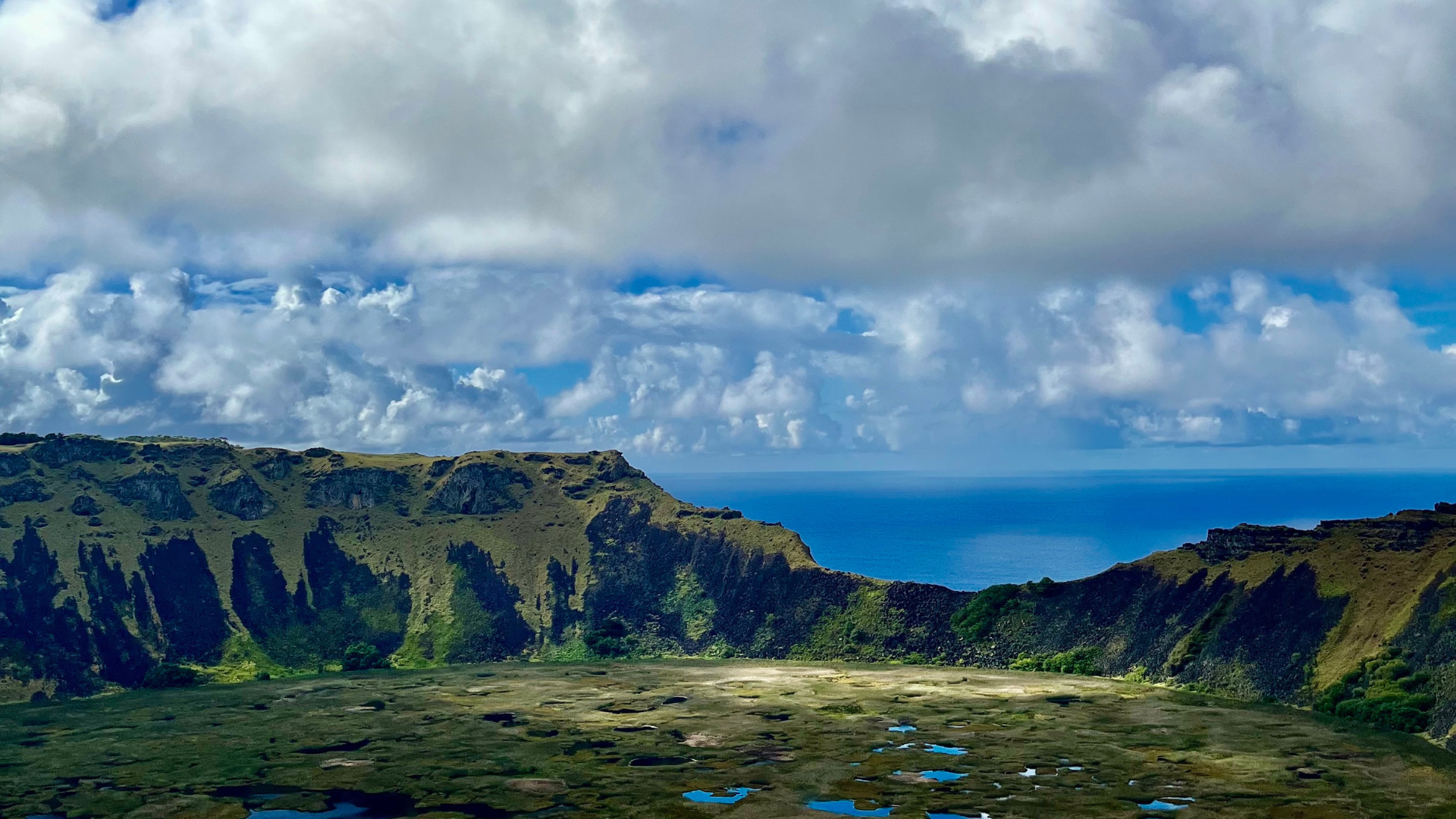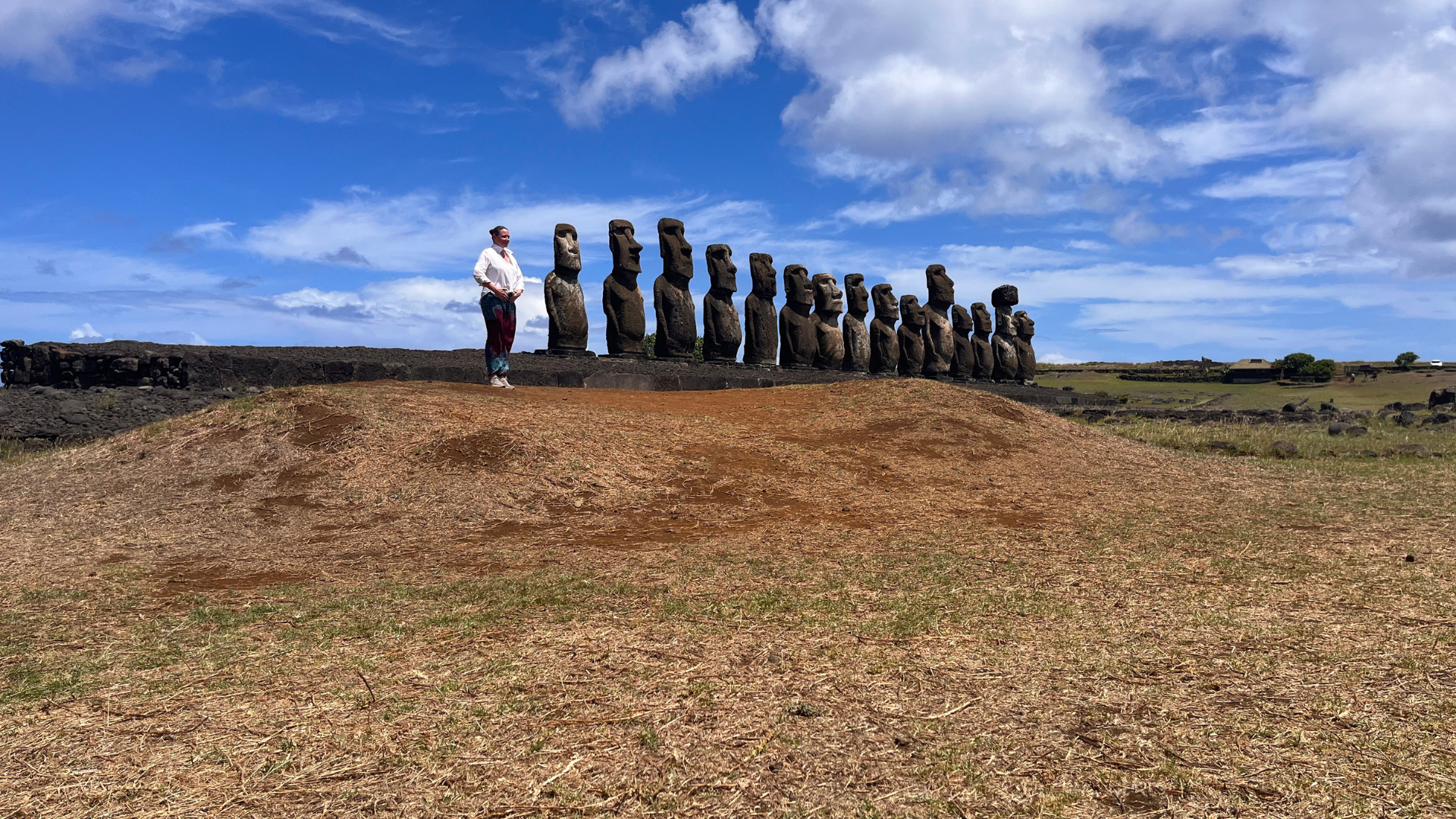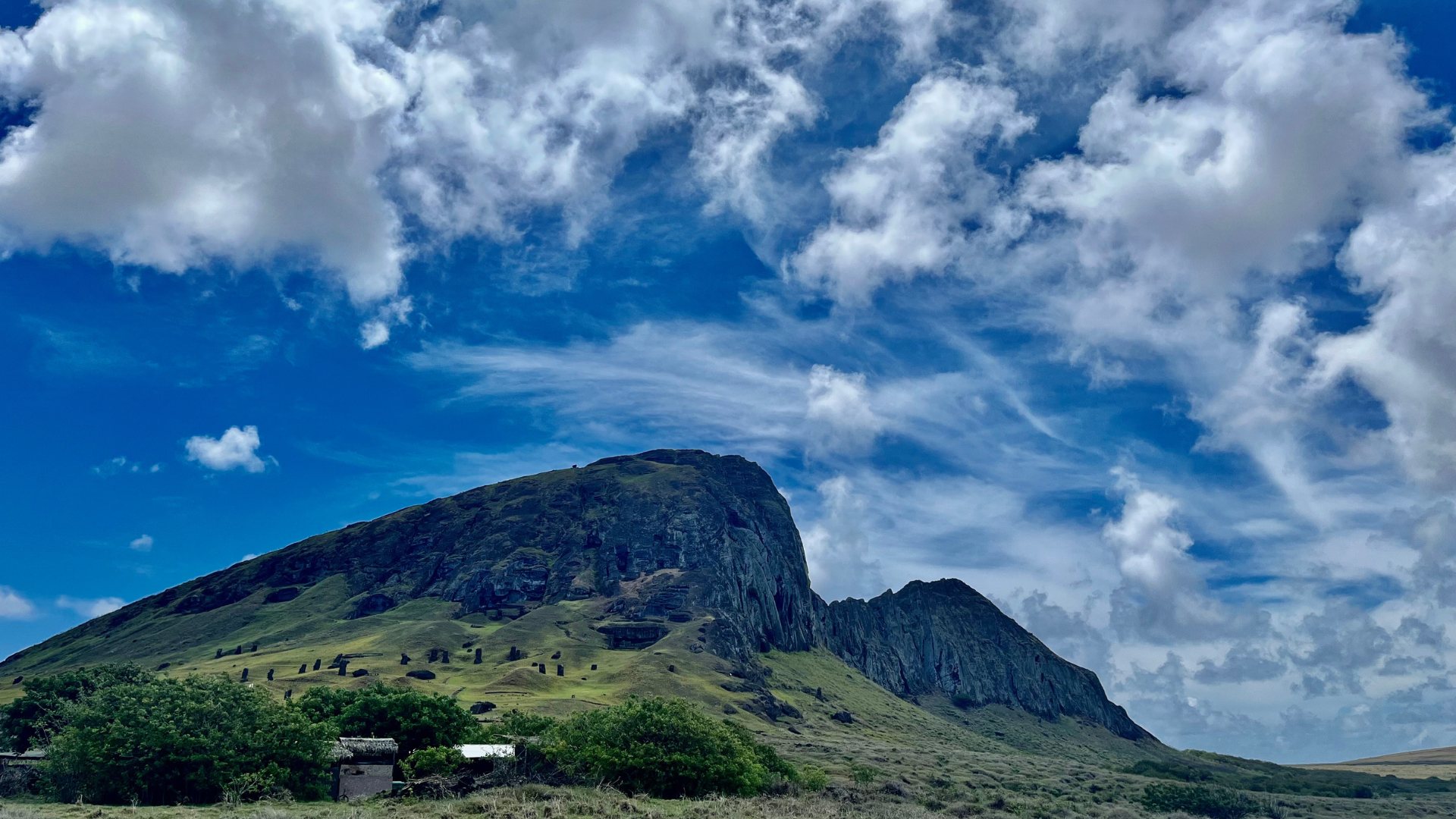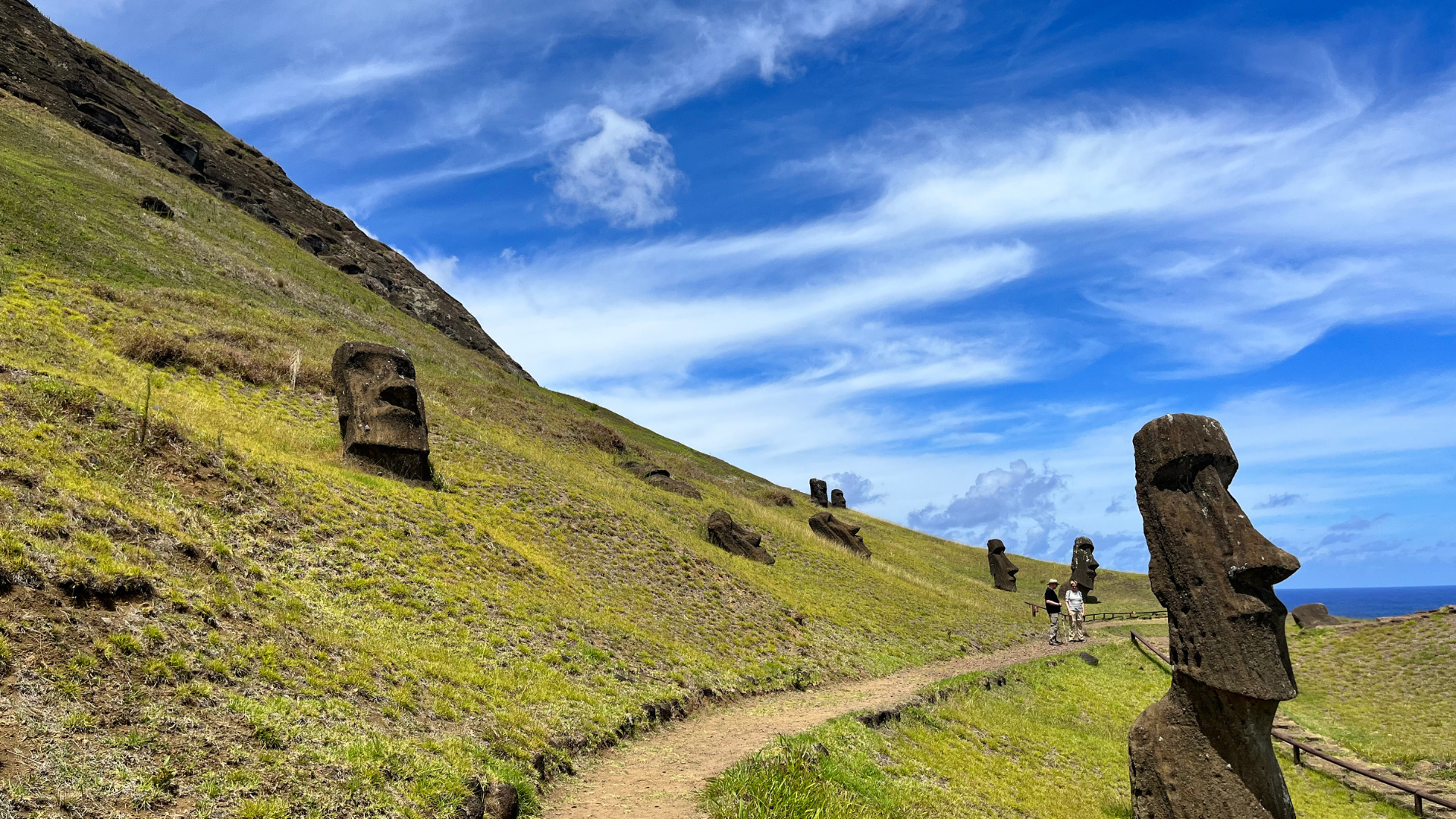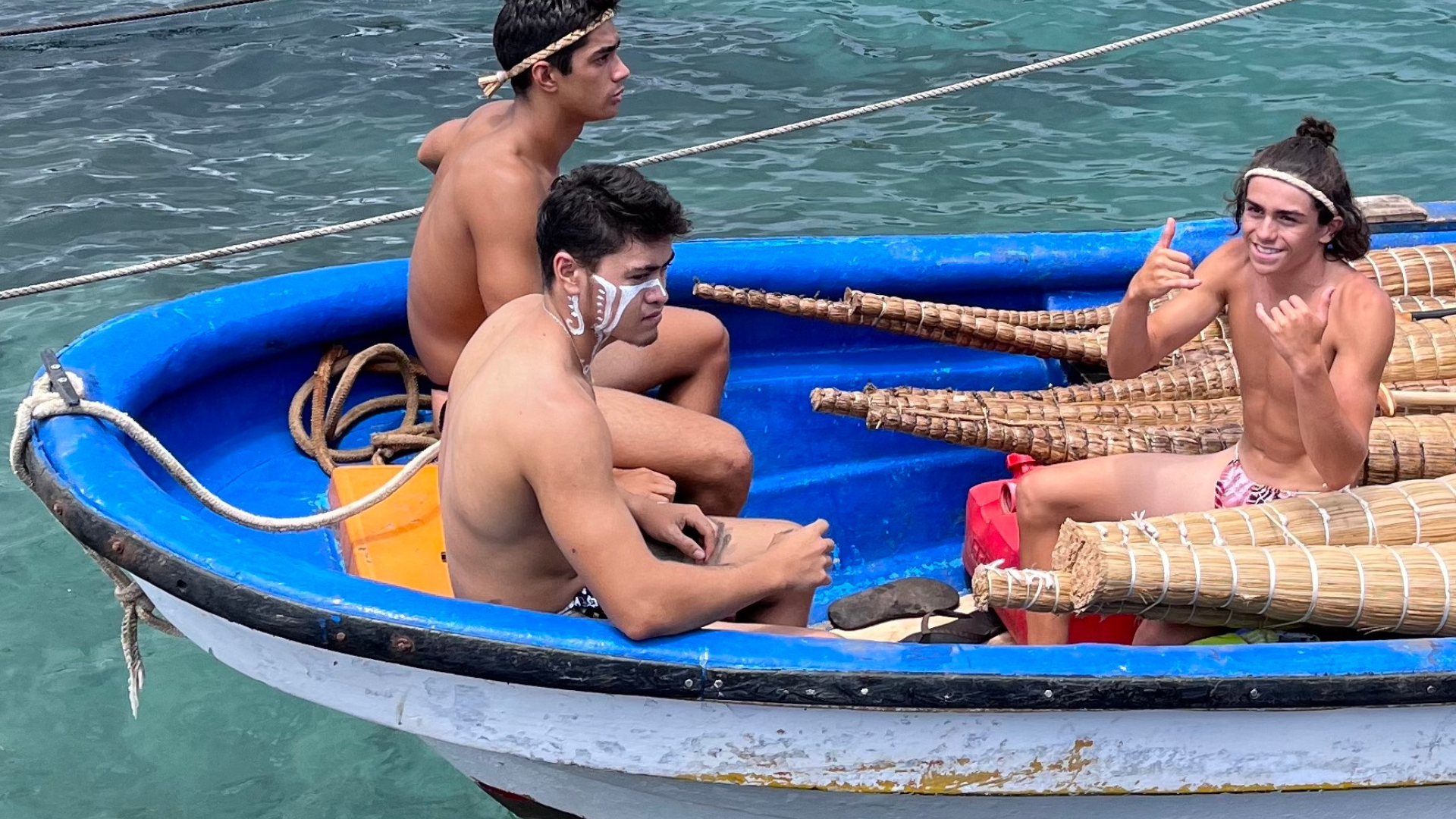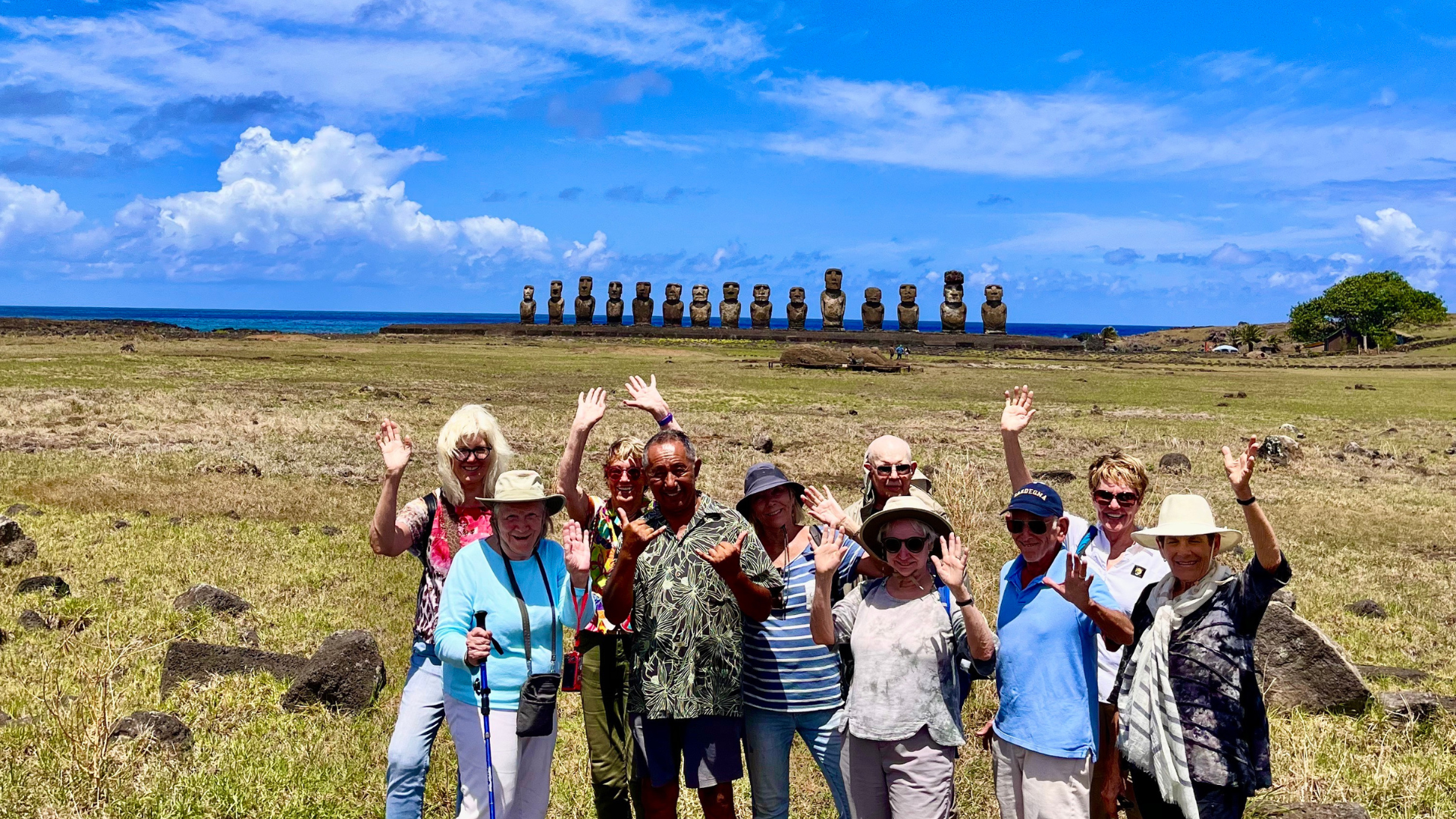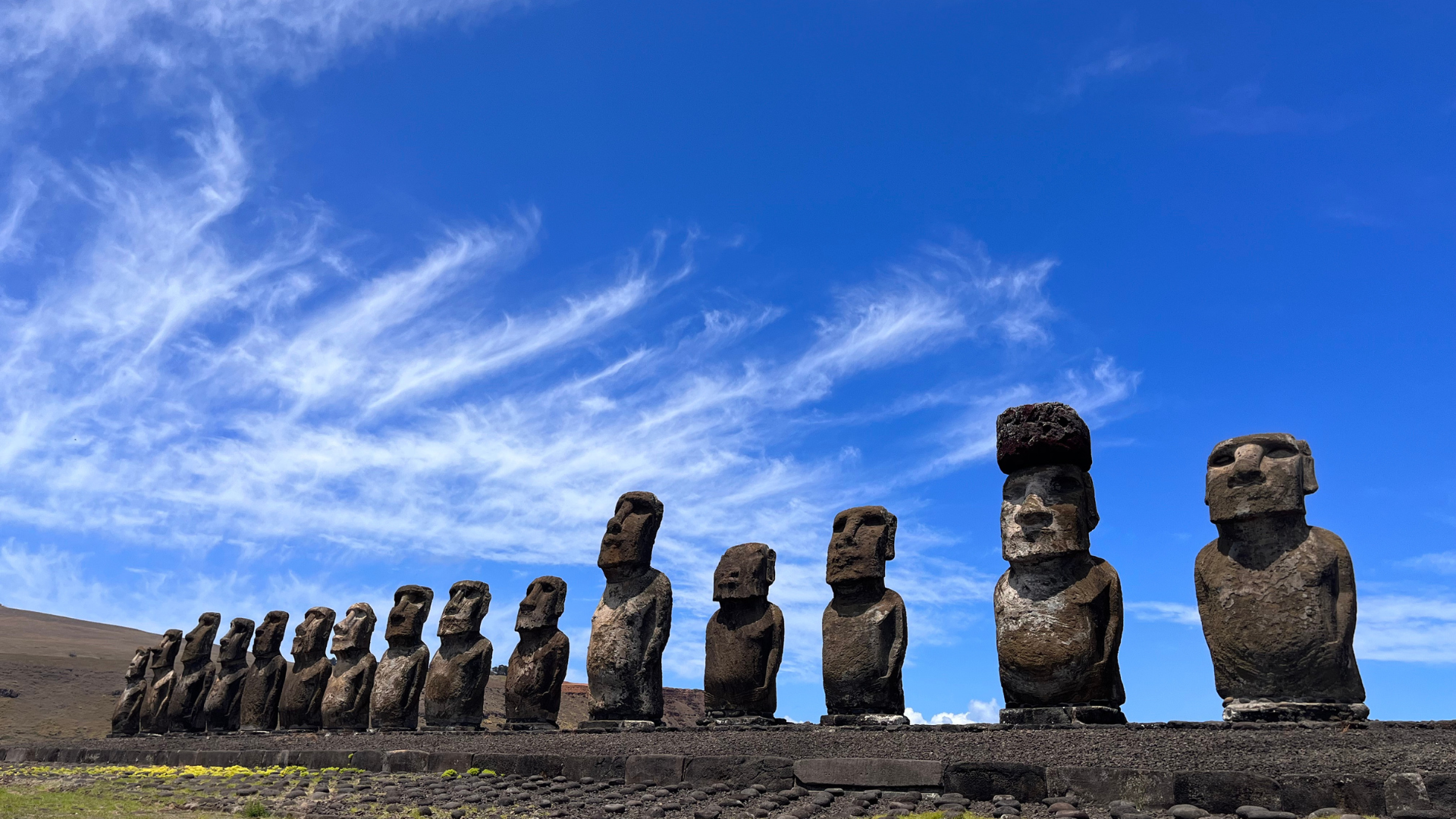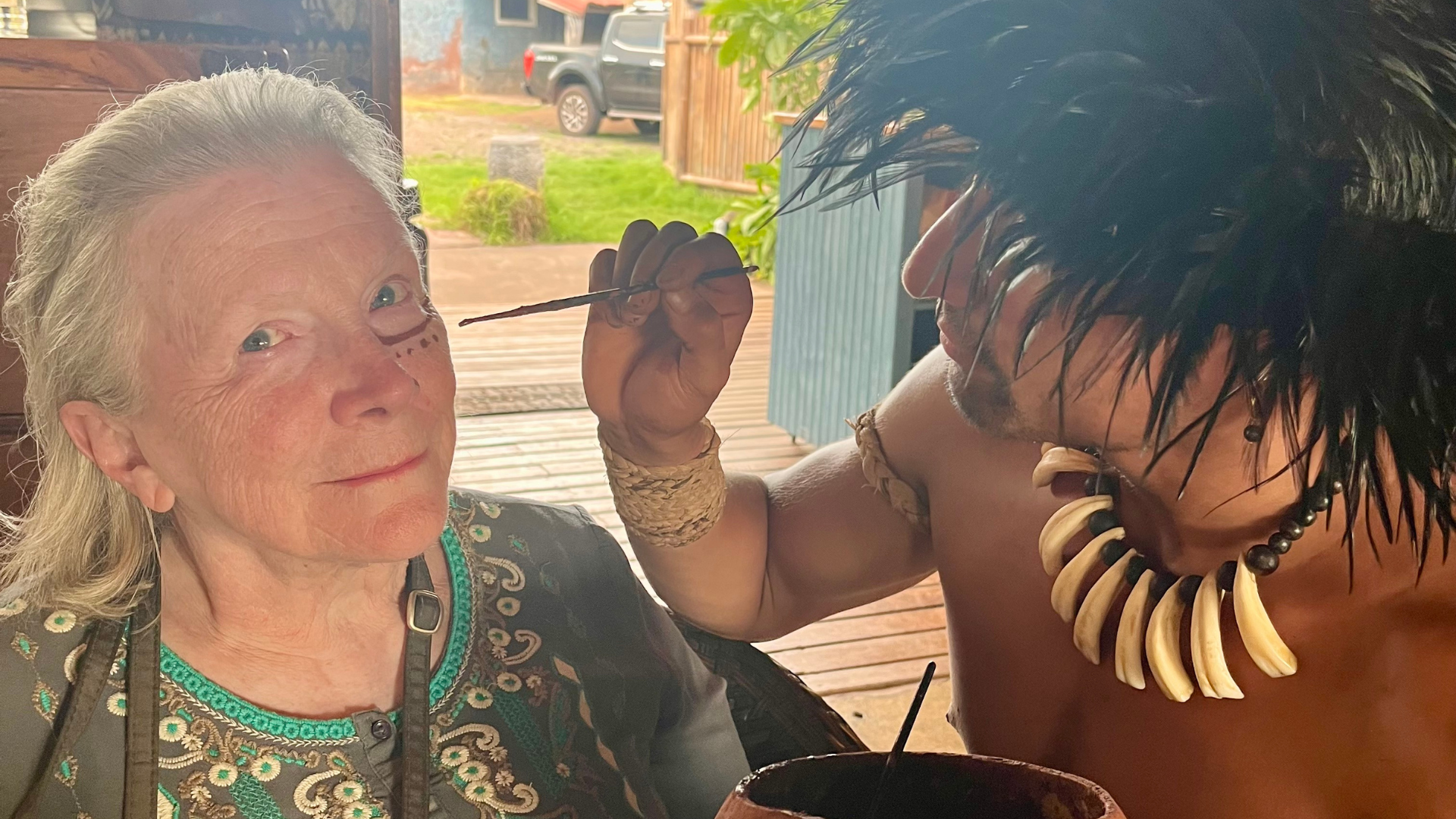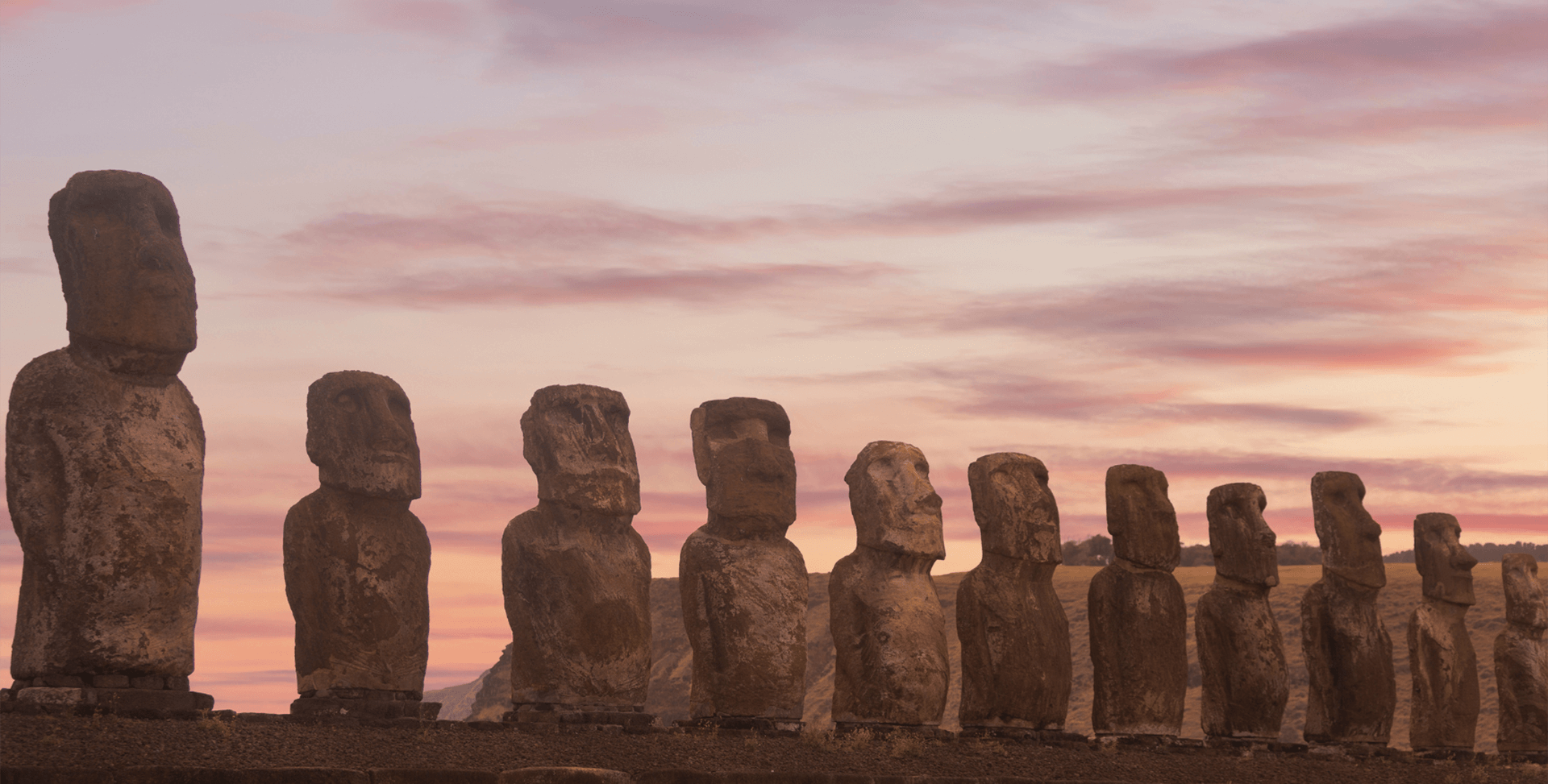



At the southeastern tip of the Polynesian triangle lies windswept Easter Island, one of the most remote spots on the planet. Surrounded by an endless ocean as blue as the sky and located 2,300 miles west of Santiago, Chile, this tiny dot of land is sixty square miles of rocky grasslands, extinct volcanic cones, and steep ocean cliffs. Easter Island, known to its Polynesian inhabitants as Rapa Nui, stands as a unique open-air archaeology museum, home to nearly a thousand towering moai statues that cast enigmatic gazes across the landscape and hundreds of intricate petroglyphs carved into ancient stone. Far Horizons designed this journey so that you could fully immerse yourself in this island’s deep history and culture, exploring its mysteries in the company of a scholar who has worked here and throughout Polynesia for more than thirty years.
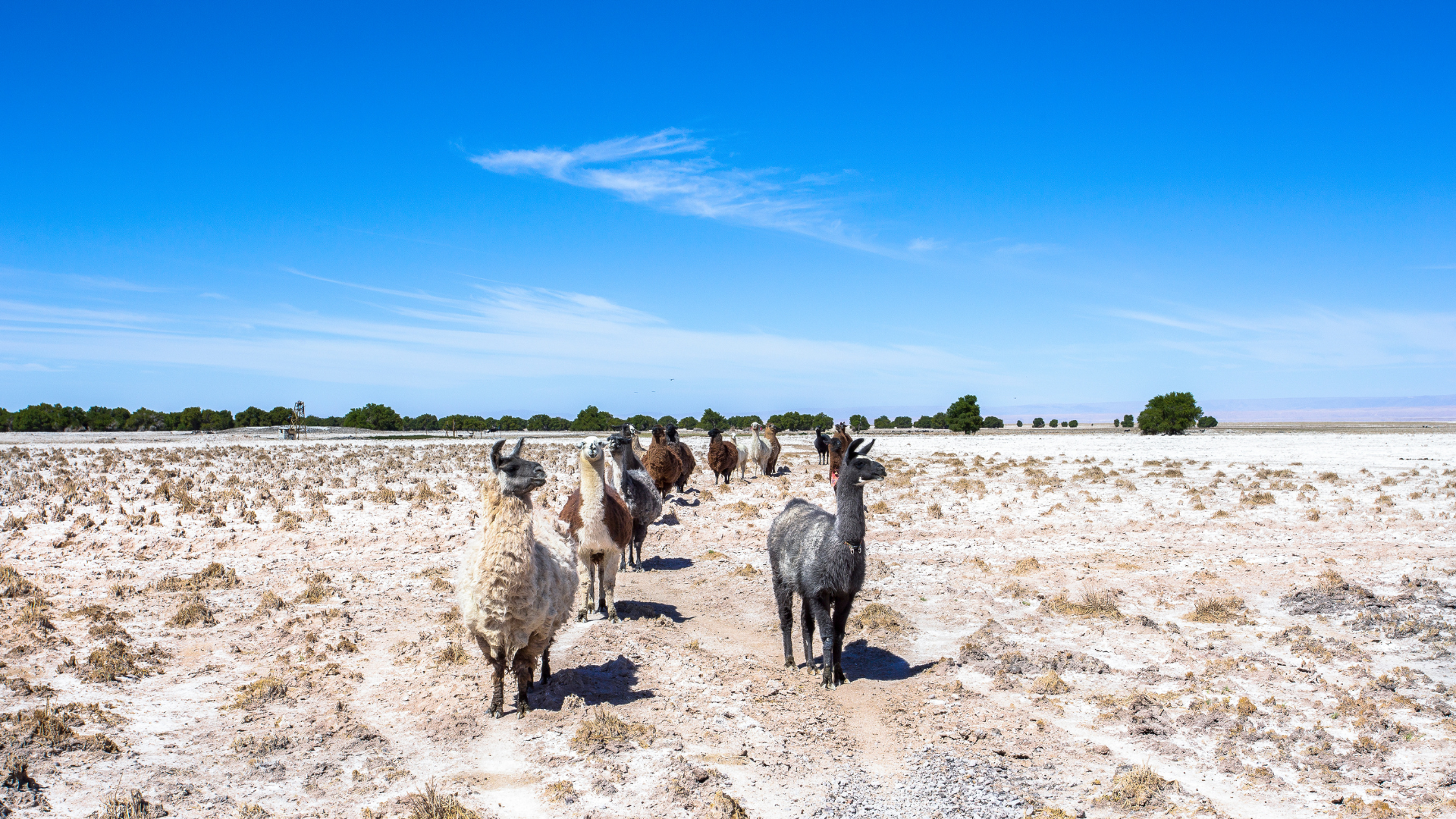
But this trip begins long before you set foot on Rapa Nui. In northern Chile, soaring volcanoes, stark lava fields, and rolling, trackless sand dunes give startling contrast to a seemingly endless desert. The early artists who lived here perhaps thousands of years ago left behind spectacular pictographs and geoglyphs — huge ground drawings akin to the Nazca Lines of southern Peru. These enormous representations of hunters, camels, eagles, condors, and herds of llamas with their shepherds cover the surface of hills and, unlike those in Peru, are easily visible from the ground. Beyond the rock art, the Atacama rewards the curious traveler with charming villages set in desert oases, colonial adobe churches, unusual vegetation, the largest salt lake in Chile — home to spectacular flamingos — and, in Arica, displays of the world’s oldest mummies.
The journey includes three days in and around Santiago, where Chile’s rich cultural heritage comes into focus. The Pre-Columbian Art Museum traces 4,500 years of South American civilization, while a day along the coast brings you to the bohemian port city of Valparaíso and the elegant beach resort of Viña del Mar, where a private viewing of Rapa Nui artifacts at the Fonck Museum offers a fitting coda to your time on the island.
From the Atacama to the Pacific, and from Rapa Nui to the vineyards of the Central Valley, this small-group journey brings together some of South America’s most extraordinary destinations into a single, seamless exploration of ancient cultures, monumental art, and landscapes that stay with you long after you’ve come home.
Arrive in Santiago and transfer to Hotel Magnolia. After check-in and lunch at a local restaurant, we will tour the historical city, including a visit to the Pre-Columbian Art Museum which catalogs 4,500 years of South American civilization. Time permitting, we will also stop at Los Dominicos Craft Center, which has been named a traditional heritage zone by the Chilean government. Gather this evening for our welcome dinner at an elegant restaurant overlooking the city. (L/D)
Board a morning flight to Calama and drive to San Pedro de Atacama where we visit the Yerbas Buenas Petroglyphs. This was a stop for traders and herders for millennia. Continue to the Valle de la Luna and the Valle de la Muerte, where red rock formations and sand cliffs pierce the crystalline sky. Here, the wind has sculpted the stone peaks into bizarre shapes that truly give the area a lunar landscape. Many centuries ago, the verdant oasis of San Pedro de Atacama was the center of a Paleolithic civilization that built impressive rock fortresses upon the steep mountains that encircle the valley. Today, the charming village of adobe houses could have sprung from the American Southwest. Overnight for the next two nights at the Hotel Diego de Almagro. (B/L/D)
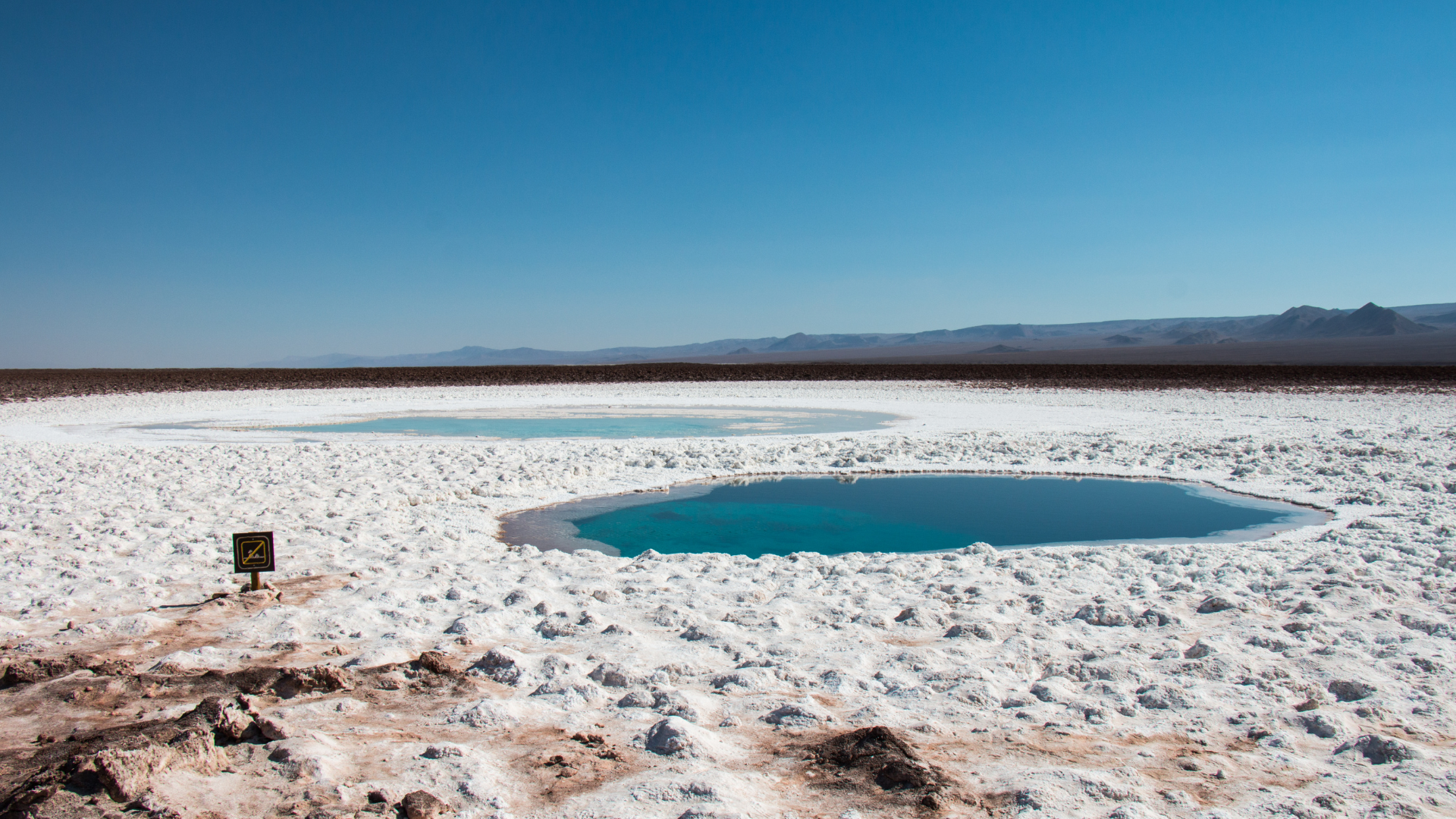
This morning, we will go through Salar de Atacama, the largest salt flat in Chile. Under the rugged salt crust is a lake containing the world’s largest reserve of lithium locked in an underground reservoir. Lagoons within the crust are home to many birds, including colorful flamingos, red-gartered coots, and guallatas.
Move on through groves of acacia and pepper trees to the oasis of Toconao, located 8,153 ft above sea level. Here, walk through the archaeological site of Tulor, where excavations show the 2000-year-old remains of a community of mud houses protected by encircling walls. A short drive north leads to a 700-year-old fortress, Pukará de Quitor, overlooking the fertile Río San Pedro valley from atop a strategic bluff and the residence of the last indigenous ruler of the area.
Time permitting, we will enter the Toconao Church, with its unique 18th-century tower. Our last stop is in the community of Peine to observe pictographs that were created by the Atacameno people and could be 10,000 years old. (B/L/D)
Today will be a long drive to Iquique. Along the way, we will stop at Cerros Pintados. This extraordinary site boasts more than 350 geoglyphs. Created on the region’s barren hills between 500 and 1450 AD, they served as guideposts for caravans crossing the Atacama Desert from the Andes to the Pacific Ocean.
The entire side of the hill is covered with one of the world’s largest outdoor murals. More than 15 acres of slopes are decorated with shapes depicting humans, animals, birds, and abstract designs.
Overnight for the next two nights in Hotel Gavina Costa Mar in Iquique. (B/L/D)
The port city of Iquique was the center of the mining industry in the 19th century. The Georgian-style architecture in the historic quarter affirms the wealth accumulated during that era. Our hotel is near the Plaza de Armas Arturo Prat. The Neo-Classical Municipal Theater, inaugurated as an opera house on January 1, 1890, is on one side, and the 19th-century clock tower dominates the center. Also on the plaza is the Spanish Cultural Center, built in 1904 during the period of Spanish colonization. Constructed in the Moorish style with an ornamented façade and balconies, it now houses a club and restaurant.
We will drive down Calle Baquedano, declared a Zona Típica in 1977 and on the UNESCO Tentative List. Stately palm trees overshadow the avenue fringed with magnificent Georgian and Greek Revival mansions. These were built between 1880 and 1920 with pine brought in from Oregon. In 1892, a nitrate industrialist constructed a family residence that now houses the Regional Museum. Inside, it displays important collections of items of indigenous peoples, objects from the Andean Plateau, and mummies from the Chinchorro culture.
The Astoreca Palace contains an exhibition of furniture used in the 19th century. The Museo Corbeta Esmeralda houses a replica of a courageous little Chilean vessel that, in 1879, challenged ironclad Peruvian warships in the War of the Pacific. It was captained by the national hero, Arturo Prat. We will see the staff quarters, the engine, and a video explaining the battle.
In the afternoon, journey through the Tamarugal National Forest to see the wild tamarugos, a tree indigenous to this area, and on to eerie Humberstone. This ghost town has been deserted since the nitrate industry collapsed in the 1950s. Now a UNESCO World Heritage Site, this company town was home to thousands of people who lived and worked here from the second half of the 19th century, processing the largest deposit of saltpeter in the world. Dinner is on our own. (B/L)
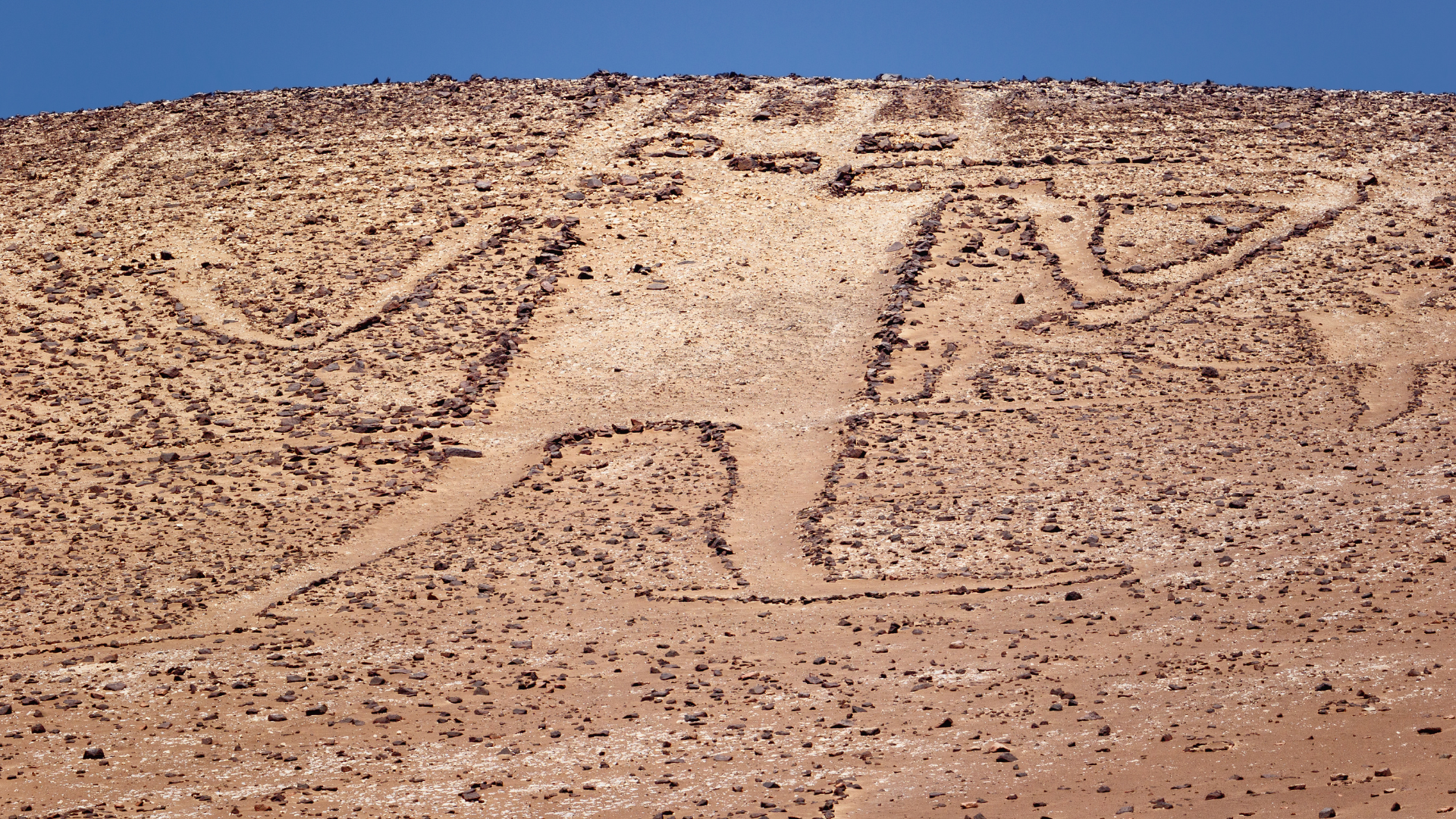
As we move north, spend the rest of the day exploring intriguing rock art in the colorful, wild landscape. Unlike the Nazca lines that can only be seen clearly from an airplane, these artistic designs were formed on the sides of hills and are easily viewed from the ground. The famed Giant of Atacama is on the western slope of Cerro Unita and is the world’s largest representation of a human figure, measuring one hundred twenty meters tall.
At Tiliviche, we will gaze across a quebrada (an immense gorge) to a huge scene on the opposite hillside. The artist created a panel filled with movement as a herd of llamas is driven down the valley by running shepherds. We will also travel to the Chiza petroglyph site. Overnight for the next two nights in the Apacheta Hotel in Arica. (B/L/D)
Giant ground drawings appear on a mountain ridge as we arrive in the Lluta Valley. Created by dark stones placed on the pale sand, stunning images of alpacas, giant humans, and enormous condors cover the hillside. From here, travel to the Azapa Valley, where prehistoric artists created fascinating panels on the sandy slopes of Cerro Sombrero and Alto Ramirez.
We will stop to enter the Church of San Geronimo of Poconchile, built of adobe in the 17th century, and the Archaeological Museum of Azapa, where the entire story of cultural development in this region is displayed, including the mummies from the Chinchorro culture, a UNESCO World Heritage Culture.
Tonight’s special dinner party will be in an elegant restaurant with magnificent views over the Pacific Ocean. (B/L/D)
A morning flight takes us back to Santiago. Upon arrival, we travel to Valparaiso, located on the shores of the Pacific Ocean, for lunch and a tour of the coastal town’s historic center. Continue to Viña del Mar, one of Chile’s most fashionable beach resorts. Here, we will visit the Fonck Museum and see its original Rapanui wooden sculptures and artifacts from Easter Island. Return to Santiago in the late afternoon and overnight at an airport hotel. (B/L/D)
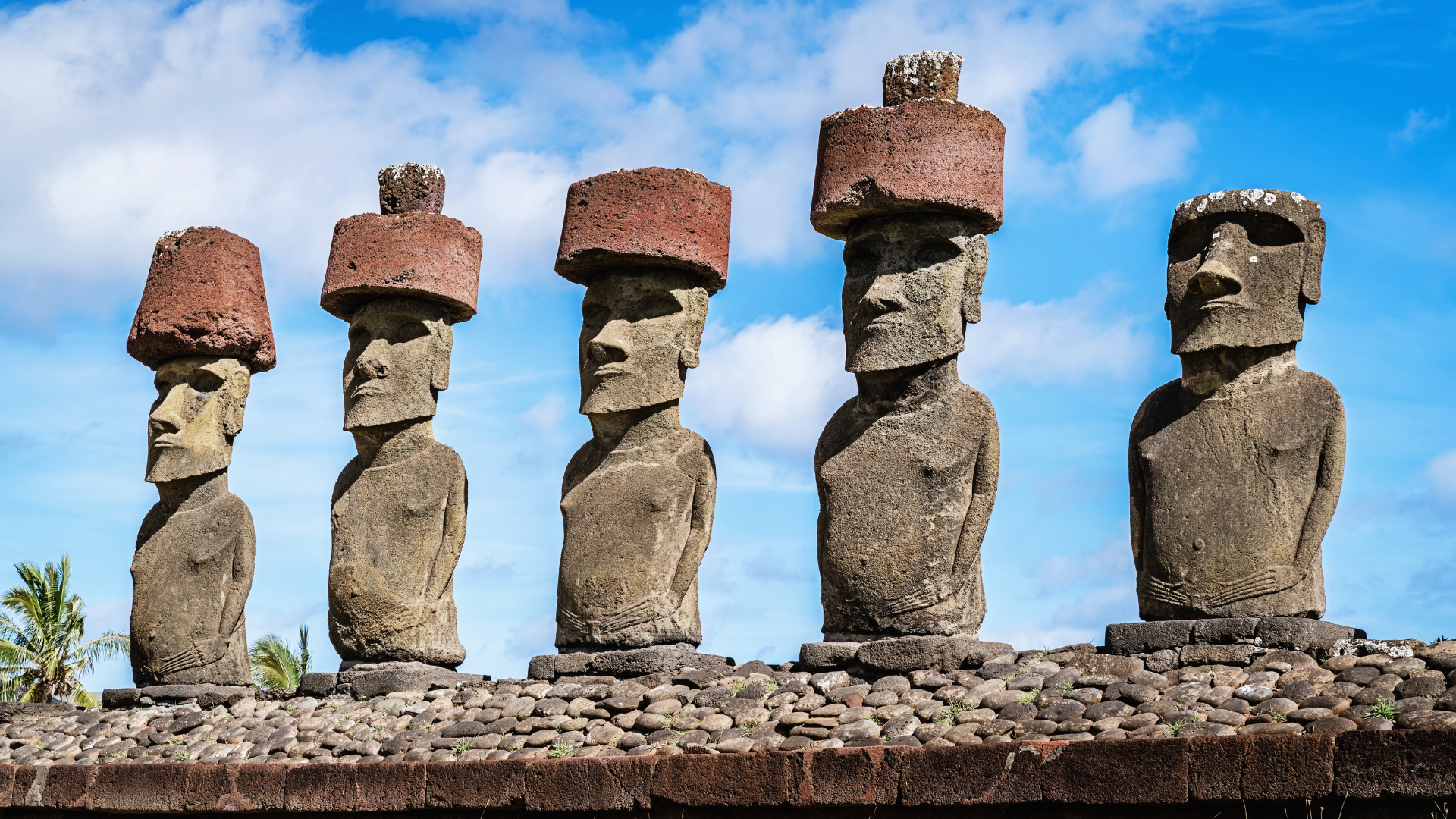
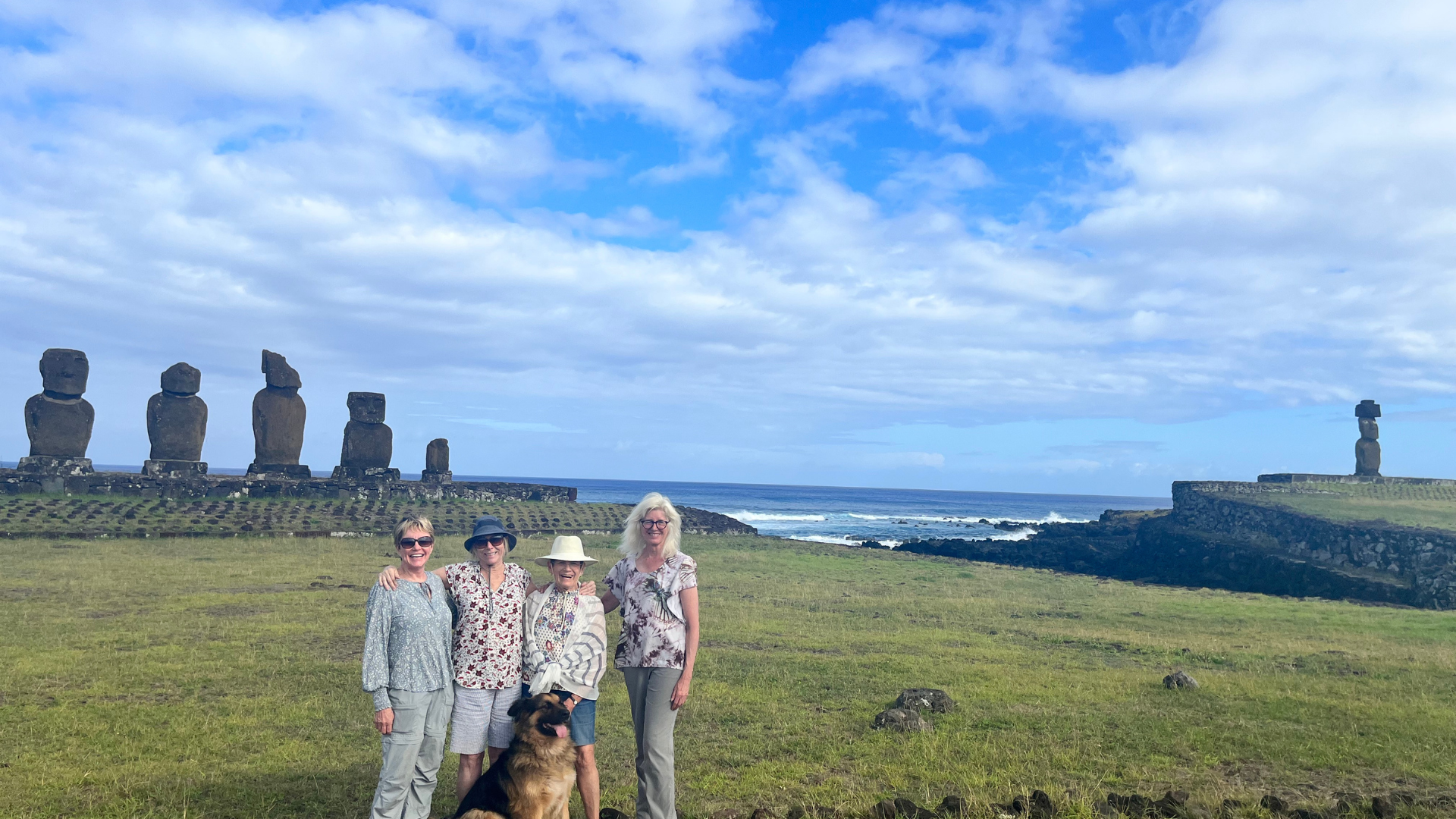
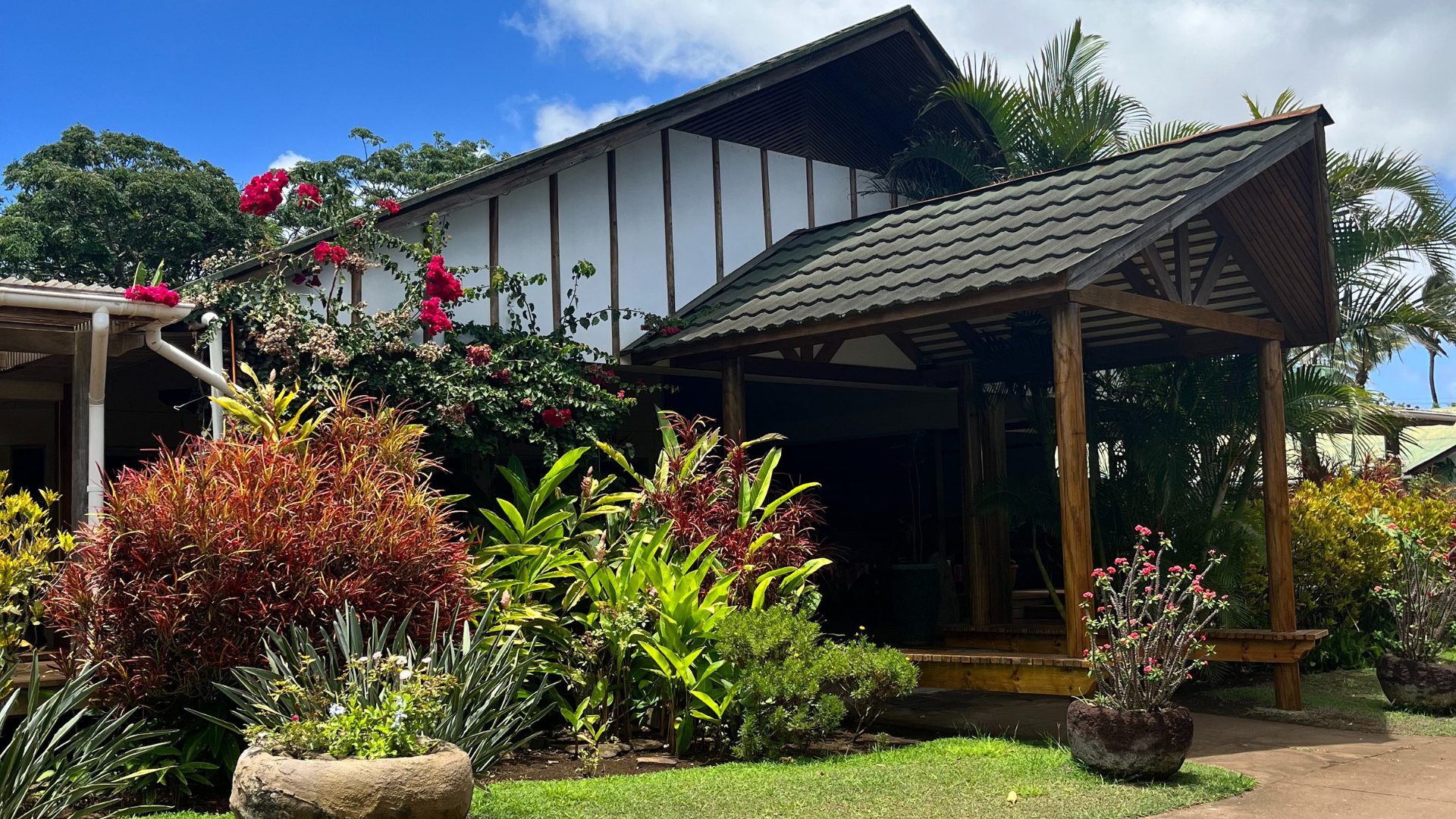
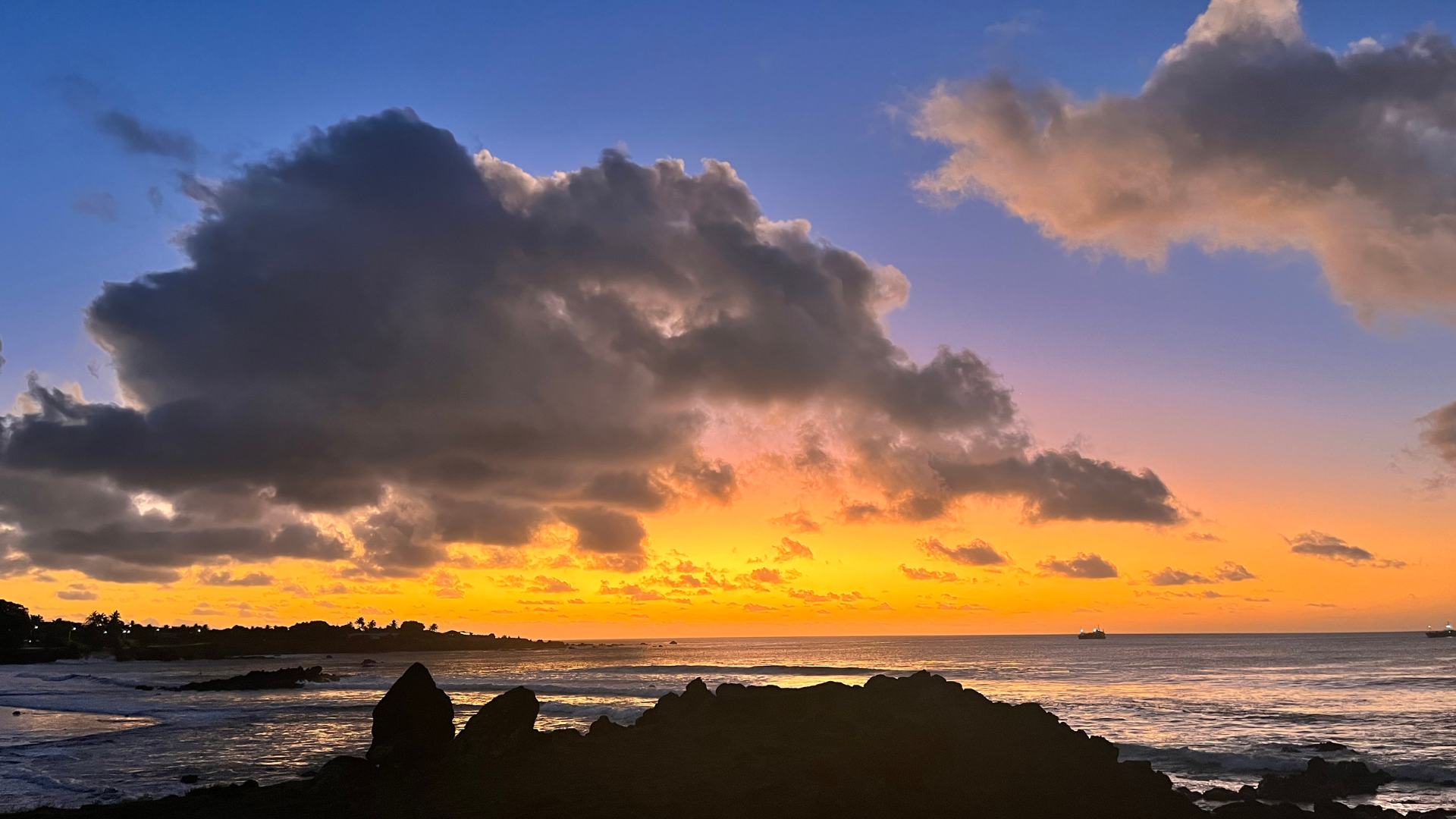
This morning, fly to Easter Island and check into the O’tai Hotel, our home for the next four nights. Surrounded by lovely, fragrant gardens, this small family-run inn is only a block from the coast in the center of the village of Hanga Roa. Enjoy a sunset visit to Ahu Ko Te Riku (also known as Tahai), a large solitary statue, or moai, that supports a massive maroon topknot. (B/L-onboard/D)
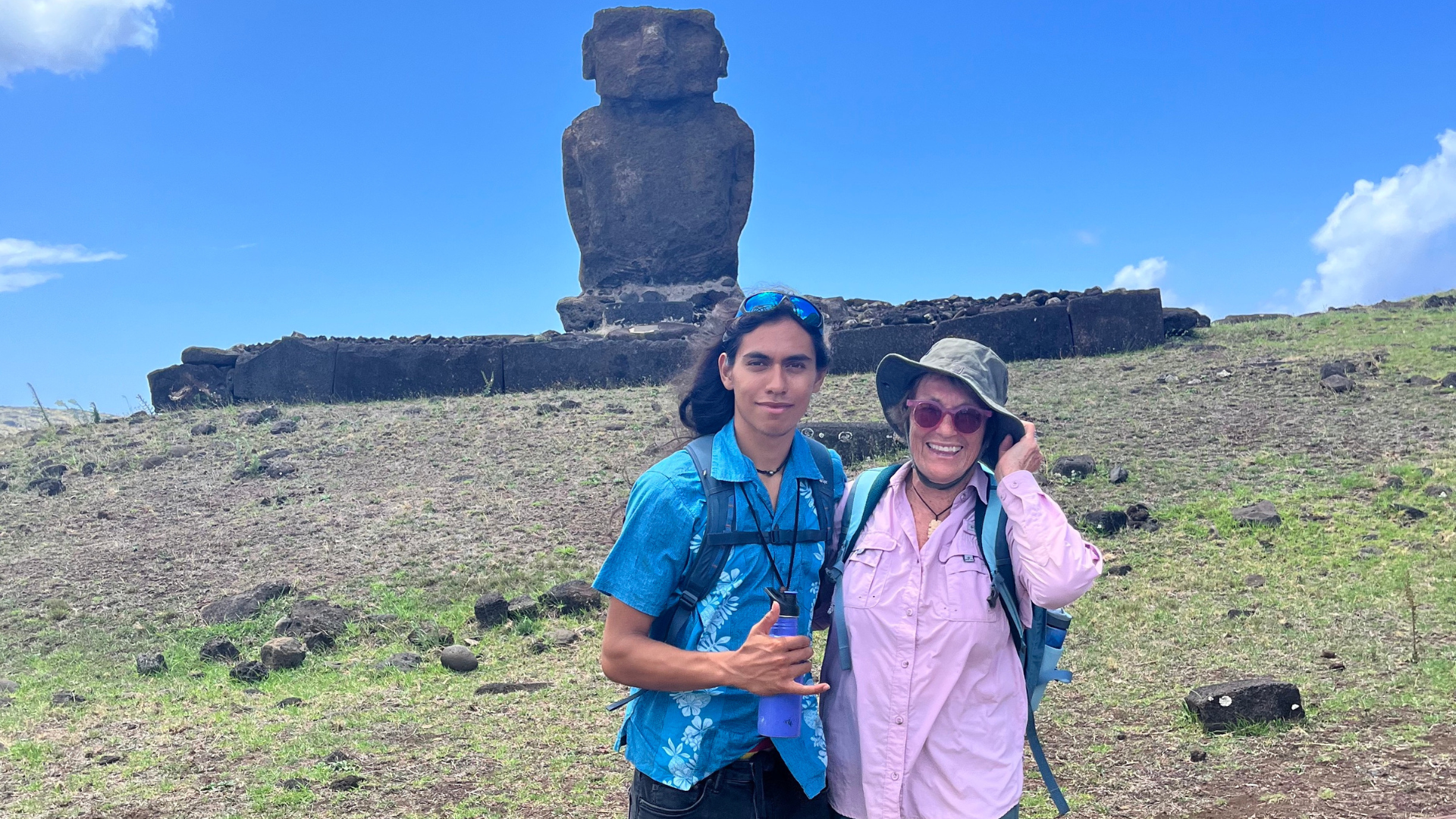
Return to Tahai for a morning visit before moving on to Anakena, the island’s largest white-sand beach and the landing place of the legendary Hotu Matua, the founding hero of the island.
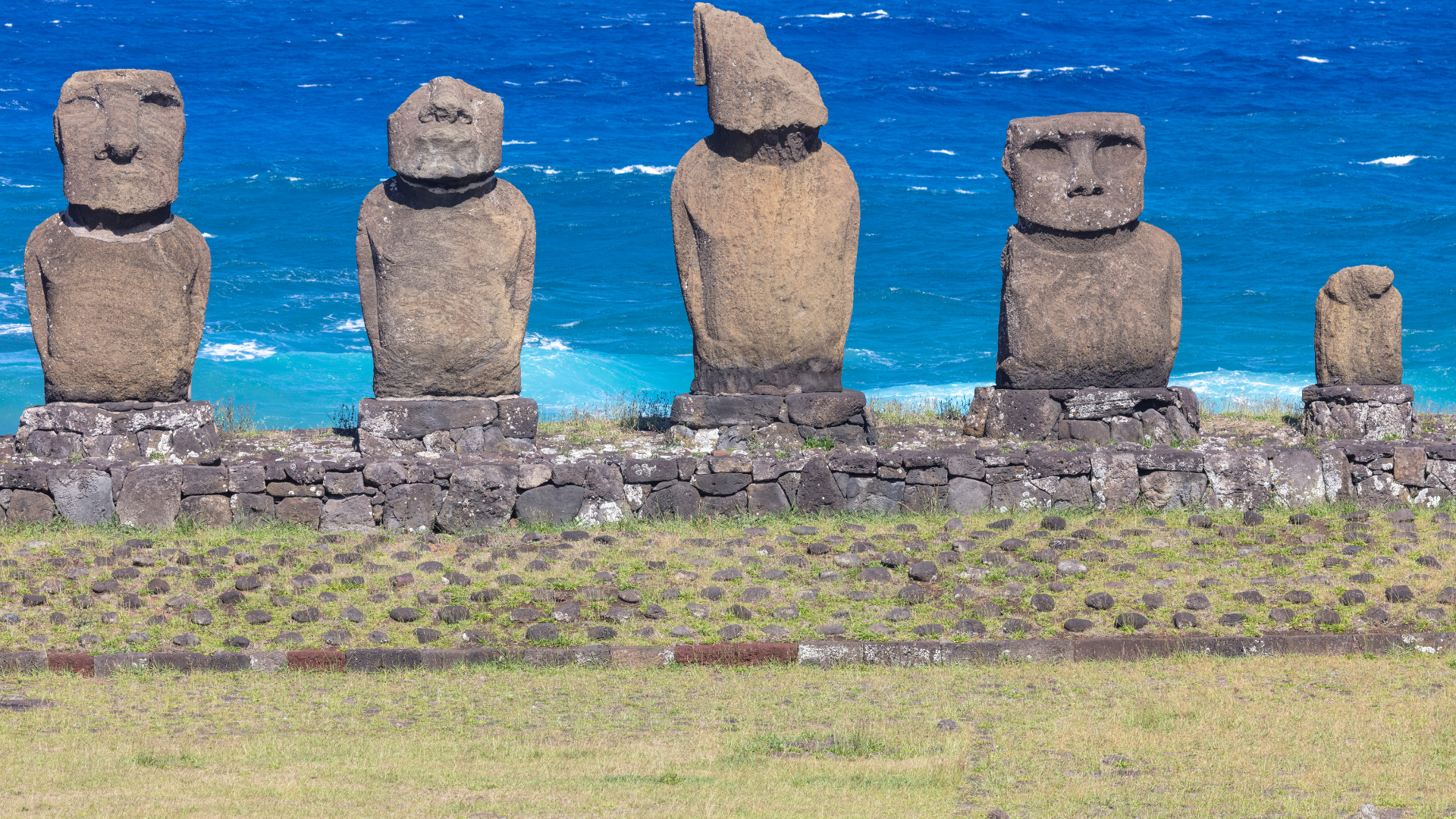
Not far away, we explore Ahu Nau Nau, with its row of statues with topknots, and Ature Huki, where statues stand on the side of the hill overlooking the beach. (B/L/D)
With its many large moai, Vaihu is one of the most impressive sites on the south coast. Toppled in the wars, the statues now lie with their noses buried in the ground, surrounded by scattered topknots. At Akahanga are numerous large figures, and the remains of a village with the foundations of several boat-shaped houses lie on a hillside nearby.
After a beach BBQ lunch, continue to the north coast, stopping at the Poike “Ditch” and the Trumpet of Hiro. Visit Ahu Hekii, Ahu Ra’ai, and its petroglyphs, and Te Pito Te Kura, the largest statue ever moved. Tongariki was the largest ahu (shrine) built on the island. Destroyed by a tsunami in 1960, the huge moai were recently re-erected. Notable here are the stunning petroglyphs of enormous tuna, turtles, and human and birdman figures. (B/L/D)
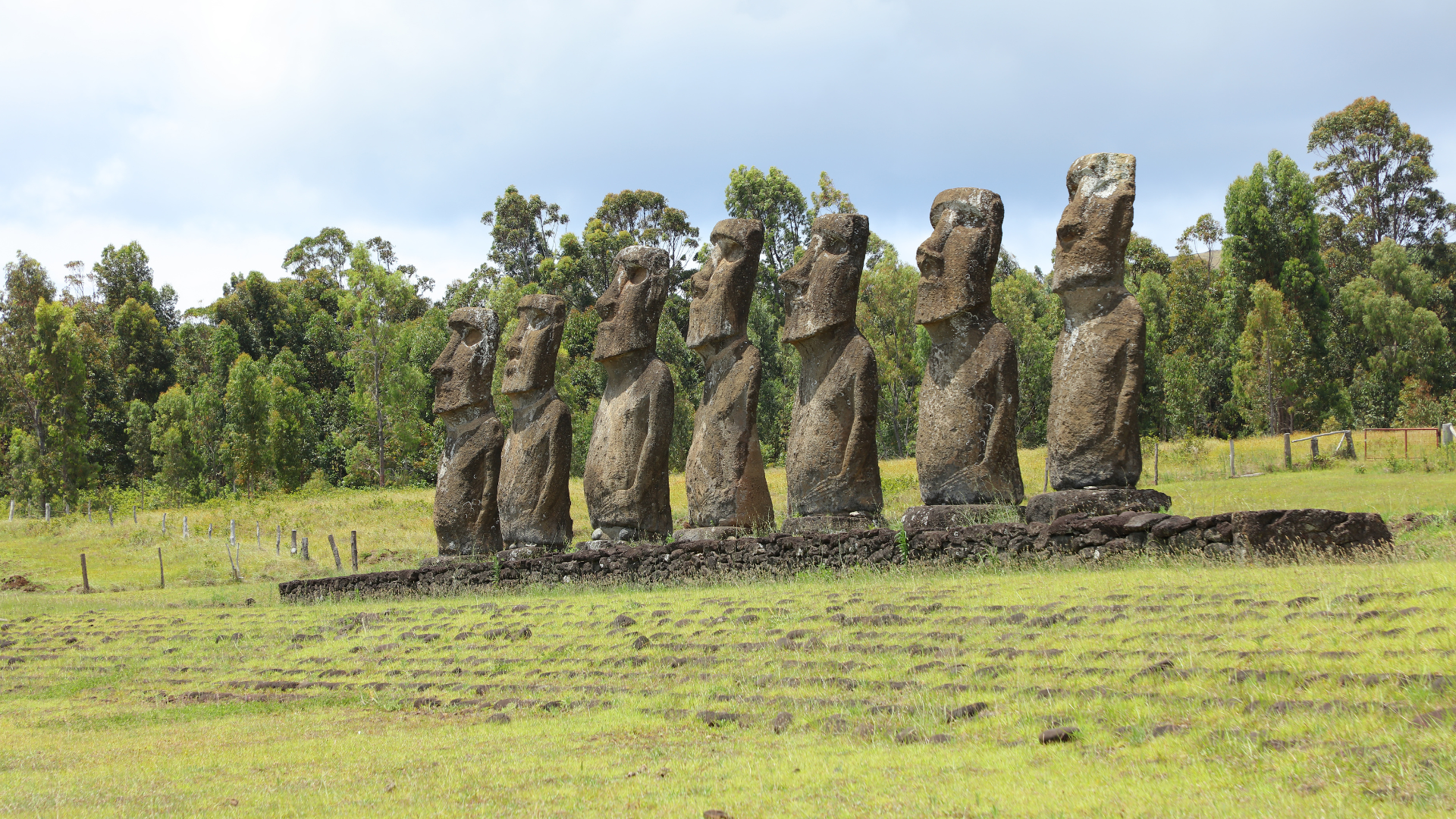
The remote west coast of the island is this morning’s destination. Begin with a visit to Ahu Huri A Urenga, where a solitary statue still stands; it was once a solstice observatory. After a picnic lunch, we move on to Ahu Akivi, where seven standing giants are oriented towards the summer solstice. The moai face a plaza fronted with stones, the site of early religious rites and dances. Finally, visit Puna Pau, where the red scoria topknots for the stone figures were quarried.
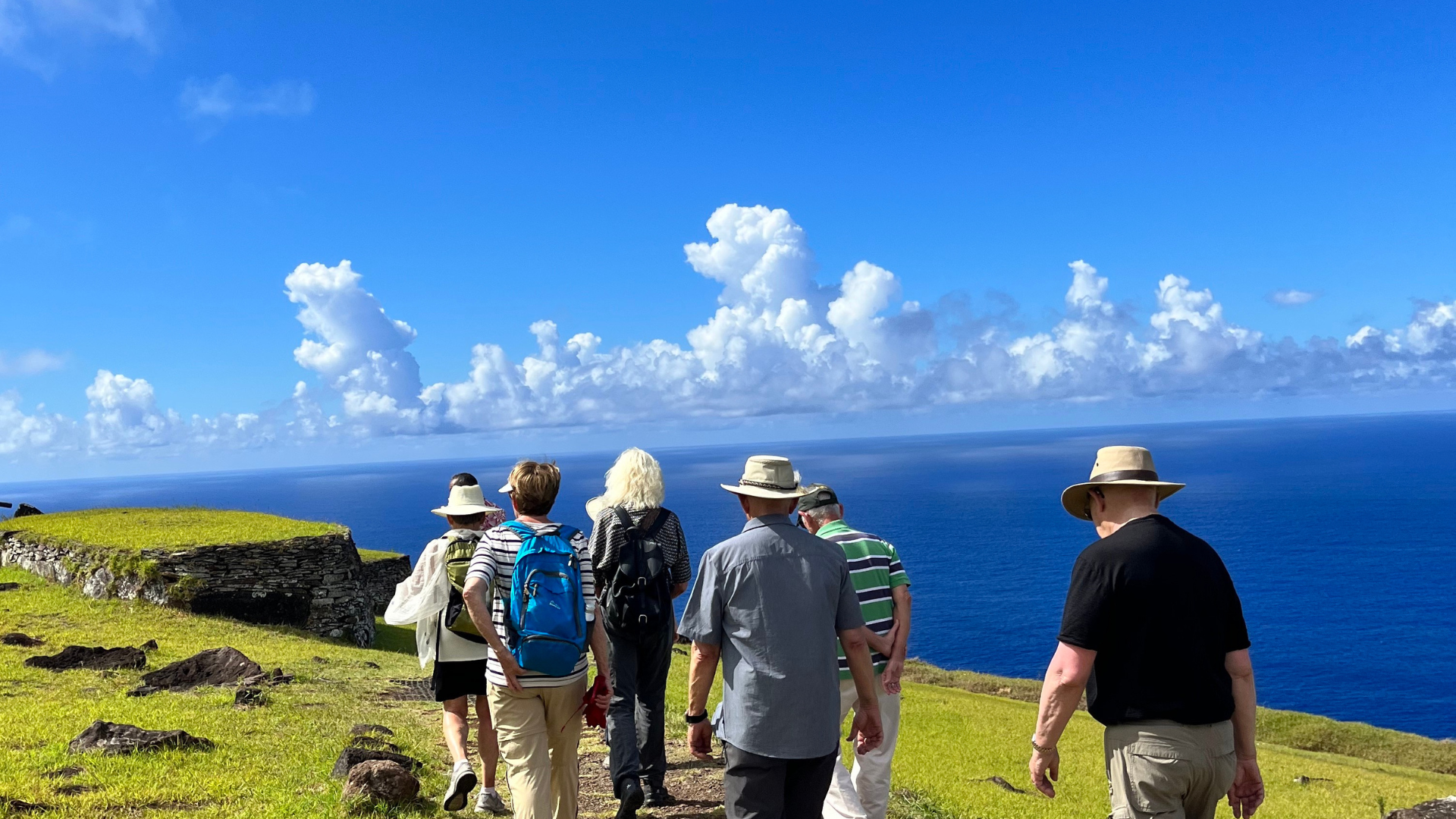
After a picnic lunch, continue on to the ancient village of Orongo which sits on the seaward edge of the volcano Rano Kao. This sacred site is famed for its hundreds of intricate petroglyphs carved on massive boulders perched on the edge of the cliff.
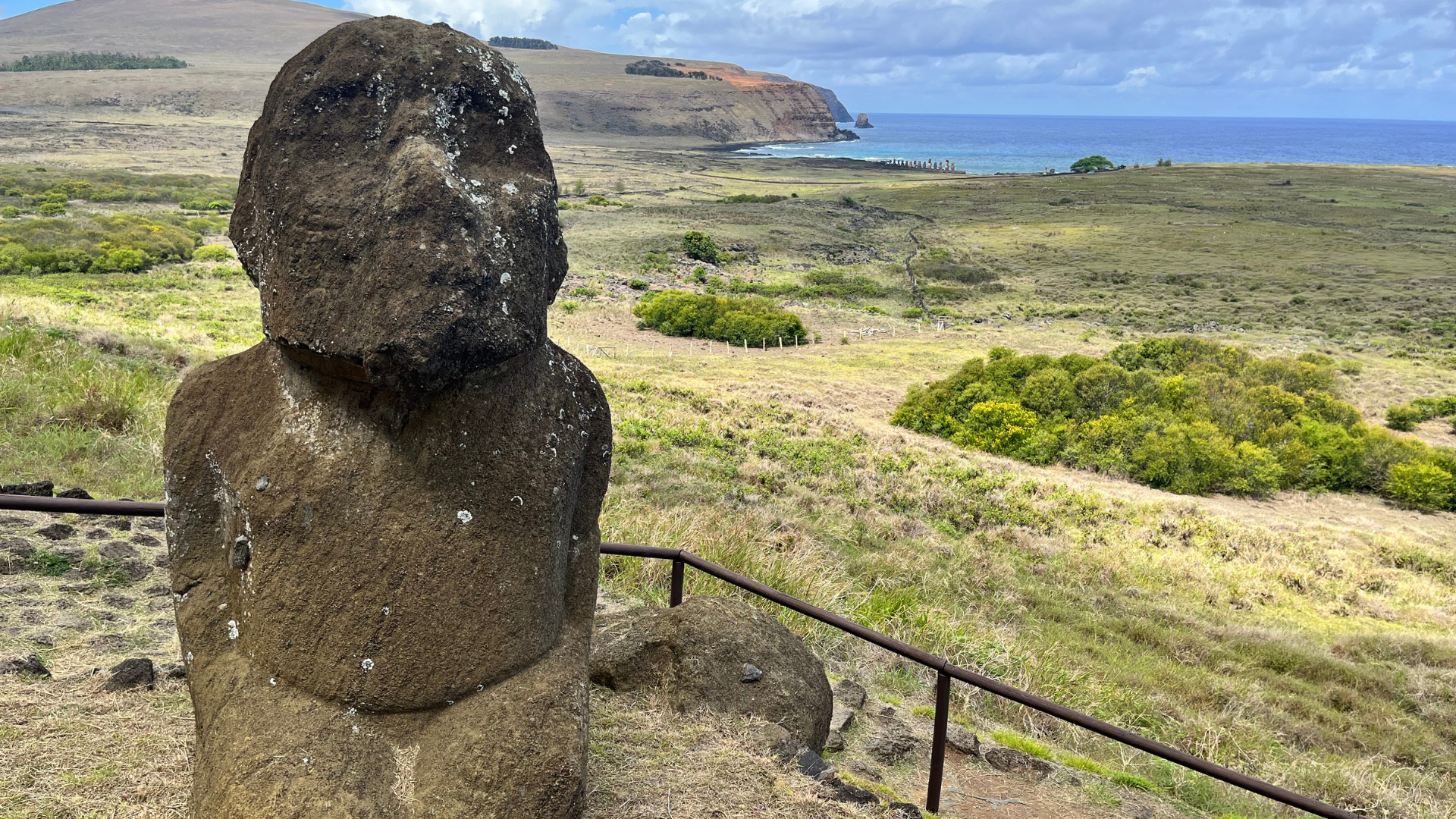
Within the flanks of the volcanic mountain, Rano Raraku, lies the quarry where the massive moai were carved. Many unfinished giants still lie imprisoned in stone, abandoned when the work suddenly and mysteriously stopped. Others stand buried to their shoulders in quarry debris and eroding soil, and rock. Hike to the trail alongside the mountain slope to see the statues in various stages of completion, including the one known kneeling moai.
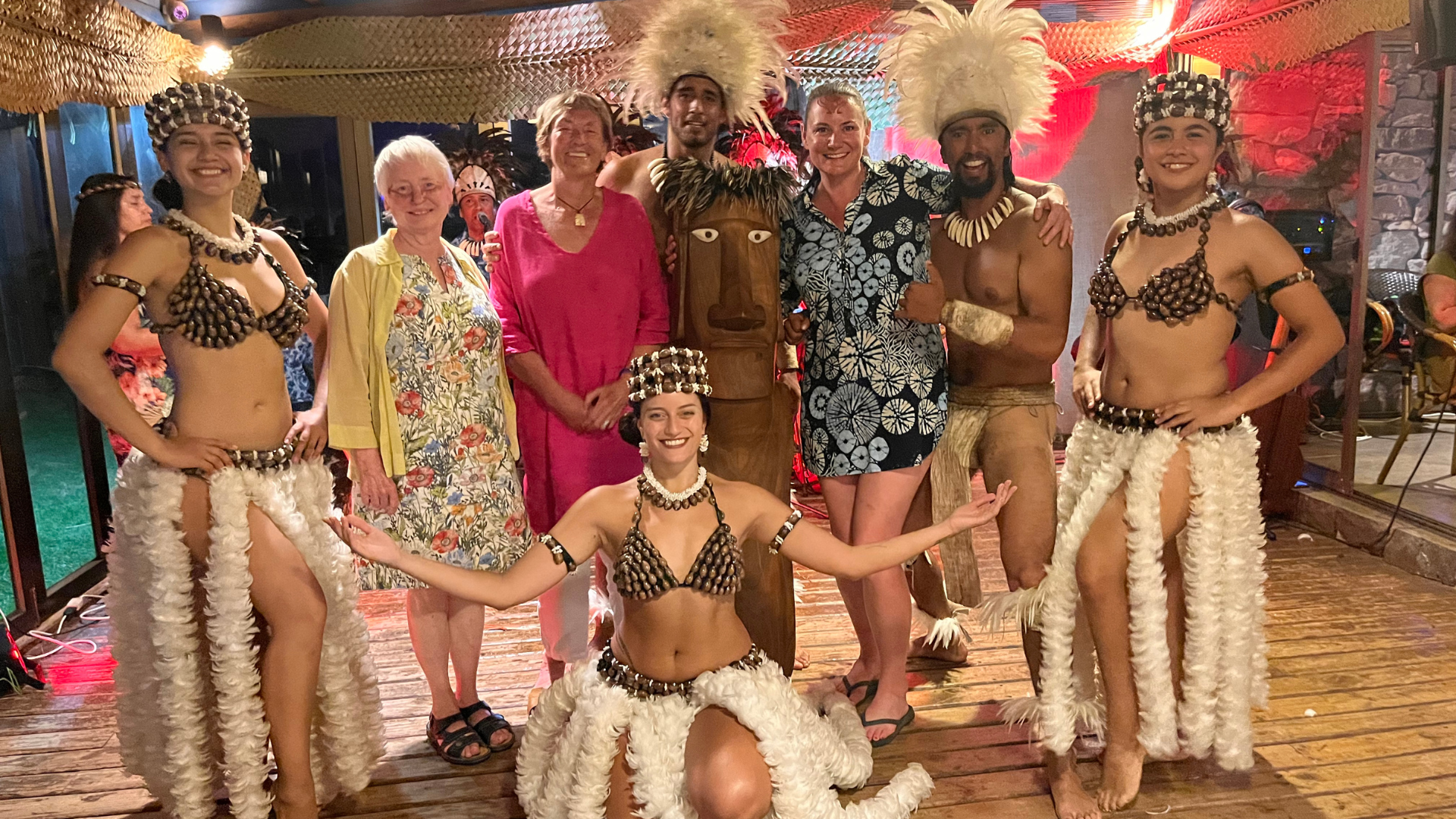
Tonight we will celebrate our last full day on Easter Island with a festive umu dinner and dance performance. (B/L/D)
Mahani Teave is a Rapanui concert pianist and one of the founders of NGO Toki Rapanui, a music school on the island. If available, we will join Mahani and take a tour of the music school to learn about the innovative, green, and sustainable aspects of the building and enjoy a performance by her students.
This afternoon we fly back to Santiago and return to our airport hotel for one night. Dinner is on your own. (B/L)
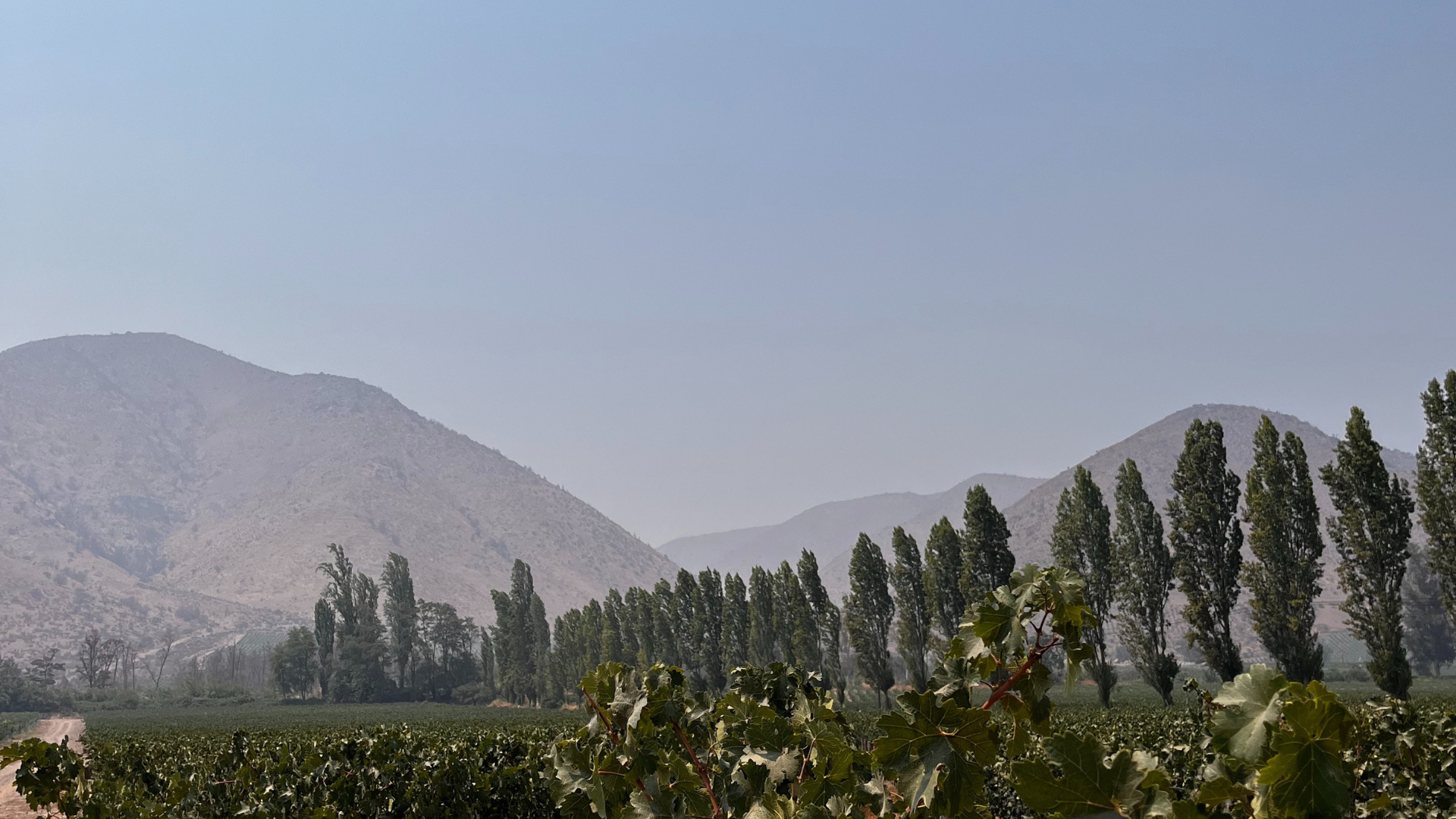
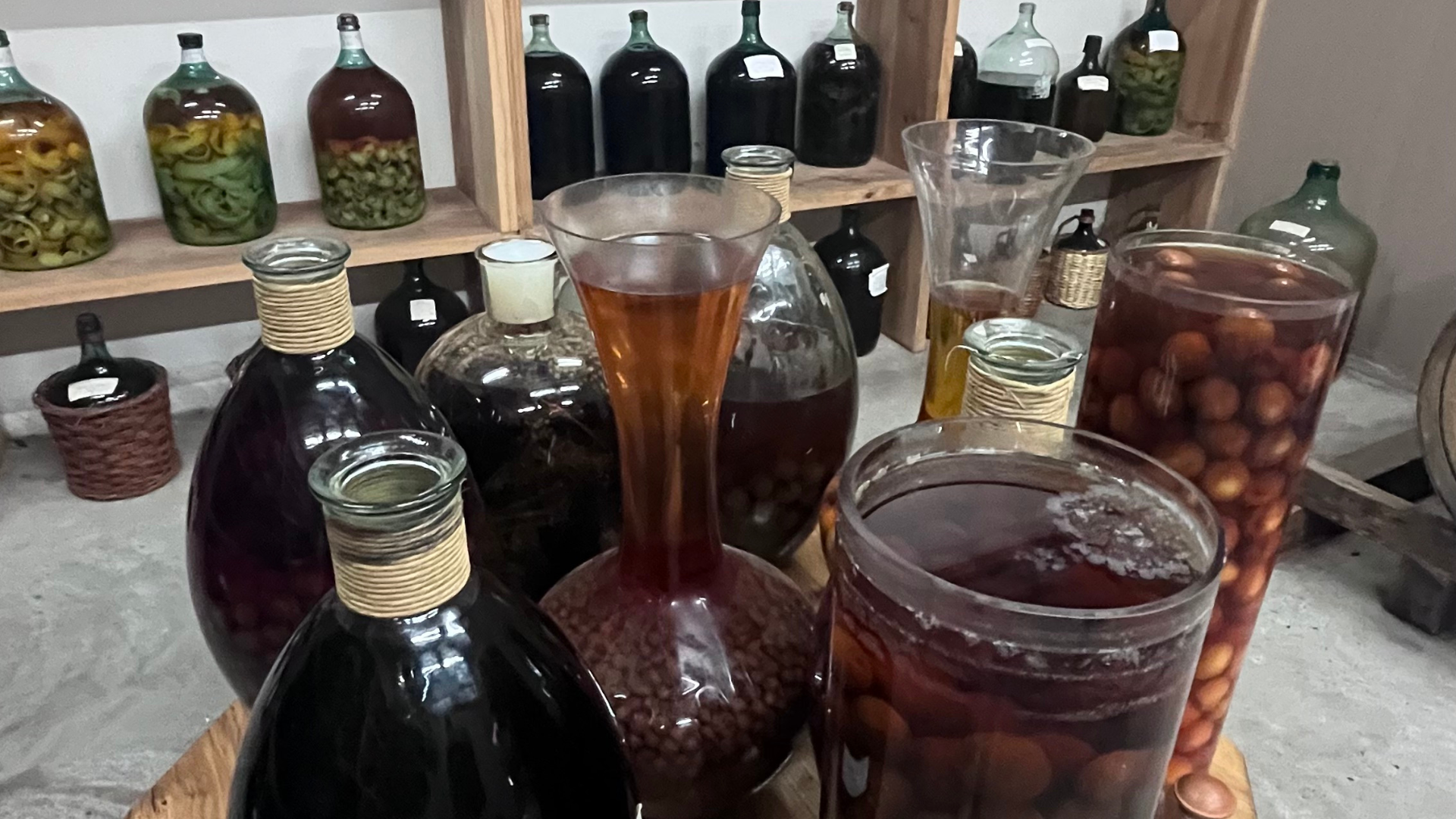
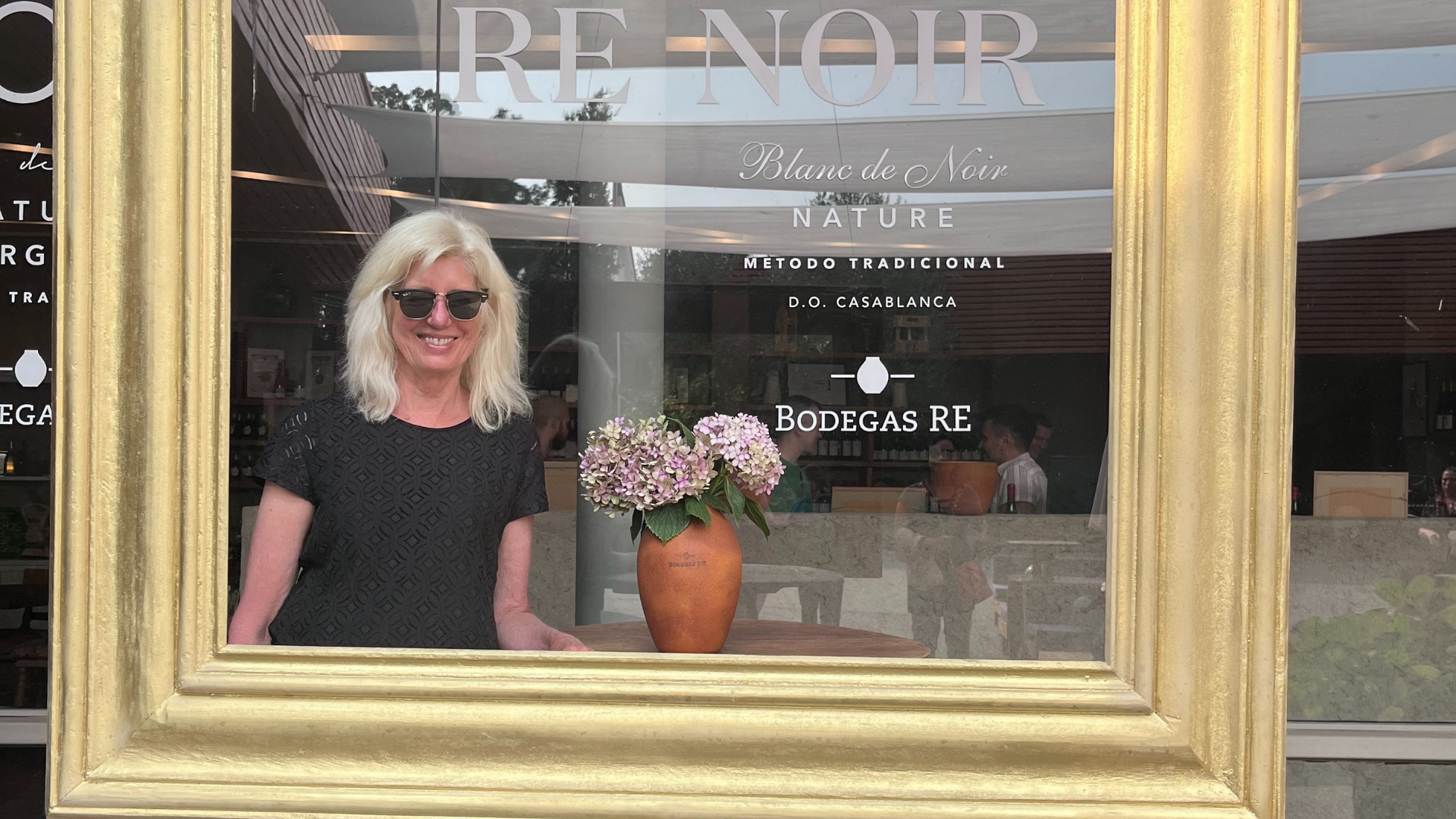
Our final day in Santiago begins with some free time before we make our way to the renowned Santa Rita Winery, one of Chile’s most celebrated vineyards, where a guided tour reveals the history and craft behind some of South America’s finest wines. On the grounds, we visit the Museo Andino, a remarkable collection of pre-Columbian artifacts that illuminates the ancient cultures of the Andes in an intimate, unhurried setting. We linger over a three-course lunch with a glass of wine before returning to Santiago for our evening flight home, carrying with us the memory of statues standing sentinel over a windswept Pacific island and the vast, painted silence of the Atacama. (B/L)
Arrive back home or transfer to the airport for an early morning international flight.