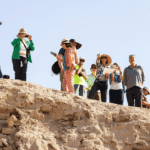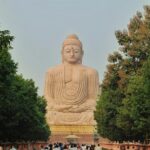


Three mud-brick forts rise out of the Kyzylkum Desert, two hundred kilometers from the nearest city. They are called the Qalas. They were built over two thousand years ago to guard the trade routes that would eventually become the Silk Road. You have almost certainly never heard of them.
We walked through them on a Far Horizons trip through Uzbekistan, Turkmenistan and Tajikistan.
The walls are partial ruins now — sections standing, sections fallen — but the sight lines are still intact. You can look out across the desert from the ramparts and understand exactly why someone built a fort here, on this rise, facing that direction. The intent of the place is so easy to see.
This is the gap that most travel content doesn’t talk about.
Samarkand is on every UNESCO list. Samarkand gets the photography, the itineraries, the long essays about the Timurid empire. And it deserves all of it — Registan square is one of the most extraordinary things I have ever stood in front of.
But Samarkand doesn’t exist in isolation. It was the destination at the end of routes that people had been navigating, protecting, and dying for across centuries. The Qalas are part of that story. They are why the routes held.
When you only see the famous site, you see the conclusion, without the thesis.
There is a version of Educational Travel that is just about seeing more UNESCO sites. More checkboxes, bigger lists.
That is not what we are doing, we are Intellectual Travel™
The lesser-known sites matter because they give the famous ones their meaning.
Kerkouan, the Punic city on the Tunisian coast that was never rebuilt after the Romans destroyed it, tells you something about Carthage that no museum can.
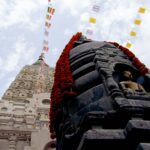
Merv, the ancient oasis city in Turkmenistan that was once larger than Paris, tells you something about how the medieval Islamic world actually functioned across geography. The ribbons tied to a half-buried shrine in northern Turkmenistan, left by local families still honoring a site no tour operator lists — that tells you something about continuity of meaning that a finished, restored monument cannot.
These are not consolation prizes for travelers who couldn’t get to the famous locations. They are the context that makes the famous sites legible.
Over forty years and through ongoing investment in archaeological preservation, Far Horizons has built a catalog of trips around exactly this principle. Not sites chosen for their recognizability, but sites chosen because they complete the picture and enhance your understanding.
This month, we are releasing our latest catalog.
It is not organized by region or by UNESCO designation. It is organized by what each place helps you understand.
We will be writing about a different lesser known site each Sunday in May — places that don’t make many brochures but that you will not forget.
Starting with the Qalas in Central Asia. We were essentially alone out there. The desert extended in every direction. The mud brick had been baking in the sun for two thousand years. And standing on those ramparts, looking out at the same sight lines the garrison soldiers used, I understood something about the Silk Road that I had never understood from reading about it.
That is what this kind of travel does. Not just visits. Understanding.
The catalog drops this next week. If you want to be first to see it, you can sign up here.